Protecting hands from arc flash
Inspect gloves & know their voltage protection
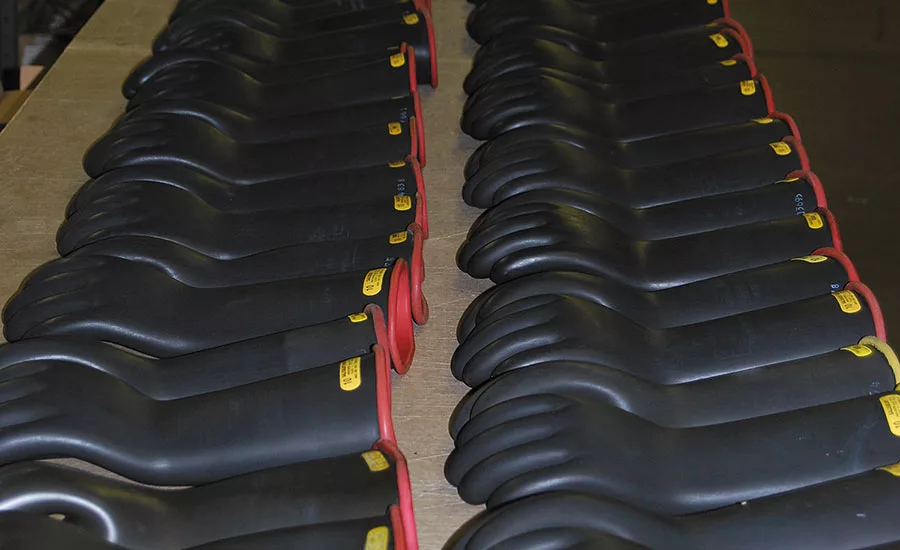
Photo courtesy of Saf-T-Gard International, Inc.
Arc flash and electrical shock injuries continue to pose a significant threat to workplace health and safety. Anywhere from five to ten arc explosions occur in electric equipment every day in the U.S., and as many as ten U.S. workers are killed or injured according to CapSchell Inc., a Chicago-based research and consulting firm.
Plus, OSHA estimates that 80 percent of electrically-related accidents and fatalities involving “Qualified Workers” are caused by arc flash/arc blast. The best way to prevent arc incidents from happening is to de-energize equipment before beginning work, but there are instances where turning off the power could create an even greater hazard. So employers and facility owners must establish safe practices to protect their workers against arc flash incidents, including the use of personal protective equipment (PPE).
According to the National Fire Protection Association (NFPA), arc flash is an electric current that passes through the air when insulation or isolation between electrified conductors is no longer sufficient to withstand the applied voltage. Arc flash can be initiated through accidental contact, equipment which is underrated for the available short circuit current, contamination or tracking over-insulated surfaces, deterioration or corrosion of equipment and/or parts, as well as other causes. The arc causes an ionization of the air, and arc flash temperatures can reach as high as 35,000˚ Fahrenheit.
To identify the specific arc flash hazard at a given piece of equipment within a facility, you should conduct an arc flash hazard analysis. This will help establish the energy needed for an arc flash to cause second degree burns (incident energy determination) and the distance where the second-degree burns are caused, or where the incident energy is 1.2 calories per centimeter squared (flash protection boundaries). The results of the analysis will aid in determining the proper PPE, including (but not limited to) rubber insulating gloves.
Glove up
Employees who work on electrically-energized circuits and equipment use their hands, making them the most susceptible part of the body to electric shock. Arc-rated work gloves offer no shock protection, and most arc flash hazards have a shock exposure hazard as well. Rubber insulating gloves (electrical gloves) are an essential element in protecting workers that are exposed to high-voltage currents. Shock protection is the primary benefit. Electrical rubber insulating gloves also provide significant burn protection in the event of an arc flash.
Electrical-protective gloves are categorized by the level of voltage protection they provide. Voltage protection is broken down into the following classes, and each class of gloves is clearly marked with the maximum use voltage on the permanent color-coded label:
• Class 00 - BEIGE LABEL - Maximum use voltage of 500 volts AC/proof tested to 2,500 volts AC
• Class 0 - RED LABEL - Maximum use voltage of 1,000 volts AC/proof tested to 5,000 volts AC
• Class 1 - WHITE LABEL - Maximum use
voltage of 7,500 volts AC/proof tested to 10,000 volts AC
• Class 2 - YELLOW LABEL - Maximum use voltage of 17,000 volts AC/proof tested to 20,000 volts AC
• Class 3 - GREEN LABEL - Maximum use voltage of 26,500 volts AC/proof tested to 30,000 volts AC
• Class 4 - ORANGE LABEL - Maximum use voltage of 36,000 volts AC/proof tested to 40,000 volts AC
Inspect to protect
OSHA, ASTM and NFPA standards also require regular inspection and testing of in-service electrical protective equipment in order to maintain compliance and ensure the products’ safety and integrity.
Visually inspecting rubber gloves identifies physical, chemical or ozone damage. Inflating the gloves with air or otherwise stretching the surface helps identify age and ozone damage as well as other physical damage such as snags, rope burns, deep cuts and punctures.
Expand the gloves no more than 1.25-1.50 times their normal size. Listen for escaping air to detect holes. If a portable inflator is not available, use a rubber glove inspection tool or roll the glove cuff tightly to trap air inside. Then, apply pressure to areas of the glove to inspect for escaping air. Repeat the procedure again with the rubber gloves turned inside out.
Test to ensure the best
Testing is a critical component to arc and electrical safety. ASTM F496 standard applies to the in-service care of rubber insulating gloves. If you do not have the equipment required to perform these electrical tests, there are accredited independent testing facilities that can perform the acceptance and in-service testing on behalf of end users.
The interval between the date of issue and electrical testing should be based on work practices and test experience. For gloves, the interval should not exceed six months except for industries such as telecommunications that utilize insulating gloves as precautionary protection, in which case the maximum interval may be increased to nine months.
Storing for continued safety
Proper storage extends the service life of rubber insulating gloves. Never fold the gloves. Folds and creases strain rubber and cause it to crack from the ozone prematurely. Store rubber gloves with the fingertips up in the right-size bag or roll-up, and never force more than one pair into each bag. Avoid storing the gloves inside out, which can also cause strain and promote ozone cutting. Try to store in a dry and cool location away from sources of ozone and direct sunlight. Refer to ASTM F1236, standard guide for visual inspection of electrical protective rubber products for additional information.
Looking for a reprint of this article?
From high-res PDFs to custom plaques, order your copy today!