ISHN logo
search
cart
facebook twitter linkedin youtube
  • Sign In
  • Create Account
  • Sign Out
  • My Account
ISHN logo
  • NEWS
    • Today's News
    • Global Safety News
    • Government Regulations
  • PRODUCTS
    • Product Innovations
    • Featured Products
  • TOPICS
    • Environmental Health and Safety
    • Facility Safety
    • Workplace Health
    • Occupational Safety
    • PPE
    • More Topics
  • CONSTRUCTION
  • TECHNOLOGY
  • COLUMNS
    • Best Practices
    • Dave Johnson: What’s going on
    • Editorial Comments
    • Leading Safety
  • MULTIMEDIA
    • ISHN Podcast
    • Videos
    • Cold Stress Education Quiz
    • Webinars
    • White Papers
  • MORE
    • Buyer's Guide
    • Newsletters
    • Convention Companion
    • Polls
    • Events
    • ISHN Store
    • Sponsor Insights
  • EMAGAZINE
    • eMagazine
    • Archived Issues
    • Contact
    • Advertise
  • JOIN TODAY!
Environmental Health and SafetyWorkplace Safety Culture

Lack of line workers raises safety risks

Crew members reinforce situational awareness
By Dave Johnson
line workers
April 22, 2016

Four days before Hurricane Sandy struck in October, 2013, Consolidated Edison Co. sought 1,800 power line repair workers from its fellow utilities to help respond to the massive storm brewing in the Atlantic Ocean, according to the Claims Journal.

It got just 32. Three days later, the New York-based utility boosted its request to 2,500. It got 171.

Con Edison’s difficulties getting help from the industry’s mutual aid program, in which U.S. utilities send workers to other regions during emergencies, show how years of cost cuts and pressure to keep prices low have left utilities less prepared to restore power from the biggest natural disasters.

“Utilities do not have the required field personnel at hand to effectively respond to large storms,” the Moreland Commission, a panel convened by New York Governor Andrew Cuomo to investigate utility storm response and preparation, said in a report.

Union concerns

Years of budget cutting by many utilities have taken their toll on worker training programs and reduced the ranks of experienced linemen, according to the International Brotherhood of Electrical Workers (IBEW). Since deregulation came to the electric industry more than ten years ago, utilities have reduced their line staff by 25 or 30 percent, according to IBEW.

The job of utility linemen is varied and complex. It takes five years to train a lineman to a journeyman level, and most in the industry acknowledge that it takes ten years to become a well-rounded lineman. There is much to learn, said Utility Department International Representative Don Hartley.

“It can be challenging to have a conversation with a group of linemen who have never had to worry about a lack of work or face a layoff,” Bob Gerstle, a 38-year utility industry vet, told Transmission and Distribution World. “After all, there is a shortage of linemen nationally, with a slew of retirements coming in the next 10 years.”

From the front lines

The impact on safety of a shortage of skilled linemen is borne out in an IBEW survey of utility foremen, linemen/servicemen, and apprentices. Asked if doing more with less causes safety concerns, about half of those surveyed said “yes.” If the job requires more manpower than was assigned and the foreman asks for additional help, 75 percent of the time more help is provided, according to the survey.

Employment of line installers and repairers is projected to grow six percent from 2014 to 2024, about as fast as the average for all occupations, according to the U.S. Bureau of Labor Statistics. Job opportunities should be best for those with good technical and mechanical skills. Those looking to become electric power-line installers should have the best job prospects. In 2014, the U.S. workforce of line workers totaled 236,000, with a median annual average salary of $61,740.

Still, demand outstrips supply in segments of the industry. Many foremen and line workers in the IBEW survey said their greatest safety concern was, in the words of one, “not enough linemen to fill the openings and teach the inexperienced.”

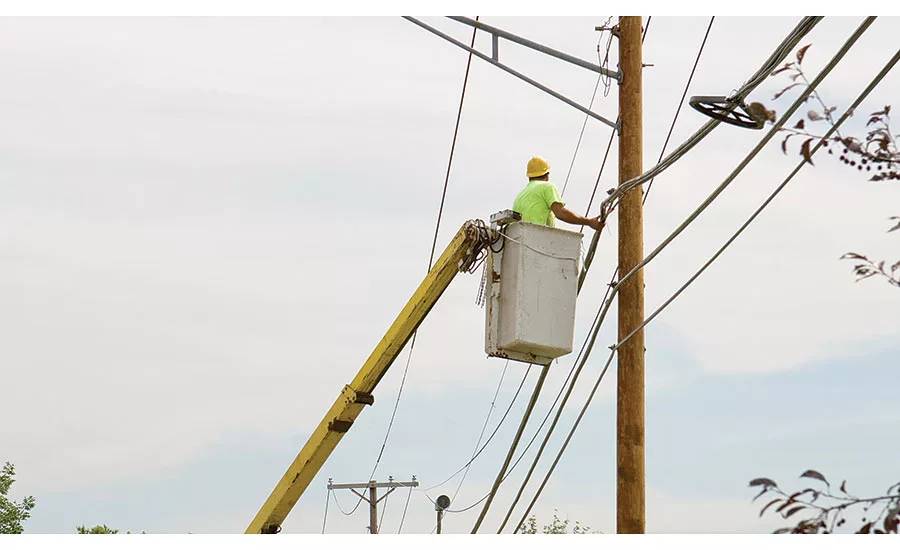
Line workers on the front lines, challenged by building or repairing complex, high-voltage equipment while dangling sometimes hundreds of feet in the air, often remarked in the survey that their greatest safety concern is lack of manpower:

“Not enough people to cover in emergencies.”

“More flaggers needed.”

“Too small of crews going the extra effort to get the job done.”

“Foreman is afraid to disappoint management by not getting the job done or asking for more help.”

“More linemen need to be hired.”

“Get more guys.”

“Money seems to be a concern.”

Maintaining safe cultures

Sufficient manpower is crucial to utility/energy industry safety because, as one expert says, “safety isn’t an absolute state. It’s a process and a culture that encourages safe practices and anticipates hazards.” Safety processes and cultures are undermined if there aren’t enough “brother’s and sister’s keepers” observing and correcting at-risk behaviors such as failing to wear FR clothing or fall protection gear, keeping an eye on traffic and weather, and ensuring proper grounding.

Adequate staffing is also needed because many assignments are complex, located in remote areas, and require following hundreds of rules and procedures. Peer-to-peer safety reminders and communication are important to avoid complacency and perform tasks safely such as:

• Wiping down a hot stick before using it and performing a visual inspection;

• Performing a visual inspection and a field air test on rubber gloves before every use;

• Wearing steel-toe boots;

• Inspecting a sling and all its fastenings and attachments before use every time;

• Getting in the habit of placing wheel chocks behind truck wheels every time a boom is in the air.

Reinforcing safe work practices

Line workers and repairers often work in crews. The industry can take a page from the airline industry’s use of crew resource management – CRM -- (also used in medical surgical operations). CRM is a set of training procedures for use in environments where human error can have devastating effects – such as the fatal accidents and life-changing injuries that are risks of line work. Used primarily for improving air safety, CRM focuses on interpersonal communication, leadership, and decision-making in the cockpit.

CRM – or situational awareness – avoids working with tunnel vision. It reinforces safety axioms such as: 1) If you do not have the proper equipment, do not do the job; 2) Never assume the line is dead – if it’s not grounded, it’s not dead; 3) Know and maintain minimum approach distances – insulate and isolate – cover up; 4) Never install or remove grounds by hand – use approved and tested hot-line tools; and 5) Always wear rubber gloves and sleeves if you are working within minimum approach distances.

Share This Story

Looking for a reprint of this article?
From high-res PDFs to custom plaques, order your copy today!

Djohnson new pic 7.10.22

Dave Johnson was chief editor of ISHN from 1980 until early 2020. He uses his decades of expertise to write on hot topics and current events in the world of safety. He also writes and edits at Dave Johnson’s Writing Shop LLC and is editor-at-large for ISHN. Find him at https://www.facebook.com/Dave-Johnsons-Writing-Shop-101316571547263/, and on LinkedIn at https://www.linkedin.com/in/daveljohnsoneditor/.

Recommended Content

JOIN TODAY
to unlock your recommendations.

Already have an account? Sign In

  • forklift safety

    Exploring the latest technologies in forklift safety

    With more staff and more stock in warehousing now more...
    Facility Safety
    By: Josh Cramer
  • welding

    All about welder’s flash or arc eye

    A flash burn is a painful inflammation of the cornea,...
    Environmental Health and Safety
  • dangerous jobs

    The 10 most dangerous jobs in the U.S.

    On-the-job deaths have been rising — hitting the highest...
    Government Safety Regulations
    By: Benita Mehta
Manage My Account
  • eMagazine Subscriptions
  • ISHN Newsletter & Other Newsletter Alerts
  • Online Registration
  • Manage My Preferences
  • Subscription Customer Service

More Videos

Sponsored Content

Sponsored Content is a special paid section where industry companies provide high quality, objective, non-commercial content around topics of interest to the ISHN audience. All Sponsored Content is supplied by the advertising company and any opinions expressed in this article are those of the author and not necessarily reflect the views of ISHN or its parent company, BNP Media. Interested in participating in our Sponsored Content section? Contact your local rep!

close
  • man wearing the the Sundström SR200 Full Face Mask Respirator
    Sponsored byOHD

    5 Fit Testing Mistakes That Could Cost You

  • This image shows Magid AcuSpex polarized blue mirrored safety glasses.
    Sponsored byMagid Glove and Safety

    Construction PPE Guide: What Crews Need for Each Task

  • lone worker in confined space
    Sponsored byAlphasense Ltd.

    GET THE LEAD OUT of your Safety Oxygen Sensors!

Popular Stories

SpaceX 7 launch

OSHA Investigating Fatal Fall at SpaceX Starbase

Automated loading dock equipment

After March 2026 Rivian Death, Safety Managers Reassess Loading Dock Systems Under OSHA's Warehouse Emphasis Program

psychology in the workplace

Most Workplaces Measure Psychological Safety, Ignoring Psychosocial Risks

top 10 most dangerous jobs

Poll

Seasonal Readiness

With the federal heat stress prevention rule on the horizon, which area of your safety program needs the most attention?
View Results Poll Archive

Products

Surviving an OSHA Audit A Management Guide, 2nd Edition

Surviving an OSHA Audit A Management Guide, 2nd Edition

See More Products

ISHN Podcasts

Related Articles

  • line workers

    Lack of line workers raises safety risks

    See More
  • Iraqi rebuilding raises safety risks

    See More
  • Recession raises safety risks of 24/7 operations

    See More

Related Products

See More Products
  • 1118911040.jpg

    Risk Assessment: A Practical Guide to Assessing Operational Risks

  • 9781498773416.jpg

    The Legal Aspects of Industrial Hygiene and Safety

See More Products

Events

View AllSubmit An Event
  • May 23, 2017

    Zika Virus: An Emerging Infectious Disease, Epidemiology, Risks and Prevention in the Workplace

    Zika Virus: An Emerging Infectious Disease, Epidemiology, Risks and Prevention in the Workplace will present the history and evolution of the Zika Virus including understanding the geographic areas and populations at risk, the epidemiology of the disease, modes of transmission, case definitions, clinical presentation, health effects, surveillance and prevention in the workplace and in the community.
View AllSubmit An Event

Related Directories

  • SafetyLine Lone Worker

    SafetyLine Lone Worker helps companies monitor the status of workers who are remote, alone, or working in hazardous situations. We are an automated check-in monitoring and emergency notification service. SafetyLine uses its communications infrastructure to ensure that workers have comprehensive monitoring, 24/7, without the need for costly monitoring centers.
  • LineDrive

    LineDrive is a solutions-based sales agency that specializes in People Safety, Facility Safety, and Facility Maintenance & Productivity. We partner with top brands to deliver services and solutions that keep your facility safe and productive. Our services and solutions are free of charge; we simply ask that if we help solve a problem, reduce risk or increase productivity, that you support our partner brands with a purchase via your preferred distributor.
×

Become a Leader in Safety Culture

Build your knowledge with ISHN, covering key safety, health and industrial hygiene news, products, and trends.

JOIN TODAY
  • RESOURCES
    • Advertise
    • Contact Us
    • Directories
    • Manufacturing Division
    • Store
    • Want More
  • SIGN UP TODAY
    • Create Account
    • eMagazine
    • Newsletters
    • Customer Service
    • Manage Preferences
  • SERVICES
    • Marketing Services
    • Reprints
    • Market Research
    • List Rental
    • Survey/Respondent Access
  • STAY CONNECTED
    • LinkedIn
    • Facebook
    • YouTube
    • X (Twitter)
  • PRIVACY
    • PRIVACY POLICY
    • TERMS & CONDITIONS
    • DO NOT SELL MY PERSONAL INFORMATION
    • PRIVACY REQUEST
    • ACCESSIBILITY

Copyright ©2026. All Rights Reserved BNP Media, Inc. and BNP Media II, LLC.

Design, CMS, Hosting & Web Development :: ePublishing