Tech advances are reinventing hearing conservation programs
Open your ears
Rapid advancements in technology are changing the methods and tools for protecting workers’ hearing. Smartphone apps, low-cost sensors, the Internet of Things (IoT), 3D printing/modeling and data mining are changing the way we work and the way we live - impacting our personal and professional lives.
In addition to traditional commercial new product development, there is growing involvement by government agencies and the military to help stimulate and support research to bring better tools to practitioners entrusted with worker safety and health outcomes. Examples of this are the creation of NIOSH’s Center for Direct Reading and Sensor Technologies and OSHA’s recent “Hear and Now - Noise Safety Challenge” competition.
Virtually all areas of hearing conservation are advancing faster than ever to help make occupationally-acquired noise-induced hearing loss (ONIHL) a thing of the past. Best practices in hearing conservation driven by new technology include engineering and administrative controls, risk and exposure assessment and PPE.
New technology
Implementing engineering controls through “Buy Quiet” programs for eliminating the risk should be the first choice – but isn’t always feasible or cost effective. But as processes like 3D printing become more versatile and affordable, lower noise printers might replace more traditional machining systems that are harder to quiet down to safe levels.
Administrative controls should be implemented as a next priority, and their effects can be analyzed in advance for maximum effectiveness using free task-based exposure modeling software tools from the web. Other programs analyze trends in a person’s hearing threshold level versus their documented noise exposure levels, type of hearing protection used, medical history and years on the job. When compared to “normal” changes in hearing level over time as recognized in the ISO 1999 and ANSI 3.44 standards, these can predict which workers will suffer a compensable hearing loss during their employment if corrections aren’t made, such as offering better hearing protection devices and ensuring proper fit.
And when it comes to limiting hearing loss using PPE, new types of passive and active hearing protection devices are available – along with wearable real-time noise alerts that help ensure workers are wearing HPDs in noisy environments. While winners of the recent OSHA-sponsored “Hear and Now – Noise Safety Challenge” were just published in Q4 2016 and have not yet resulted in any commercial product, one of the entries was a sound monitor small enough to mount on industrial eyewear with an optical display showing noise levels projected like a “heads-up” display found in jet fighters and high-end sports cars.
HPD fit-testing gains popularity
HPD fit-testing has gained widespread adoption for advancing proper use, and internet-based hearing acuity tests and hearing loss simulation programs are available as effective motivators - empowering noise-exposed populations to take control of their hearing health outcomes.
HPD fit testing has been around for some time but is much more common with the development of systems that are able to accommodate a wider variety of HPDs. Recent work by NIOSH resulted in development of alternative fit checking systems that can be used with virtually any type of earplug regardless of the manufacturer. Originally called the NIOSH HPD Well-Fit™ System, this device has gone from laboratory to licensed commercial manufacturing and is now available.
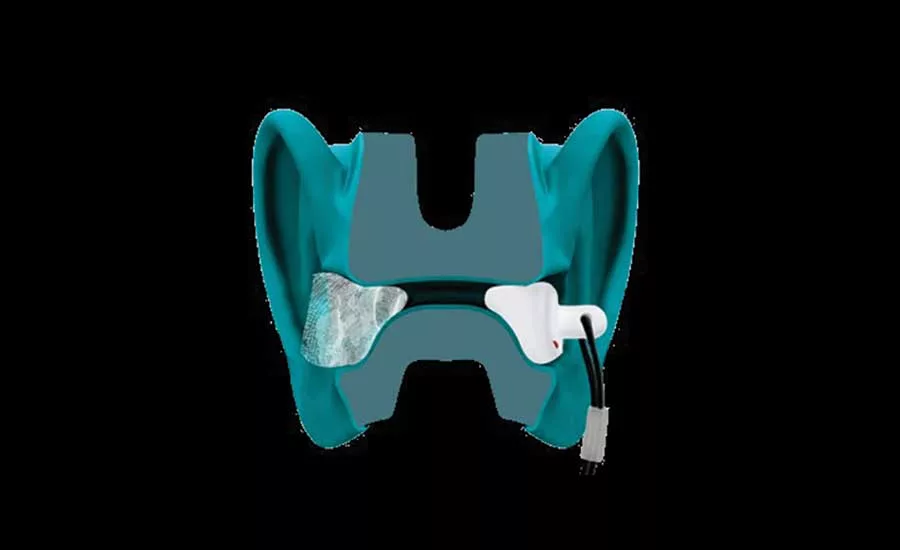
New ways of creating individually optimized hearing protection devices leapt forward recently with the introduction of optical scanning techniques — an alternative to silicone ear impressions. Custom-fit HPDs are usually produced by a technician or audiologist injecting liquid silicone into the ear canal, where it cures and harden for extraction. Now, using highly accurate light-based techniques to scan the ear canal, a quick and clean alternative exists that had been impossible until advances in digital imaging, 3D modeling and low-cost high-speed processing converged. Scanned ear canal files can be printed as molds for custom-fit HPDs using high-resolution 3D printers.
Smartphones aid in measurement
Exposure assessment instruments have benefited from Moore’s Law (i.e. computing power doubles every 18 months). Most dosimeters and sound level / octave band meters are digitally sampling devices. Features like Bluetooth remote communications, MEMS devices (Miniaturized Electro-Mechanical Systems/Sensors) utilized as microphones and built-in accelerometers for sensing workers’ motion and/or impacts with the dosimeter are the result of advances in silicon chip and wireless communications. Dosimeters became miniaturized, shoulder-mounted devices long ago and newer ones have full color displays and audio event recording on exceedance to validate high noise sources or reveal artifacts and anomalies in the data. Some even have optional octave band data recording.
The evolution of smartphones into powerful pocket-sized computers makes low-cost noise measurement possible. Dozens of apps are available for Apple or Android devices, many free, and offer direct measurement of A-weighted sound pressure level (SPL). Many include advanced functionality such as octave band, 1/3 octave band and FFT (Fast Fourier Transform) analysis.
While apps vary greatly in accuracy (hint: the best ones are not free) most still use the smartphone mic rather than a true precision measurement microphone such as those found on OSHA compliant meters. A recent study by NIOSH (“Evaluation of Smartphone Sound Measurement Applications”, by Kardous and Shaw) shows that some apps and hardware approach or even meet ANSI Type 2 requirements – at least under normal environmental conditions. With the addition of a calibrated low-cost measurement microphone, the performance, accuracy and repeatability of smartphone apps are even better – but these still won’t replace ANSI-approved noise dosimeters and sound meters for compliance purposes, according to NIOSH. And for measuring noise in hazardous locations, you must use an intrinsically safe meter to prevent an explosion.
Apps such as signal and tone generators are used for creating sounds or noises to do everything from masking background noises in a room to offering auditory stimulus relief for those afflicted with tinnitus.
Other apps mimic the functions of an audiometer, again, these are not calibrated for compliance in a hearing conservation program, but they are useful for raising awareness of possible hearing loss with co-workers, friends and family (does your child use earbuds?) Results could indicate a properly administered audiogram by a certified practitioner should be obtained.
Conclusion
We live in an era of unprecedented technological advancement that impacts every aspect of our lives, from the way we shop and travel to the way we communicate with friends and family. These trends are resulting in new methods and tools that change the way safety professionals and industrial hygienists prevent hearing loss. Open your eyes (and ears!) to these new developments around you - and you’ll find new ways to modernize and upgrade the performance of your hearing conservation program.
Looking for a reprint of this article?
From high-res PDFs to custom plaques, order your copy today!