ISHN logo
search
cart
facebook twitter linkedin youtube
  • Sign In
  • Create Account
  • Sign Out
  • My Account
ISHN logo
  • NEWS
    • Today's News
    • Global Safety News
    • Government Regulations
  • PRODUCTS
    • Product Innovations
    • Featured Products
  • TOPICS
    • Environmental Health and Safety
    • Facility Safety
    • Workplace Health
    • Occupational Safety
    • PPE
    • More Topics
  • CONSTRUCTION
  • TECHNOLOGY
  • COLUMNS
    • Best Practices
    • Dave Johnson: What’s going on
    • Editorial Comments
    • Leading Safety
  • MULTIMEDIA
    • ISHN Podcast
    • Videos
    • Cold Stress Education Quiz
    • Webinars
    • White Papers
  • MORE
    • Buyer's Guide
    • Newsletters
    • Convention Companion
    • Polls
    • Events
    • ISHN Store
    • Sponsor Insights
  • EMAGAZINE
    • eMagazine
    • Archived Issues
    • Contact
    • Advertise
  • JOIN TODAY!
Occupational SafetyEnvironmental Health and Safety

Development of a Confined Space Risk Analysis and Work Categorization Tool

April 3, 2017

The IRSST just published a new research report those purpose is to contribute to confined space accident prevention by helping companies apply existing regulations. Researchers wanted to gain a better understanding of confined space risk management and identify issues based on the literature and field observations, and develop a confined space risk analysis and work categorization tool that meets the needs defined in the first stage of the project.

A confined space is any area that is completely or partially enclosed and is not designed for human occupation, nor intended to be, but may occasionally be occupied for the performance of work. (Definition from Quebec Regulation respecting Occupational Health and Safety (ROHS), section 1) A worker may therefore enter such a space that is not a workstation, has restricted access, and presents a risk to health and safety.

The issue of confined space work cuts across a wide range of sectors: municipal, manufacturing, chemical, military, agricultural, construction and transportation. The most common confined spaces in industry are tanks, reservoirs, silos, vats, manholes, pits, sewers, pipes and tank cars or trucks that have certain characteristics defined in the regulations. Workers enter confined spaces to perform maintenance, manufacturing or other tasks (e.g., construction industry).

The occupational health and safety hazards are primarily atmospheric, biological, physical and ergonomic. The risks run by workers who enter these confined spaces are potentially high because of the confinement, inadequate natural ventilation, need to work in isolation, and access, rescue and communication problems. Moreover, accidents are common in confined spaces.

The findings show that, first, the number of fatal accidents caused by an equipment energy control problem highlights the importance of mechanical hazards in confined spaces. A more multidisciplinary approach would therefore seem desirable. Second, the risk estimation and assessment stages are seldom dealt with formally in the literature, with the exception of atmospheric risks.

A five-step risk assessment tool was developed for confined spaces.

  • Step 1 of the tool consists of a list of 26 closed-ended questions intended to characterize the confined space, its environment and working conditions.
  • Step 2 describes the accident process related to the risks identified by the tool user.
  • Step 3 facilitates risk estimation using a risk matrix and criteria tailored to the context of confined spaces. For this purpose, risk estimation tool design criteria recently proposed for machine safety were applied.
  • Step 4 provides a graphic classification by risk categories and levels.
  • Step 5 consists of a feedback loop that estimates residual risks once the risk reduction measures have been selected.

The tool can be used to determine, on the basis of explicit criteria, whether any two confined space job assignments are actually identical, with a view to simplifying risk reduction work if possible. The tool can also help decide, on the basis of predetermined criteria, whether rescue without entry is possible a priori and whether the residual risks are acceptable. Twenty-two confined space experts were asked to test the tool’s practicality and suitability. The tool was also compared with other types of tools recommended in the literature or by businesses for analysing risks associated with confined space work.

This study provides support for designers, safety officers and rescuers in their respective efforts to improve the health and safe working conditions of people who must enter confined spaces. The tool can be used to design a confined space or to assess an existing one.

To download the report: http://www.irsst.qc.ca/en/publications-tools/publication/i/100915/n/confined-space-analysis-tool

KEYWORDS: accident prevention confined space occupational exposure

Share This Story

Looking for a reprint of this article?
From high-res PDFs to custom plaques, order your copy today!

Recommended Content

JOIN TODAY
to unlock your recommendations.

Already have an account? Sign In

  • forklift safety

    Exploring the latest technologies in forklift safety

    With more staff and more stock in warehousing now more...
    Workplace Training Strategies
    By: Josh Cramer
  • welding

    All about welder’s flash or arc eye

    A flash burn is a painful inflammation of the cornea,...
    Environmental Health and Safety
  • dangerous jobs

    The 10 most dangerous jobs in the U.S.

    On-the-job deaths have been rising — hitting the highest...
    Occupational Safety
    By: Benita Mehta
Manage My Account
  • eMagazine Subscriptions
  • ISHN Newsletter & Other Newsletter Alerts
  • Online Registration
  • Manage My Preferences
  • Subscription Customer Service

More Videos

Sponsored Content

Sponsored Content is a special paid section where industry companies provide high quality, objective, non-commercial content around topics of interest to the ISHN audience. All Sponsored Content is supplied by the advertising company and any opinions expressed in this article are those of the author and not necessarily reflect the views of ISHN or its parent company, BNP Media. Interested in participating in our Sponsored Content section? Contact your local rep!

close
  • man wearing the the Sundström SR200 Full Face Mask Respirator
    Sponsored byOHD

    5 Fit Testing Mistakes That Could Cost You

  • This image shows Magid AcuSpex polarized blue mirrored safety glasses.
    Sponsored byMagid Glove and Safety

    Construction PPE Guide: What Crews Need for Each Task

  • lone worker in confined space
    Sponsored byAlphasense Ltd.

    GET THE LEAD OUT of your Safety Oxygen Sensors!

Popular Stories

SpaceX 7 launch

OSHA Investigating Fatal Fall at SpaceX Starbase

dust explosion

Tennessee OSHA Issues Record $3.1M Fine After Deadly Explosion at Munitions Plant

Worker Impairment

How to Tell When a Co-Worker is Impaired? A Safety Pro’s Challenge

top 10 most dangerous jobs

Poll

Seasonal Readiness

With the federal heat stress prevention rule on the horizon, which area of your safety program needs the most attention?
View Results Poll Archive

Products

Surviving an OSHA Audit A Management Guide, 2nd Edition

Surviving an OSHA Audit A Management Guide, 2nd Edition

See More Products

ISHN Podcasts

Related Articles

  • The power of a confined space conversation

    See More
  • How to monitor workers in a confined space

    How to monitor workers in a confined space

    See More
  • Confined Space blog

    A Confined Space blog post

    See More

Related Products

See More Products
  • 1118911040.jpg

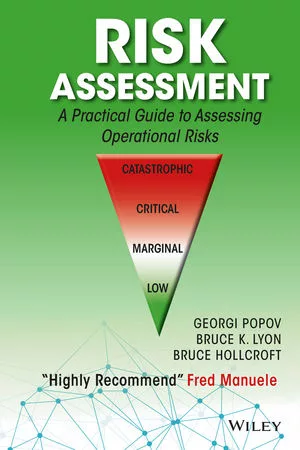
    Risk Assessment: A Practical Guide to Assessing Operational Risks

See More Products

Related Directories

  • A F C International Inc.

    Single and Multi gas detectors, fixed position gas monitors, respiratory protection, SCBAS, fit testing, calibration gases, confined space entry detectors.
×

Become a Leader in Safety Culture

Build your knowledge with ISHN, covering key safety, health and industrial hygiene news, products, and trends.

JOIN TODAY
  • RESOURCES
    • Advertise
    • Contact Us
    • Directories
    • Manufacturing Division
    • Store
    • Want More
  • SIGN UP TODAY
    • Create Account
    • eMagazine
    • Newsletters
    • Customer Service
    • Manage Preferences
  • SERVICES
    • Marketing Services
    • Reprints
    • Market Research
    • List Rental
    • Survey/Respondent Access
  • STAY CONNECTED
    • LinkedIn
    • Facebook
    • YouTube
    • X (Twitter)
  • PRIVACY
    • PRIVACY POLICY
    • TERMS & CONDITIONS
    • DO NOT SELL MY PERSONAL INFORMATION
    • PRIVACY REQUEST
    • ACCESSIBILITY

Copyright ©2026. All Rights Reserved BNP Media, Inc. and BNP Media II, LLC.

Design, CMS, Hosting & Web Development :: ePublishing