Political talk causing stress in the workplace
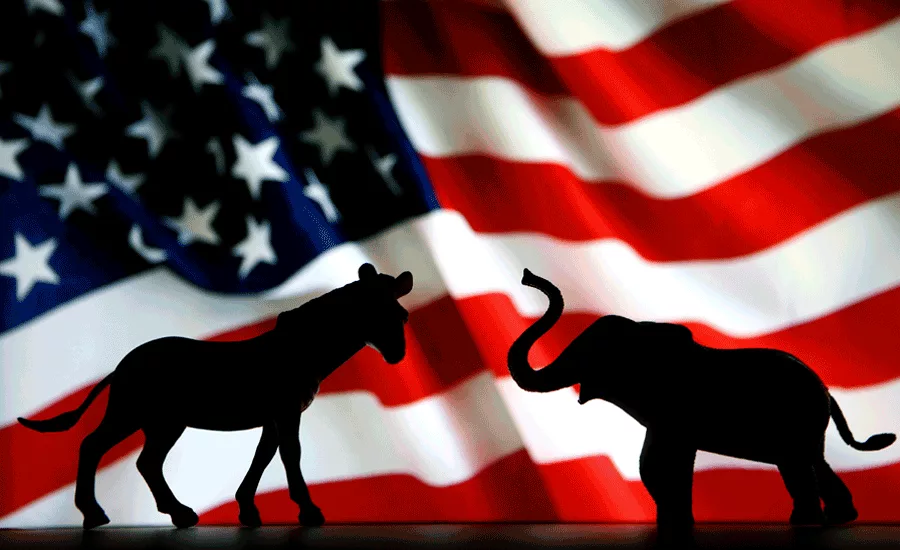
American workers are more likely to say they are feeling stressed and cynical because of political discussions at work now than before the 2016 presidential election, according to survey results released today by the American Psychological Association (APA).
The survey found that 26 percent of full-time and part-time employed adults said they felt tense or stressed out as a result of political discussions at work since the election, an increase from 17 percent in September 2016 when they were asked about political discussions at work during the election season. More than one in five (21 percent) said they have felt more cynical and negative during the workday because of political talk at work, compared with 15 percent before the election, according to the survey from APA's Center for Organizational Excellence.
Productivity, increased workplace hostility
Half of the post-election survey respondents (54 percent) said they have discussed politics at work since the election, and for 40 percent of American workers, it has caused at least one negative outcome, such as reduced productivity, poorer work quality, difficulty getting work done, a more negative view of coworkers, feeling tense or stressed out, or increased workplace hostility. This is a significant increase from the pre-election survey data, when one in four (27 percent) reported at least one negative outcome.
"Employers might prefer to keep political talk out of the workplace, but the reality is these often-heated discussions have intensified since the election, posing a threat to employee well-being and business performance," said David W. Ballard, PsyD, MBA, director of APA's Center for Organizational Excellence. "Whether it's about politics or any other difficult conversation on the job, managers and supervisors need to create a work climate where people with diverse opinions and backgrounds can work together toward common goals without their differences creating a toxic environment."
Key findings
Other key findings from the post-election survey related to political discussions at work:
- Nearly one-third (31 percent) said they had witnessed coworkers arguing about politics, and 15 percent said they have gotten into an argument themselves. More than one in five (24 percent) said they avoided some coworkers because of their political views.
- About one in six experienced strained relationships as a result of political discussions at work since the election: 16 percent said they have a more negative view of coworkers; 16 percent felt more isolated from coworkers; 17 percent said team cohesiveness suffered; and 18 percent reported an increase in workplace hostility.
- Some said that political talk in the workplace has hurt their job performance: 15 percent said they have had difficulty getting work done; 13 percent said their work quality has suffered; and 14 percent said they have been less productive.
- Since the election, significantly more female workers reported feeling more cynical and negative during the workday: 9 percent before the election, vs. 20 percent since. (For male workers, 20 percent reported feeling cynical and negative before the election, vs. 23 percent since).
Another notable finding from the survey is the difference in the way political discussions at work since the election are affecting employees based on their political views. In the survey before the election, there were few differences across political party or philosophy on how talk of politics was affecting workers.
Liberals stressed
Since the election, self-described liberals are more likely than moderates or conservatives to report feeling tense or stressed as a result of political discussions at work since the presidential election (38 percent, vs. 22 percent for moderates and 21 percent for conservatives) and perceive an increase in workplace hostility (26 percent, vs. 16 percent for moderates and 13 percent for conservatives). People who identified as liberal were also more likely to report that political discussions have made them feel more connected to coworkers (39 percent, vs. 28 percent for moderates, 25 percent for conservatives).
"The political tensions are about more than who won or lost an election," Ballard said. "People across the political spectrum have strong feelings about very personal issues that directly affect their lives, including equality, civil liberties, the role of government, social justice and economic security. Being bombarded with news updates, social media chatter and arguments with friends and coworkers can reinforce stereotypes about Republicans and Democrats, liberals and conservatives, perpetuating an 'us versus them' mentality and driving a wedge between people."
"Employers and employees have a shared responsibility to resist the trap of vilifying those with different opinions and actively encourage civility, respect, collaboration and trust," continued Ballard. "A psychologically healthy work environment can help diminish the negative consequences of unavoidable political discussions and serve as a source of stability and support, even during divisive times."
About the Center for Organizational Excellence
APA's Center for Organizational Excellence works to enhance the functioning of individuals, groups, organizations and communities through the application of psychology to a broad range of workplace issues. The center houses the Psychologically Healthy Workplace Program, a public education initiative designed to engage the employer community, raise public awareness about the value psychology brings to the workplace and promote programs and policies that enhance employee well-being and organizational performance.
Notes:
APA's 2017 Work and Well-Being Survey was conducted online among 1,512 U.S. adults who are employed full time, part time, or self-employed, of whom 1,311 were employed full time or part time.
The pre-election data is from an online survey among 2,025 U.S. adults, of whom 927 were employed full time or part time.
The full report is available online at http://www.apaexcellence.org/assets/general/2017-politics-workplace-survey-results.pdf
The American Psychological Association, in Washington, D.C., is the largest scientific and professional organization representing psychology in the United States. APA's membership includes nearly 115,700 researchers, educators, clinicians, consultants and students. Through its divisions in 54 subfields of psychology and affiliations with 60 state, territorial and Canadian provincial associations, APA works to advance the creation, communication and application of psychological knowledge to benefit society and improve people's lives.
Looking for a reprint of this article?
From high-res PDFs to custom plaques, order your copy today!