Beyond water, rest & shade: An athletic approach to heat illness
Athletics scholars have studied heat-related illnesses (HRIs) and their impact on athletes of all ages at all levels. Their discoveries can help safety professionals prevent HRIs in the workplace.
Heat-related illness (HRI) is an umbrella term used to describe a variety of health issues that result from prolonged exposure to environmental heat and humidity, including heat rash, cramps, heat syncope, heat exhaustion, and heat stroke. With weather patterns becoming increasingly unpredictable, it is more important than ever for safety professionals to be informed on the latest research to prevent future HRIs and injuries in the workplace.
And while OSHA’s national heat stress campaign about prevention, water, rest and shade best practices has certainly raised awareness about heat stress, many safety professionals have discovered another rich source of inspiration and information: the wide world of sports. After professional football player Korey Stringer died from complications of heat stroke in August of 2001, his wife Kelci teamed with exertional heat stroke expert Douglas Casa, Ph.D., ATC to form the Korey Stringer Institute at the University of Connecticut in April, 2010. The institute has identified four “big ticket” items that, if followed, will almost certainly eliminate HRIs and fatalities.
Hydration
Water is an integral component of body processes as it carries nutrients and oxygen to cells, helps convert food to energy, and regulates body temperature. It accounts for 60 percent of body weight, 75 percent of muscles, and 80 percent of the brain. When an individual is adequately hydrated, called euhydration, body processes such as thermoregulation are able to occur. When an individual is dehydrated, however, these processes are unable to successfully happen. As discussed earlier, dehydration is a major contributing factor to HRIs. To prevent dehydration, and thus minimize the risk of contracting an HRI, workers should have free access to readily available fluids at all times. Furthermore, electrolytes will be lost during the perspiration process and should be replaced accordingly.
Acclimatization
Acclimatization is a key prevention method to which states with existing heat illness standards refer. The California Heat Illness Prevention Standard, for example, defines acclimatization as a “temporary adaptation of the body to work in the heat that occurs gradually when a person is exposed to it. Acclimatization peaks in most people within four to fourteen days of regular work for at least two hours per day in the heat.”
The military is one of the best organizations at helping their employees get accustomed to heat. Some of their heat acclimatization strategies that might apply to an industrial setting include:
- Begin the acclimatization process up to one month before work in hot conditions begins.
- Upon arrival to the hot work environment, start slowly and reduce work intensity and duration and limit heat exposure.
- Acclimatize in the heat of the day, work in the coolest part of the day.
Work-to-rest ratio
Once temperatures reach 75 degrees Fahrenheit, begin adjusting work-to-rest ratios. There are many variables, including temperature, work intensity, and clothing/equipment that come into play, but the general idea is that as the heat increases so to should the frequency and length of breaks. OSHA has separate, temperature-dependent guidelines in place for workers doing light, moderate, and heavy work. For light work, the defined temperature is a Wet Bulb Globe Temperature (WBGT) of 86° Fahrenheit, 80° F for moderate work, and 77° F for heavy work. These guidelines suggest workers should not be subjected to the aforementioned temperature situations for more than two hours without a break (Minnesota Department of Labor and Industry, 2016).
Body cooling
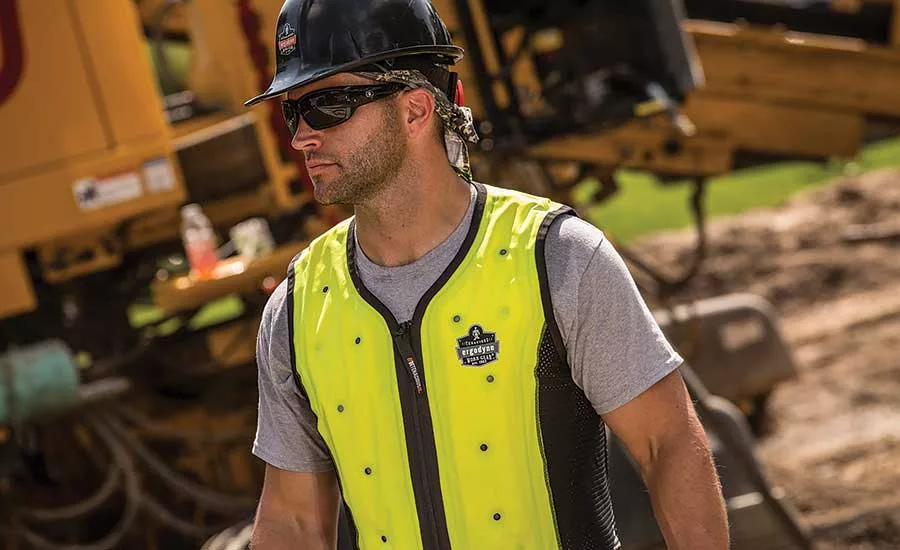
Preventing body temperatures from reaching dangerous levels while working in high-heat environments is key to heat related illness prevention. One way to combat rising temperatures is to use body cooling techniques throughout the workday or training session. These techniques include removing outer layers of clothing and/or equipment to allow the body to cool off and receive air flow. Place cooling towels, wet sheets, or ice packs over major arteries or areas with a conglomeration of blood vessels to facilitate cooling (Department of Army and Air Force, 2003). Wetting the skin surface via a hose, mist, or other means, and applying a fan can accelerate the evaporation process.
Psychology of toughness
HRI is prevalent in athletes during the preseason and among new workers in industrial settings. In both populations, fighting the notion of “I don’t need a break” is a challenge. The new worker may set out to prove their worth to an organization in the same way an athlete aims to impress their coach early in the season.
On the athletic field, recognition of early HRI symptoms is supplemented by the presence of an athletic trainer or team doctor who is well-versed in HRIs and takes prompt action when symptoms develop in an athlete. It is very unlikely to have such oversight in an industrial setting, leaving recognition of HRI symptoms to safety managers, supervisors, and the workers themselves.
Studies show that if a heat stroke victim is not treated and cooled within a half hour of collapse, survival rate drastically decreases. So it is essential that authority figures recognize the signs of HRIs swiftly and address them properly.
The industrial athlete
The Korey Stringer Institute’s unofficial fifth big ticket item is education. The industrial athlete faces similar extreme environments, pressure, and exertion as a world-class athlete in their field of competition. Both can benefit from repeated HRI education on prevention, recognition, and treatment. HRIs can be prevented by adequate hydration, acclimatization, implementing work-to-rest ratios, and body cooling as temperatures soar. By understanding an athletic approach to HRI prevention, the industrial worker can get a new, illuminating perspective on the matter.
Looking for a reprint of this article?
From high-res PDFs to custom plaques, order your copy today!