Avoid the heavy costs of burn injuries
Once is all it takes
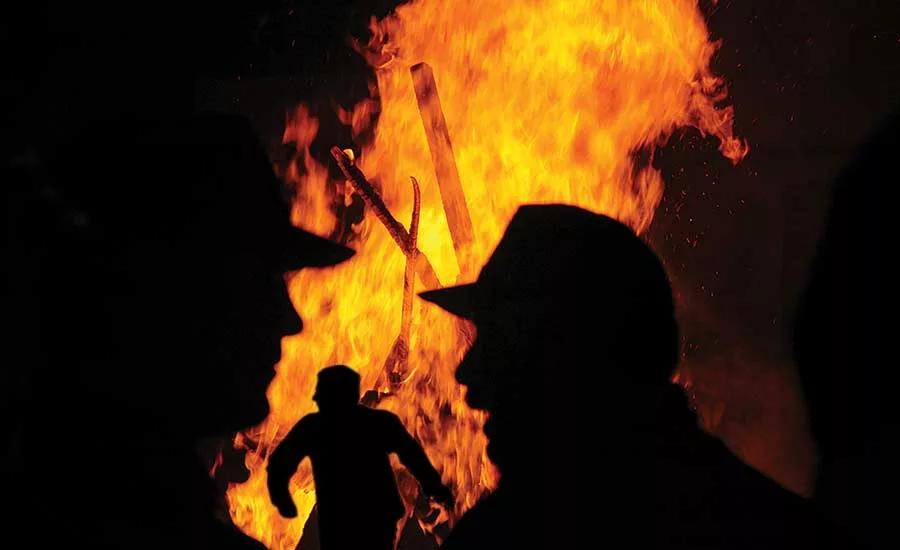
Burn incidents don’t happen often, so there isn’t much to worry about, right? According to the Bureau of Labor Statistics, more than 16,000 industrial injuries due to thermal burns were reported for the year 2013. From 2000 to 2013, nearly 2,300 workers died as a result of injuries sustained in an industrial fire or explosion.
The people injured or lost in these types of accidents are parents, spouses and friends. We need to do everything in our power to prevent burn injuries from occurring.
If an accident does occur, the costs extend beyond the potential tragedy of lost life or severe injury. A single burn injury can cost a company millions of dollars in hospital fees, OSHA fines, increased insurance premiums, legal costs and lost productivity.
Hospital fees
According to the American Burn Association, for a survivor with 40-60 percent body burn the average duration of a hospital stay is 54 days, and the average cost of the stay is $780,000. With more severe injuries, these costs can be even higher.
Workers’ compensation insurance will mitigate most direct costs associated with an injury claim, right? This is not always the case. Some plans cap the maximum reimbursement per injury case, which leaves the remainder for the company to pay.
OSHA fines
In 2012, two employees were severely burned when an organic industrial filter cartridge ignited, causing an explosion. Their employer received two citations based on the use of incorrect PPE for the identified hazard and lack of employee training on the proper use of PPE. OSHA proposed fines of $325,710. In another incident in 2005, 13 employees were injured in an explosion, and seven were hospitalized and treated for burns. Penalties amounted to $21,156,500.
Insurance premiums
Your company’s experience modification rate (EMR) reflects both the past cost of injuries and future risks; it’s multiplied with the manual premium rate to calculate your actual premium. The lower your EMR, the lower your premium will be. Within groupings of similar companies, an EMR of 1.0 is considered average. The frequency and aggregate costs of claims the insurance provider pays on behalf of a company drive the company’s EMR above or below 1.0.
If an accident occurs and your EMR increases, the new rate sticks with you for three years — unless you face another accident, in which case your EMR could increase even further.
Legal costs
The average settlement in burn injury cases equaled $827,506, according to a study conducted by the Vanderbilt University Law School. In some cases the costs can be much more substantial. One burn injury verdict from a case involving a refinery explosion and negligence amounted to $122,500,000.
Lost productivity
Data from the Bureau of Labor statistics shows that from 2000 to 2013 a total of 32,000 workers suffered lost-time work injuries as a result of an industrial fire or explosion. There were 1,470 cases in 2013 alone, and 32 percent of those cases involved more than 31 missed workdays.
Lost workdays result in a company being short-staffed or relying on fill-in workers who add an additional cost and may be less efficient. Both scenarios can lower productivity. Damaged employee morale may further reduce productivity. If the injured employee is unable to return to work, the loss of experience and need for retraining costs both time and dollars.
A difficult road to recovery
Consider the revenue necessary to cover the expenses. Imagine a company pays $850,000 in direct costs resulting from a burn injury. If the company has a net profit margin of 10 percent, it needs to generate an additional $8,500,000 in revenue to fully cover the cost of the injury. Damage to customer relations and public image makes generating additional revenue even harder.
FR clothing makes a difference
If an accident does occur, the type of clothing employees are wearing can make a significant difference. When exposed to flame, clothing that is not flame-resistant (FR) can ignite and continue to burn, potentially causing additional damage to the skin. On the other hand, FR clothing provides an added layer of protection.
A well-designed and effectively implemented FR clothing program can cost a great deal less than a single burn injury. Because of one major clothing fire incident, a large university saw their 10-year total cost of injuries rise from $248,000 to $12,900,300, which translates to a change of $43 per chemist to $2,209 per chemist. The use of a $100 to $175 FR lab coat could have significantly minimized the injury and reduced the associated costs.
To determine the right program for your company, it’s important to identify the types of hazards employees might encounter on the job and ensure that the FR clothing you select is designed to address these hazards. FR clothing should also meet the requirements of all the safety standards applicable to your industry.
Plus, you’ll want to consider wearer comfort. If employees are unwilling to wear their FR clothing correctly, the safety benefits can be compromised. Select FR clothing that fits correctly, offers full ease of movement, and prevents workers from becoming too hot or too cold. This increases the likelihood protective garments will be worn consistently and effectively.
Finally, consider durability and long-term value. FR clothing with holes, rips or worn-out areas may not offer adequate protection. Choose products made from reputable fabrics by trusted manufacturers, and look for features such as reinforced seams for added durability. High-quality FR clothing may have higher upfront costs, but these products deliver greater value over time because they do not need to be replaced as frequently.
When it comes to the physical, emotional and financial costs of burns, an ounce of prevention is worth way more than a pound of cure. And an effective FR clothing program is an essential component in preventing burn injuries.
Looking for a reprint of this article?
From high-res PDFs to custom plaques, order your copy today!


