ISHN logo
search
cart
facebook twitter linkedin youtube
  • Sign In
  • Create Account
  • Sign Out
  • My Account
ISHN logo
  • NEWS
    • Today's News
    • Global Safety News
    • Government Regulations
  • PRODUCTS
    • Product Innovations
    • Featured Products
  • TOPICS
    • Environmental Health and Safety
    • Facility Safety
    • Workplace Health
    • Occupational Safety
    • PPE
    • More Topics
  • CONSTRUCTION
  • TECHNOLOGY
  • COLUMNS
    • Best Practices
    • Dave Johnson: What’s going on
    • Editorial Comments
    • Leading Safety
  • MULTIMEDIA
    • ISHN Podcast
    • Videos
    • Cold Stress Education Quiz
    • Webinars
    • White Papers
  • MORE
    • Buyer's Guide
    • Newsletters
    • Convention Companion
    • Polls
    • Events
    • ISHN Store
    • Sponsor Insights
  • EMAGAZINE
    • eMagazine
    • Archived Issues
    • Contact
    • Advertise
  • JOIN TODAY!
Facility Safety

Stay informed about combustible dust hazards

Avoid a Dust-up
By Benita Mehta
NFPA Combustible Dust Standard
December 26, 2017

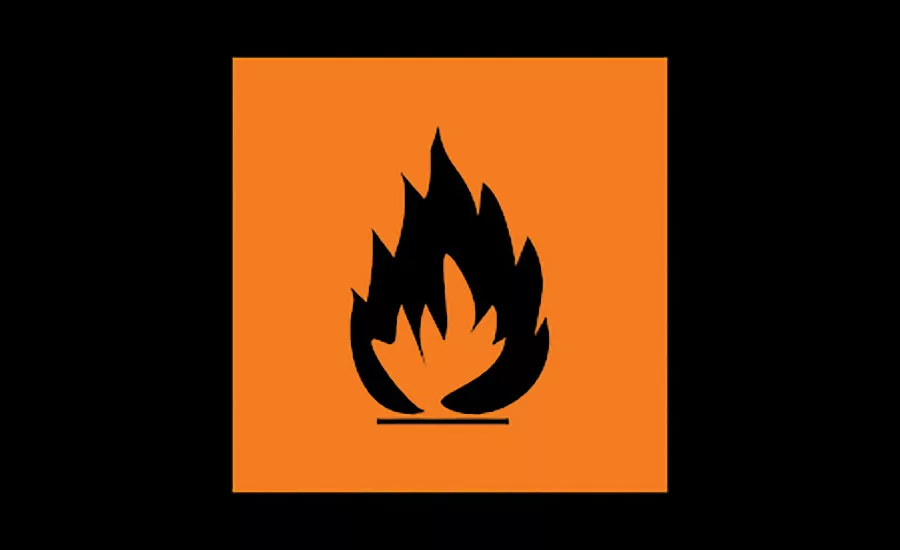
According to OSHA, combustible material can burn rapidly when in a finely divided form. If such a dust is suspended in air in the right concentration, under certain conditions, it can become explosive. Even materials that do not burn in larger pieces, given the proper conditions, can explode in dust form.

There is no OSHA standard on combustible dust, but under the Combustible Dust National Emphasis Program, OSHA can issue fines for violations under 18 different standards, including 1910.22, the main umbrella standard. You can also be cited under the General Duty Clause, which can apply to recognized hazards not specifically addressed in OSHA standards.

NFPA®  652

NFPA® introduced a standard to promote awareness of combustible dust hazards. The standard was created to promote and define hazard analysis, awareness, management and mitigation. It helps in identifying combustible dust hazards and what to do about them.

NFPA 652 requires all facilities that process, handle, convey, or manufacture potentially combustible dust to have their dust tested and keep the results on file. This is required, NFPA says, even if your type of dust has no history of causing an incident.

A wide variety of materials that can explode in dust form exist in many industries. Examples of these materials include: food, grain, tobacco, plastics, wood, paper, pulp, rubber, pesticides, pharmaceuticals, dyes, coal, metals (e.g., aluminum, chromium, iron, magnesium, and zinc). These materials are used in a wide range of industries and processes, such as agriculture, chemical manufacturing, pharmaceutical production, furniture, textiles, fossil fuel power generation, recycling operations, and metal-working and processing which includes additive manufacturing and 3D printing.

The vast majority of natural and synthetic organic materials, as well as some metals, can form combustible dust. NFPA’s “Industrial Fire Hazards Handbook” states that “any industrial process that reduces a combustible material and some normally noncombustible materials to a finely divided state presents a potential for a serious fire or explosion.”

Dust combustibility

The Combustible Dust National Emphasis Program issued by OSHA in 2008 instructs inspectors on how to identify combustible dust hazards.

The program contains policies and procedures for inspecting workplaces that create or handle combustible dusts. In some circumstances these dusts may cause fires or an explosion. OSHA says those dusts include, but are not limited to:

  • Metal dust such as aluminum and magnesium
  • Wood dust
  • Coal and other carbon dusts.
  • Plastic dust and additives
  • Biosolids
  • Other organic dust such as sugar, flour, paper, soap, and dried blood
  • Certain textile materials

Industries that handle combustible dusts include, but are not limited to:

  • Agriculture
  • Food Products
  • Chemicals
  • Textiles
  • Forest and furniture products
  • Metal processing
  • Tire and rubber manufacturing plants
  • Paper products
  • Pharmaceuticals
  • Wastewater treatment
  • Recycling operations (metal, paper, and plastic.)
  • Coal dust in coal handling and processing facilities

OSHA says facilities should carefully identify the following in order to assess their potential for dust explosions:

  • Materials that can be combustible when finely divided;
  • Processes which use, consume, or produce combustible dusts;
  • Open areas where combustible dusts may build up;
  • Hidden areas where combustible dusts may accumulate;
  • Means by which dust may be dispersed in the air; and
  • Potential ignition sources.

The primary factor in an assessment of these hazards is whether the dust is in fact combustible. According to the NFPA, “material that will burn in air” in a solid form can be explosive when in a finely divided form. Combustible dust is defined by NFPA as: “Any finely divided solid material that is 420 microns or smaller in diameter (material passing a U.S. No. 40 Standard Sieve) and presents a fire or explosion hazard when dispersed and ignited in air.” In some cases, additional information such as test results will be available from chemical manufacturers.

Different dusts of the same chemical material will have different ignitability and explosive characteristics, depending upon many variables, such as particle size, shape, and moisture content. In some cases, dusts will be combustible even if the particle size is larger than that specified in the NFPA definition, especially if the material is fibrous, says OSHA.

Industrial settings may contain high-energy ignition sources such as welding torches.

Hazard analysis considerations

The amount of dust accumulation necessary to cause an explosive concentration can vary greatly, according to OSHA. This is because there are so many variables – the particle size of the dust, the method of dispersion, ventilation system modes, air currents, physical barriers, and the volume of the area in which the dust cloud exists or may exist. As a result, says OSHA, many basic rules of thumb regarding accumulation can be subjective and misleading. The hazard analysis should be tailored to the specific circumstances in each facility and the full range of variables affecting the hazard.

OSHA details the locations that need to be considered in an assessment. One place for a dust explosion to initiate is where dust is concentrated. In equipment such as dust collectors, a combustible mixture could be present whenever the equipment is operating. Other locations to consider are those where dust can settle, both in occupied areas and in hidden concealed spaces. A thorough analysis will consider all possible scenarios in which dust can be disbursed, both in the normal process and potential failure modes.

Training

OSHA emphasizes that workers are the first line of defense in preventing and mitigating fires and explosions. If the people closest to the source of the hazard are trained to recognize and prevent hazards associated with combustible dust in the plant, they can be instrumental in recognizing unsafe conditions, taking preventative action, and/or alerting management, says OSHA.

Employers with hazardous chemicals (including combustible dusts) in their workplaces are required to comply with 29 CFR 1910.1200, the Hazard Communication standard.

Sources:

https://www.osha.gov/dsg/combustibledust/standards.html

https://www.osha.gov/dts/shib/shib073105.html

https://www.osha.gov/OshDoc/Directive_pdf/CPL_03-00-008.pdf


KEYWORDS: Combustible dust hazards NFPA standards

Share This Story

Looking for a reprint of this article?
From high-res PDFs to custom plaques, order your copy today!

Benita mehta 200

Benita Mehta is chief editor of ISHN. She has been with ISHN since 2015 and has been chief editor since 2020. 

Recommended Content

JOIN TODAY
to unlock your recommendations.

Already have an account? Sign In

  • forklift safety

    Exploring the latest technologies in forklift safety

    With more staff and more stock in warehousing now more...
    Facility Safety
    By: Josh Cramer
  • welding

    All about welder’s flash or arc eye

    A flash burn is a painful inflammation of the cornea,...
    Environmental Health and Safety
  • dangerous jobs

    The 10 most dangerous jobs in the U.S.

    On-the-job deaths have been rising — hitting the highest...
    Transportation Safety
    By: Benita Mehta
Manage My Account
  • eMagazine Subscriptions
  • ISHN Newsletter & Other Newsletter Alerts
  • Online Registration
  • Manage My Preferences
  • Subscription Customer Service

More Videos

Sponsored Content

Sponsored Content is a special paid section where industry companies provide high quality, objective, non-commercial content around topics of interest to the ISHN audience. All Sponsored Content is supplied by the advertising company and any opinions expressed in this article are those of the author and not necessarily reflect the views of ISHN or its parent company, BNP Media. Interested in participating in our Sponsored Content section? Contact your local rep!

close
  • man wearing the the Sundström SR200 Full Face Mask Respirator
    Sponsored byOHD

    5 Fit Testing Mistakes That Could Cost You

  • This image shows Magid AcuSpex polarized blue mirrored safety glasses.
    Sponsored byMagid Glove and Safety

    Construction PPE Guide: What Crews Need for Each Task

  • lone worker in confined space
    Sponsored byAlphasense Ltd.

    GET THE LEAD OUT of your Safety Oxygen Sensors!

Popular Stories

SpaceX 7 launch

OSHA Investigating Fatal Fall at SpaceX Starbase

Worker Impairment

How to Tell When a Co-Worker is Impaired? A Safety Pro’s Challenge

Automated loading dock equipment

After March 2026 Rivian Death, Safety Managers Reassess Loading Dock Systems Under OSHA's Warehouse Emphasis Program

top 10 most dangerous jobs

Poll

Seasonal Readiness

With the federal heat stress prevention rule on the horizon, which area of your safety program needs the most attention?
View Results Poll Archive

Products

Surviving an OSHA Audit A Management Guide, 2nd Edition

Surviving an OSHA Audit A Management Guide, 2nd Edition

See More Products

ISHN Podcasts

Related Articles

  • Chilworth Technology’s dust explosion testing and process safety consulting services help process industries address and mitigate combustible dust hazards

    See More
  • Combustible dust hazards found at Dallas feed company

    See More
  • CSB issues “Call to Action” on combustible dust hazards

    See More

Related Products

See More Products
  • 1119010160.jpg

    Guidelines for Combustible Dust Hazard Analysis

See More Products

Related Directories

  • e-Hazard

    E-Hazard is dedicated to building an electrical safety culture with you. Our electrical engineering services and training will prepare your team for any electrical safety needs or concerns. E-Hazard can help with electrical training, arc flash studies, electrical audits, electrical safety programs, LOTO, infrared scanning, NFPA 70B, consulting and much more.
  • SonicAire

    SonicAire is the global leader in engineered solutions for combustible dust control. Our patented fan systems use BarrierAire™ technology to prevent dust from settling in overhead and hard-to-reach areas—helping facilities stay compliant with OSHA, NFPA, and insurance requirements. Thousands of manufacturers across wood products, food, grain, textiles, plastics, and more trust SonicAire to: Eliminate the risk of dust-related fires and explosions Automate housekeeping in overhead areas Protect worker health with improved air quality Reduce manual cleaning costs and production downtime Our systems are engineered for your facility, installed with precision, and backed by our Compliance Guarantee—because when it comes to safety, good enough is never enough. Create a cleaner, safer, and more compliant facility with SonicAire. ���� Visit www.SonicAire.com or call (336) 712-2437.
  • Scientific Dust Collectors

    Scientific Dust Collectors (SDC) began in 1981 when our first patent for improving filter cleaning was issued. Our patented UniFlow Supersonic Nozzle -based cleaning system is where it all starts. Combined with our High Side Inlets, Wide Filter Spacing, and Inlet Baffling, we are able to guarantee performance, efficiency, and filter life. ASHRAE 199 Test Lab on site.
×

Become a Leader in Safety Culture

Build your knowledge with ISHN, covering key safety, health and industrial hygiene news, products, and trends.

JOIN TODAY
  • RESOURCES
    • Advertise
    • Contact Us
    • Directories
    • Manufacturing Division
    • Store
    • Want More
  • SIGN UP TODAY
    • Create Account
    • eMagazine
    • Newsletters
    • Customer Service
    • Manage Preferences
  • SERVICES
    • Marketing Services
    • Reprints
    • Market Research
    • List Rental
    • Survey/Respondent Access
  • STAY CONNECTED
    • LinkedIn
    • Facebook
    • YouTube
    • X (Twitter)
  • PRIVACY
    • PRIVACY POLICY
    • TERMS & CONDITIONS
    • DO NOT SELL MY PERSONAL INFORMATION
    • PRIVACY REQUEST
    • ACCESSIBILITY

Copyright ©2026. All Rights Reserved BNP Media, Inc. and BNP Media II, LLC.

Design, CMS, Hosting & Web Development :: ePublishing