Confined space entry goes wireless
Testing, monitoring & permitting will never be the same
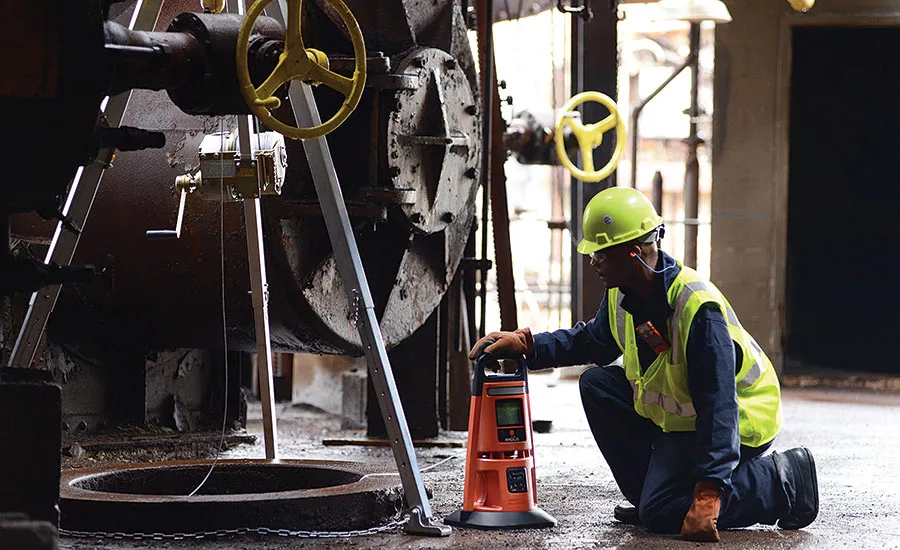
The year 2018 marks the 25th anniversary of the implementation of permit-required confined space entry regulations in the United States. Thousands of entries that take place across the country every day have become, shall we say, standard. We consult the written confined space program, assess the space for potential hazards, and ventilate the atmosphere in the space. We remove any physical hazards, ensure that all lock out and tag out procedures have been implemented, and test the atmosphere prior to entering the space. We assign an attendant to watch over the entry, sign off on the permits and enter the space to perform the necessary work.
Our wireless world
Today, we have surrendered our lives to wireless technology. We use laptop computers with wireless connections to our home and company networks. We have become dependent on cell phones to carry out many of our day-to-day activities. We control our thermostats, our lights and even the locks on our doors wirelessly. The list goes on. We take for granted things in the wireless world that 25 years ago would have seemed impossible, if we could have even imagined them. With the reliance we have on wireless technology in every aspect of our lives, it is easy to expect that it is affecting how we look at worker safety and confined space entries.
Atmospheric testing
The way that we test the atmosphere within a confined space is changing thanks to flexibility offered by wireless technology. Although continuous monitoring of the atmosphere within a confined space has always been considered a best practice, the fact is that it has been difficult and often impractical to implement. While the gas tester or attendant assigned to the entry can monitor the atmosphere inside the entrance of the space with a portable gas monitor, a sampling pump and a piece of tubing or a probe, continuously monitoring the atmosphere throughout the entire space or where the work is being performed is much more challenging.
Wireless mesh technology embedded within the gas monitor in network systems enables instruments to communicate with each other at a peer-to-peer level. Entrants inside the space carrying a gas detector enabled with mesh technology share their readings with the detector stationed with the gas tester or attendant outside the space allowing them to “see” the readings and monitor the atmosphere through each of the entrants’ instruments. The repeating capabilities of instruments in the mesh network let workers go deep within a confined space away from the entrance where they could never be seen directly and communicate atmospheric readings back to the entrance of the space.
The attendant’s role
Wireless technology is changing, or maybe more appropriately stated, expanding the role of the attendant in confined space entry. It has been commonly accepted that one attendant is assigned to monitor the entrance of every confined space. Wireless technology permits one attendant to monitor the activities of multiple confined space entries from a central vantage point. Wireless video cameras can let an attendant view the activities of the workers in multiple entries and the mesh networking of the gas detectors allows one attendant to monitor the atmosphere of multiple confined spaces in just the same way as he/she can see the atmosphere in one confined space through the readings of monitors carried by multiple entrants.
Many question both the practicality and legality of this approach. Technology certainly makes multi-space watching practical, and the legal position is defined clearly in the Occupational Safety and Health Administration (OSHA) confined space entry regulation. 29 CFR 1910.146 defines the attendant in a confined space entry as “an individual stationed outside one or more permit spaces who monitors the authorized entrants and who performs all attendant’s duties assigned in the employer’s permit space program.” The standard further states in 1910.146(d)(6) that “attendants may be assigned to monitor more than one permit space provided the duties described in paragraph (i) of this section can be effectively performed for each permit space that is monitored.”
One attendant for multiple spaces clearly isn’t a new concept, but it is one that the pervasive use of wireless devices enables in a way like never before. If we can wrap our arms around the use of wireless technology in this manner, it represents a tremendous advantage in efficiency and cost over what we consider to be conventional confined space entry procedures today.
ePermitting systems
The confined space entry permit itself will soon be impacted by wireless technology as well. Electronic permitting, or ePermitting systems, are being developed to automate the permit issuing process. An electronic form on a smart device will be accessed at the point of entry and have all the appropriate procedural checklists completed. The gas readings from atmospheric testing with wireless-enabled gas detectors will be transferred to the permit automatically and all entry personnel will sign off on the permit electronically. A wireless system used to assign gas monitors and other traceable tools and equipment to the entrants will also allow the names of the entrants to be automatically recorded on the permit.
The permit will be uploaded to a database where it can be viewed during the entry and stored permanently. The permit will be automatically updated with gas readings from continuous monitoring or periodic testing and as the work progresses or entry conditions change. ePermitting is simply another example of how wireless technology can increase the efficiency and reduce the cost of entering a confined space.
It seems like only yesterday, but it really has been 25 years since we were required to complete that first confined space entry permit. If we continue to embrace wireless technology and the benefits it brings us, maybe those confined space entries tomorrow won’t seem so confined.
Looking for a reprint of this article?
From high-res PDFs to custom plaques, order your copy today!