Respirator Use: How comfort improves safety and productivity
If there is any one thing that creates a win-win with respiratory protection, especially in terms of return on investment, it is comfort. We will discuss how comfort improves safety and productivity, and explore some of the best ways to ensure comfort.
Comfort is viewed by many PPE developers and manufacturers, employers and employees as secondary to safety, but we believe that comfort is safety. The more comfortable your employees are, the more likely they can make good and safe decisions. Or to look at it from the negative perspective, uncomfortable employees are a lot more likely to lose focus and not pay enough attention to their often-dangerous job and surroundings, make bad and unsafe decisions, or sub-consciously violate safety measures and risk harming themselves.
Comfort also has a positive effect on employee morale and productivity because it allows them to operate at their maximum level. Improved productivity allows your company to complete more jobs and ultimately, generate more income.
Here are some key factors to look for in PPE to ensure maximum comfort:
Climate control
Climate control in PPE refers to those PPE items that allow your employees to improve their body temperature and work comfortably. There are many forms of climate control in PPE; with some, their very purpose is climate control (for example air-conditioning devices), while others are general items that can be used to aid with climate control (like coveralls that allow air to flow over the body).
Sufficient climate control is paramount, not only to maximize comfort, but also for safety. When the combined temperature of your body and the environment you are in reaches levels where your body can’t regulate its heat gain though sweating, you can develop heat cramps, which is a mild form of heat-related illness. This is usually accompanied by fatigue, heavy sweating, muscle cramps and thirst. If promptly treated by drinking water and resting in a cool place, further illness can be prevented. If ignored, however, this can develop into heat exhaustion where symptoms can include that of heat cramps plus confusion, nausea or vomiting, headache, dizziness and fainting.
The worst form of heat stress is heat stroke (a type of hyperthermia) where your body may stop sweating, collapse and experience seizure. This is life-threatening and requires immediate medical attention. Effective climate control will assist your body in maintaining a safe and comfortable temperature so that even the mildest forms of heat stress don’t occur.
Also important but not so commonly required is protection from the cold and the associated dangers. Prolonged exposure to cold temperatures can develop into hypothermia, which is also life-threatening, as it can cause your essential organs to fail.
Air-supplied respirators
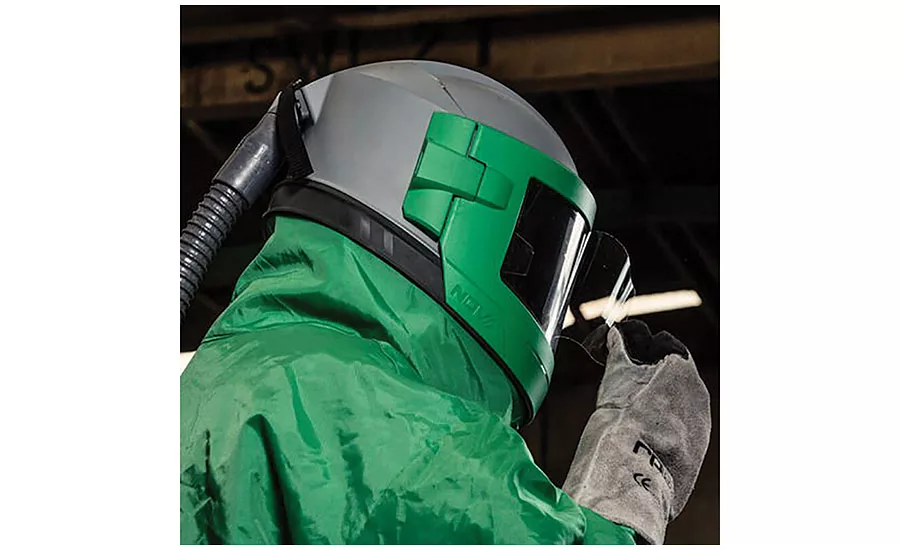
Air-supplied respirators are more comfortable because they supply air to your breathe zone, as opposed to negative pressure respirators that require you to draw air through the filters as you breathe.
Loose-fitting respirators
Loose-fitting respirators are more comfortable than tight-fitting respirators for a number of reasons:
- You don’t have tight straps against your face.
- Air flow can be distributed to a larger area around your face and head, not just directly to your breathe zone.
- They provide superior protection. For example, a full-hood style respirator in a painting environment would cover the neck opening of your paint suit, and paint would not come in contact with your skin.
- A greater range of options are available. For example, in-helmet communication, chemical protection, in-helmet hearing, head and eye protection.
Additional benefits include the ability to wear these respirators with facial hair, and no fit testing is required.
Helmet padding
Helmet padding makes respirators comfortable to wear, as opposed to head suspensions. The foam used in helmet padding eliminates pressure points on your head. It also provides stability, which means the respirator moves with your head.
Weight distribution
A respirator with even weight distribution makes it very comfortable. The rule of thumb: the more contact the respirator has with your head, the less pressure there is on any one point. But note that the placement of these contact points also play a part. A fully padded helmet spreads the weight evenly across your head, minimizing pressure points and neck strain. While these are sometimes heavier than respirators with head suspension, many operators claim that they feel lighter.
Airflow distribution
The distribution of air inside your respirator plays a major role in your overall comfort. Typically, the most comfortable respirators direct the majority of the air over your head to your breathe zone, with channels that distribute a small amount of air over you head to aid with cooling. This type of airflow system stops the air drying out your eyes or nasal passages.
In conclusion, comfort is key to maintaining safety and maximizing productivity. Comfortable respirators are air-supplied and loose-fitting. Climate control, helmet padding, weight distribution and airflow distribution are all factors you should consider to maximize comfort. Some of these are dependent on user preference, so it is a good idea to research your options and try various respirators before choosing your respirator. A great respirator will advance your safety, increase your productivity and protect you for life’s best moments.
Looking for a reprint of this article?
From high-res PDFs to custom plaques, order your copy today!