ISHN logo
search
cart
facebook twitter linkedin youtube
  • Sign In
  • Create Account
  • Sign Out
  • My Account
ISHN logo
  • NEWS
    • Today's News
    • Global Safety News
    • Government Regulations
  • PRODUCTS
    • Product Innovations
    • Featured Products
  • TOPICS
    • Environmental Health and Safety
    • Facility Safety
    • Workplace Health
    • Occupational Safety
    • PPE
    • More Topics
  • CONSTRUCTION
  • TECHNOLOGY
  • COLUMNS
    • Best Practices
    • Dave Johnson: What’s going on
    • Editorial Comments
    • Leading Safety
  • MULTIMEDIA
    • ISHN Podcast
    • Videos
    • Cold Stress Education Quiz
    • Webinars
    • White Papers
  • MORE
    • Buyer's Guide
    • Newsletters
    • Convention Companion
    • Polls
    • Events
    • ISHN Store
    • Sponsor Insights
  • EMAGAZINE
    • eMagazine
    • Archived Issues
    • Contact
    • Advertise
  • JOIN TODAY!
Transportation Safety

Self-driving Uber had six seconds to avoid fatal collision
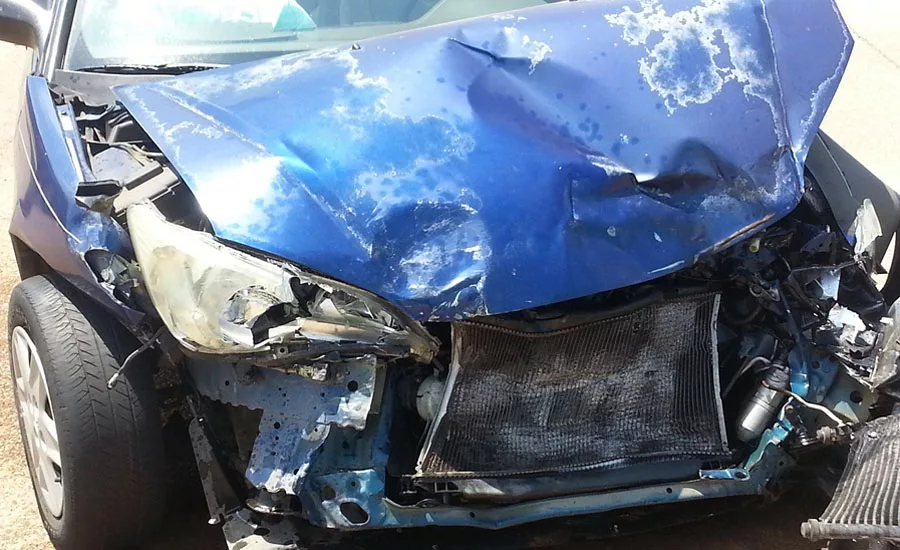
accident
June 1, 2018

The self-driving system software in an Uber test car classified a pedestrian it was about to strike and kill first as an unknown object, then as a vehicle, and finally as a bicycle – whose future path was not certain.

That evaluation was part of the National Transportation Safety Board's (NTSB) preliminary report for its ongoing investigation of a fatal crash involving a pedestrian and an Uber Technologies, Inc., test vehicle in Tempe, Arizona on March 18, 2018.

The modified 2017 Volvo XC90, occupied by one vehicle operator and operating with a self-driving system in computer control mode, claimed the life of the pedestrian. The vehicle operator was not injured.

The NTSB’s preliminary report, which by its nature does not contain probable cause, states the pedestrian was dressed in dark clothing, did not look in the direction of the vehicle until just before impact, and crossed the road in a section not directly illuminated by lighting. The pedestrian was pushing a bicycle that did not have side reflectors and the front and rear reflectors, along with the forward headlamp, were perpendicular to the path of the oncoming vehicle. The pedestrian entered the roadway from a brick median, where signs facing toward the roadway warn pedestrians to use a crosswalk, which is located 360 feet north of the Mill Avenue crash site. The report also notes the pedestrian’s post-accident toxicology test results were positive for methamphetamine and marijuana.

In its report the NTSB said Uber equipped the test vehicle with a developmental, self-driving system, consisting of forward- and side-facing cameras, radars, Light Detection and Ranging, navigation sensors and a computing and data storage unit integrated into the vehicle. The vehicle was factory equipped with several advanced driver assistance functions by the original manufacturer Volvo Cars, including a collision avoidance function with automatic emergency braking as well as functions for detecting driver alertness and road sign information. The Volvo functions are disabled only when the test vehicle is operated in computer control mode.

The report states data obtained from the self-driving system shows the system first registered radar and LIDAR observations of the pedestrian about six seconds before impact, when the vehicle was traveling 43 mph. As the vehicle and pedestrian paths converged, the self-driving system software classified the pedestrian as an unknown object, as a vehicle, and then as a bicycle with varying expectations of future travel path. At 1.3 seconds before impact, the self-driving system determined that emergency braking was needed to mitigate a collision. According to Uber emergency braking maneuvers are not enabled while the vehicle is under computer control to reduce the potential for erratic vehicle behavior. The vehicle operator is relied on to intervene and take action. The system is not designed to alert the operator.

In the report the NTSB said the self-driving system data showed the vehicle operator engaged the steering wheel less than a second before impact and began braking less than a second after impact. The vehicle operator said in an NTSB interview that she had been monitoring the self-driving interface and that while her personal and business phones were in the vehicle neither were in use until after the crash.

All aspects of the self-driving system were operating normally at the time of the crash, and there were no faults or diagnostic messages.

The NTSB continues to gather information on the Uber self-driving system, the vehicle interface, the vehicle operator’s personal and business cell phones, the vehicle operator, the pedestrian and the roadway.

The preliminary report contains no analysis and does not discuss probable cause.  The information in the report is preliminary and subject to change as the NTSB’s ongoing investigation progresses. As such, no conclusions about probable cause should be drawn from the information in the preliminary report.

The preliminary report is available online at https://goo.gl/2C6ZCH.

KEYWORDS: accident investigation traffic accidents traffic safety

Share This Story

Looking for a reprint of this article?
From high-res PDFs to custom plaques, order your copy today!

Recommended Content

JOIN TODAY
to unlock your recommendations.

Already have an account? Sign In

  • forklift safety

    Exploring the latest technologies in forklift safety

    With more staff and more stock in warehousing now more...
    Facility Safety
    By: Josh Cramer
  • welding

    All about welder’s flash or arc eye

    A flash burn is a painful inflammation of the cornea,...
    Environmental Health and Safety
  • dangerous jobs

    The 10 most dangerous jobs in the U.S.

    On-the-job deaths have been rising — hitting the highest...
    Government Safety Regulations
    By: Benita Mehta
Manage My Account
  • eMagazine Subscriptions
  • ISHN Newsletter & Other Newsletter Alerts
  • Online Registration
  • Manage My Preferences
  • Subscription Customer Service

More Videos

Sponsored Content

Sponsored Content is a special paid section where industry companies provide high quality, objective, non-commercial content around topics of interest to the ISHN audience. All Sponsored Content is supplied by the advertising company and any opinions expressed in this article are those of the author and not necessarily reflect the views of ISHN or its parent company, BNP Media. Interested in participating in our Sponsored Content section? Contact your local rep!

close
  • man wearing the the Sundström SR200 Full Face Mask Respirator
    Sponsored byOHD

    5 Fit Testing Mistakes That Could Cost You

  • This image shows Magid AcuSpex polarized blue mirrored safety glasses.
    Sponsored byMagid Glove and Safety

    Construction PPE Guide: What Crews Need for Each Task

  • lone worker in confined space
    Sponsored byAlphasense Ltd.

    GET THE LEAD OUT of your Safety Oxygen Sensors!

Popular Stories

SpaceX 7 launch

OSHA Investigating Fatal Fall at SpaceX Starbase

Worker Impairment

How to Tell When a Co-Worker is Impaired? A Safety Pro’s Challenge

Automated loading dock equipment

After March 2026 Rivian Death, Safety Managers Reassess Loading Dock Systems Under OSHA's Warehouse Emphasis Program

top 10 most dangerous jobs

Poll

Seasonal Readiness

With the federal heat stress prevention rule on the horizon, which area of your safety program needs the most attention?
View Results Poll Archive

Products

Surviving an OSHA Audit A Management Guide, 2nd Edition

Surviving an OSHA Audit A Management Guide, 2nd Edition

See More Products

ISHN Podcasts

Related Articles

  • NTSB launches team to investigate fatal collision of two metro trains in Washington, DC (6/24)

    See More
  • Driver fatigue caused fatal multivehicle collision, says NTSB (9/30)

    See More
  • NTSB determines cause of fatal train/truck collision

    See More

Related Products

See More Products
  • Top Ten Pitfalls in OSHA Recordkeeping and How to Avoid Them

See More Products

Related Directories

  • LineDrive

    LineDrive is a solutions-based sales agency that specializes in People Safety, Facility Safety, and Facility Maintenance & Productivity. We partner with top brands to deliver services and solutions that keep your facility safe and productive. Our services and solutions are free of charge; we simply ask that if we help solve a problem, reduce risk or increase productivity, that you support our partner brands with a purchase via your preferred distributor.
×

Become a Leader in Safety Culture

Build your knowledge with ISHN, covering key safety, health and industrial hygiene news, products, and trends.

JOIN TODAY
  • RESOURCES
    • Advertise
    • Contact Us
    • Directories
    • Manufacturing Division
    • Store
    • Want More
  • SIGN UP TODAY
    • Create Account
    • eMagazine
    • Newsletters
    • Customer Service
    • Manage Preferences
  • SERVICES
    • Marketing Services
    • Reprints
    • Market Research
    • List Rental
    • Survey/Respondent Access
  • STAY CONNECTED
    • LinkedIn
    • Facebook
    • YouTube
    • X (Twitter)
  • PRIVACY
    • PRIVACY POLICY
    • TERMS & CONDITIONS
    • DO NOT SELL MY PERSONAL INFORMATION
    • PRIVACY REQUEST
    • ACCESSIBILITY

Copyright ©2026. All Rights Reserved BNP Media, Inc. and BNP Media II, LLC.

Design, CMS, Hosting & Web Development :: ePublishing