ISHN logo
search
cart
facebook twitter linkedin youtube
  • Sign In
  • Create Account
  • Sign Out
  • My Account
ISHN logo
  • NEWS
    • Today's News
    • Global Safety News
    • Government Regulations
  • PRODUCTS
    • Product Innovations
    • Featured Products
  • TOPICS
    • Environmental Health and Safety
    • Facility Safety
    • Workplace Health
    • Occupational Safety
    • PPE
    • More Topics
  • CONSTRUCTION
  • TECHNOLOGY
  • COLUMNS
    • Best Practices
    • Dave Johnson: What’s going on
    • Editorial Comments
    • Leading Safety
  • MULTIMEDIA
    • ISHN Podcast
    • Videos
    • Cold Stress Education Quiz
    • Webinars
    • White Papers
  • MORE
    • Buyer's Guide
    • Newsletters
    • Convention Companion
    • Polls
    • Events
    • ISHN Store
    • Sponsor Insights
  • EMAGAZINE
    • eMagazine
    • Archived Issues
    • Contact
    • Advertise
  • JOIN TODAY!
Occupational SafetyEnvironmental Health and SafetyPPERisk ManagementConstruction Industry Safety and Health

Designing a multi-hazard FR PPE program for petroleum refineries

Expect the Unexpected
multi-hazard FR PPE program for petroleum refineries
September 18, 2018

Petroleum refineries are laden with various thermal and chemical hazards. Adequate personal protective equipment (PPE) is instrumental in providing a safe work environment for employees to complete the task at hand. When designing an effective flame-resistant (FR) PPE program for refinery workers, it is critical for safety managers to:

  • Know the multiple hazards at hand and their specific FR/AR requirements;
  • Understand the differences in protection among various FR fabrics;
  • Account for environmental factors;
  • Consider comfort and style.

Know the requirements

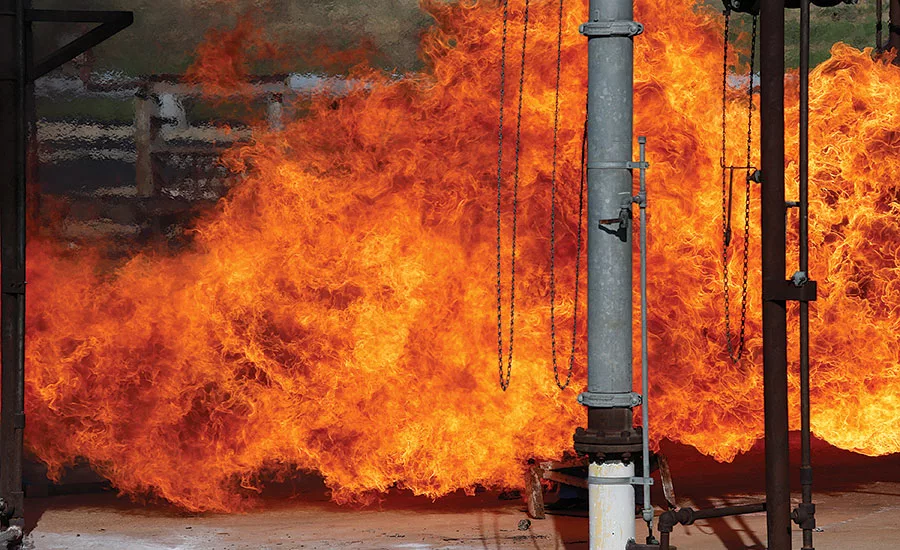
The most prevalent risk at refineries is unexpected flash fire. With extensive vapors potentially present, refineries often require anyone on the property from fence line to fence line to wear FR apparel certified to NFPA 2112.

Beyond flash fire, refinery workers face additional thermal hazards. The risk of momentary arc flash is present for electricians who work on energized equipment, requiring FR clothing that provides the proper arc rating. Molten metal welding slag and spark hazards are a concern for welders working on iron pipes. The potential for primary chemical exposure in certain tasks may require chemical-specific PPE atop FR apparel. Even simply transporting chemicals can pose the danger for a minimal inadvertent chemical splash. Moreover, poor visibility poses hazards in busy, crowded work environments, increasing the need for FR high visibility garments.

OSHA regulation, 29CFR 1910.132, also known as the PPE regulation, requires proper hazard assessment and PPE selection with availability in workplaces where any thermal or chemical hazards or mechanical irritants are present. Due to the various hazards present in petroleum refineries, safety managers must select FR apparel with multi-hazard protection, and therefore, meet each respective consensus standard. For those exposed to flash fire and arc flash, both NFPA 2112 and NFPA 70E standards must be met. For low visibility work environments, FR garments should meet ANSI 107 requirements. 

Certain fabrics, like branded cotton blends, work quadruple duty to protect against flash fire, arc flash, welding slag and low visibility hazards in a single FR garment. Multi-hazard protection fabrics reduce the need for certain task-based PPE, saving time between tasks and alleviating worry that employees are adequately protected. Workers facing primary chemical exposure may require additional layers of PPE, though recent advancements in technology have also brought new breathable fabric innovations to market that offer protection against both flash fire and inadvertent chemical splash in one garment.

Differences in protection

With myriad FR fabrics available from a variety of manufacturers, it is important to recognize the significant distinctions in company background and textile performance. FR fabric manufacturers use different scientific methods to integrate protective properties into an FR garment—making brand reputation a key differentiator.

While FR qualities are not visible, safety managers can begin to verify FR performance with NFPA 2112 certification. However, all fabrics with less than 50 percent body burn can qualify for this particular certification. It is imperative to learn the actual body burn percentage at three seconds through the ASTM F1930 test to further analyze the quality of FR protection.

Moreover, not all garments designed to protect against flash fire will also protect against arc flash and molten metal welding hazards. Knowing the versatility of each fabric, such as branded cotton blends, is key to selecting the most effective and appropriate FR apparel.

Account for environmental factors

Weather must also be considered when creating a multi-hazardous FR program. Oil refineries are often located in areas of extreme weather to which PPE must be suited. Light-weight, moisture-wicking fabrics are critical in the hot, humid environments of Houston and Louisiana, while warm yet breathable constructions are a must during Midwest winters.

Consider comfort and style

Advancements in FR fabrics have allowed workers who face multiple thermal hazards to be at once protected, comfortable and even stylish on the job. Street fashion-inspired FR apparel, including stretch denim jeans and lightweight knits, now enables workers to go straight from work to dinner without the need to change clothes.

Traditional coveralls are being replaced with a variety of shirt and pant options, and employees are benefiting from the change. Workers can easily wear one set of versatile FR clothing for their day, allowing them to be more comfortable and productive through the various service provider programs.

By the very nature of the job, refinery employees require protection against a range of thermal and chemical hazards. Through educated fabric selection for everyday multi-hazard PPE, workers can complete the task at hand comfortably, stylishly, and most importantly, safely.

KEYWORDS: arc blast Arc flash flame resistant FR clothing FR protection NFPA standards

Share This Story

Looking for a reprint of this article?
From high-res PDFs to custom plaques, order your copy today!

Recommended Content

JOIN TODAY
to unlock your recommendations.

Already have an account? Sign In

  • forklift safety

    Exploring the latest technologies in forklift safety

    With more staff and more stock in warehousing now more...
    Facility Safety
    By: Josh Cramer
  • welding

    All about welder’s flash or arc eye

    A flash burn is a painful inflammation of the cornea,...
    Environmental Health and Safety
  • dangerous jobs

    The 10 most dangerous jobs in the U.S.

    On-the-job deaths have been rising — hitting the highest...
    Transportation Safety
    By: Benita Mehta
Manage My Account
  • eMagazine Subscriptions
  • ISHN Newsletter & Other Newsletter Alerts
  • Online Registration
  • Manage My Preferences
  • Subscription Customer Service

More Videos

Sponsored Content

Sponsored Content is a special paid section where industry companies provide high quality, objective, non-commercial content around topics of interest to the ISHN audience. All Sponsored Content is supplied by the advertising company and any opinions expressed in this article are those of the author and not necessarily reflect the views of ISHN or its parent company, BNP Media. Interested in participating in our Sponsored Content section? Contact your local rep!

close
  • man wearing the the Sundström SR200 Full Face Mask Respirator
    Sponsored byOHD

    5 Fit Testing Mistakes That Could Cost You

  • This image shows Magid AcuSpex polarized blue mirrored safety glasses.
    Sponsored byMagid Glove and Safety

    Construction PPE Guide: What Crews Need for Each Task

  • lone worker in confined space
    Sponsored byAlphasense Ltd.

    GET THE LEAD OUT of your Safety Oxygen Sensors!

Popular Stories

SpaceX 7 launch

OSHA Investigating Fatal Fall at SpaceX Starbase

Worker Impairment

How to Tell When a Co-Worker is Impaired? A Safety Pro’s Challenge

Automated loading dock equipment

After March 2026 Rivian Death, Safety Managers Reassess Loading Dock Systems Under OSHA's Warehouse Emphasis Program

top 10 most dangerous jobs

Poll

Seasonal Readiness

With the federal heat stress prevention rule on the horizon, which area of your safety program needs the most attention?
View Results Poll Archive

Products

Surviving an OSHA Audit A Management Guide, 2nd Edition

Surviving an OSHA Audit A Management Guide, 2nd Edition

See More Products

ISHN Podcasts

Related Articles

  • Amendments proposed to air emissions regulations for petroleum refineries (12/18)

    See More
  • EPA proposes to reduce air toxics from petroleum refineries by 2,250 tons per year (11/3)

    See More
  • Multiple threats: Multi-hazard FR fabrics

    See More

Related Directories

  • Bulwark FR

    When real lives are on the line and corporate reputations are at stake you can turn to Bulwark® Protection. We’re the PPE powerhouse that surrounds you completely. We balance the demand for FR and PPE that looks as good as it protects. We expand your knowledge in all directions with the latest information, advice and guidance.
  • e-Hazard

    E-Hazard is dedicated to building an electrical safety culture with you. Our electrical engineering services and training will prepare your team for any electrical safety needs or concerns. E-Hazard can help with electrical training, arc flash studies, electrical audits, electrical safety programs, LOTO, infrared scanning, NFPA 70B, consulting and much more.
×

Become a Leader in Safety Culture

Build your knowledge with ISHN, covering key safety, health and industrial hygiene news, products, and trends.

JOIN TODAY
  • RESOURCES
    • Advertise
    • Contact Us
    • Directories
    • Manufacturing Division
    • Store
    • Want More
  • SIGN UP TODAY
    • Create Account
    • eMagazine
    • Newsletters
    • Customer Service
    • Manage Preferences
  • SERVICES
    • Marketing Services
    • Reprints
    • Market Research
    • List Rental
    • Survey/Respondent Access
  • STAY CONNECTED
    • LinkedIn
    • Facebook
    • YouTube
    • X (Twitter)
  • PRIVACY
    • PRIVACY POLICY
    • TERMS & CONDITIONS
    • DO NOT SELL MY PERSONAL INFORMATION
    • PRIVACY REQUEST
    • ACCESSIBILITY

Copyright ©2026. All Rights Reserved BNP Media, Inc. and BNP Media II, LLC.

Design, CMS, Hosting & Web Development :: ePublishing