ISHN logo
search
cart
facebook twitter linkedin youtube
  • Sign In
  • Create Account
  • Sign Out
  • My Account
ISHN logo
  • NEWS
    • Today's News
    • Global Safety News
    • Government Regulations
  • PRODUCTS
    • Product Innovations
    • Featured Products
  • TOPICS
    • Environmental Health and Safety
    • Facility Safety
    • Workplace Health
    • Occupational Safety
    • PPE
    • More Topics
  • CONSTRUCTION
  • TECHNOLOGY
  • COLUMNS
    • Best Practices
    • Dave Johnson: What’s going on
    • Editorial Comments
    • Leading Safety
  • MULTIMEDIA
    • ISHN Podcast
    • Videos
    • Cold Stress Education Quiz
    • Webinars
    • White Papers
  • MORE
    • Buyer's Guide
    • Newsletters
    • Convention Companion
    • Polls
    • Events
    • ISHN Store
    • Sponsor Insights
  • EMAGAZINE
    • eMagazine
    • Archived Issues
    • Contact
    • Advertise
  • JOIN TODAY!
Occupational SafetyEnvironmental Health and SafetySafety TechnologyWorkplace Health

Safety excellence requires a deep dive into goal-setting

You need more than lip service

By Cary Usrey
Safety excellence planning
March 26, 2019

Safety excellence is often whispered in hushed tones, akin to the search for the Holy Grail. Everyone seeks it, and many make finding it their life’s quest. But what is ‘it’?

Many of those asked simply spout the clichéd line of “You’ll know it when you see it.” Others will proffer the typical “zero injury=safety excellence” mantra. Simply put, safety excellence is producing work safely while concurrently promoting a continuous improvement approach within a learning organization.

Safety excellence must be defined in a comprehensive view that encompasses the vision of what is desired along with the strategy, plan, and budget necessary to fulfill the ideal. The vision is the future-state desired result, while the strategy, plan, and budget actually address how to achieve it. Take this vision statement for example:

“Our vision is to proactively evaluate our risk in order to prevent any harm to our employees.”

While succinct, it can be broken down into several components:

  • It clarifies a direction of change
  • It motivates action in the right direction
  • It helps to align people to a common purpose

Don’t dream or hope

The vision is simply a desire compressed into a broad statement. Without direction and action, it is no more than a dream or a hope. The strategy, plan, and budget help to define how the vision is to be achieved in a practical manner. This can be done by defining the process and measurement criteria that help to maintain momentum and determine if an organization is on the right track. This encompasses everything from building a team to drive the process down to the minutiae of procedural details.

Most importantly, the strategy and plan must define, by role, the responsibilities within the process so that everyone understands the part they play in the program’s overall success.

Beyond the rally cry

The next step in the safety excellence journey involves understanding that safety excellence requires sustained effort. This can be a hard pill to swallow. Many organizations create a vision statement to rally behind and don’t go much further. But safety excellence requires activity – something tangible and real that is done to realize a result. Safety excellence cannot be achieved by doing nothing more than crafting a vision statement.

Measuring excellence

An additional step of achieving safety excellence is defining how it is to be measured. Use proactive or leading indicators. Injury rates or lagging indicators are necessary, but they do not measure work done safely – they simply measure the avoidance of injury. Unsafe work can (and often does) yield outcomes where no injury occurs. Lagging indicators should never solely be used to define safety excellence. Safety excellence cannot exist with high injury rates, but low injury rates alone do not equate to safety excellence.

Appearance-based safety

A collection of leading indicators is useful and proactive, but emphasis must be placed on the conversation and communication that it elicits. This is how learnings can be realized and shared. Companies who ignore this step often fall prey to the fallacy of appearance-based safety – the illusion that everything is perfect (or needs to always be perfect) when in reality, opportunities for improvement abound. When perfection is the goal – whether implied or confessed - managing the metric instead of improving the overall process is the outcome. 

As data is collected, safety excellence requires action on that data. Consider the task of weight loss. No matter how often weight is measured, nothing will change unless there is a strategy and plan that centers on weight loss efforts. Anyone who has tried to lose weight without a plan knows hope is not a strategy. Increasing measurement frequency is not a plan. Learning-based actions lead to positive and sustainable change.

Aligning safety & productivity

Can the organization align the pillars of productivity, cost, and schedule with what is often a conflicting pillar of safety? Will safety be a tenet that is built into the foundation or will it be seen as a competing initiative that can be circumvented or ignored in order to achieve business goals that are viewed as higher priorities?

If the answer to either of these questions is negative, then the safety excellence journey is no more than lip service, relegated to a flavor-of-the-day initiative that will be eclipsed by the next marketing gimmick proposed down the line. This is the most crucial step to build safety excellence. Unfortunately, it is often the least addressed when a safety excellence journey begins.

Here’s an outline that provides the pathway to safety excellence:

  • Define safety excellence
  • Develop a vision-strategy-plan to achieve safety excellence
  • Incorporate activities and actions to build and sustain safety excellence
  • Define how safety excellence is to be measured
  • Integrate methodology to study, assess, and act on data collected
  • Align all business functions to support the safety excellence effort
  • Develop a company culture that allows learning to take place and improvement to be promoted
KEYWORDS: mobile apps safety culture safety excellence safety goals technology

Share This Story

Looking for a reprint of this article?
From high-res PDFs to custom plaques, order your copy today!

Cary Usrey has been an Implementation Manager at Predictive Solutions since March 2007. In this role, Cary is responsible for implementing training solutions and best practices for customers seeking to prevent worker injuries and reduce potential liabilities. He coaches customers through an assessment, goal-setting, and goal measurement process that is designed to maximize safety improvement and widespread organizational engagement, from the field to leadership. Cary started his career in the U.S. Navy's Nuclear Power Program.

After leaving the Navy, he served as the Environmental, Health and Safety Compliance Director at Adirondack Resource Recovery Associates, a waste-to-energy power plant in upstate New York, where he was employed for over twelve years. Following this, Cary took a position with Turner Construction, where he served as the Business Unit Safety Director for the upstate New York office for approximately three years. Cary has graduated with his Associate's Degree in Occupational Safety and Health from Trinidad State Junior College in Colorado, is a member of the Central FL chapter of the ASSE, and has served on the Board of Directors for the VPPPA (Region II).

Email Cary at cusrey@predictivesolutions.com.

Recommended Content

JOIN TODAY
to unlock your recommendations.

Already have an account? Sign In

  • forklift safety

    Exploring the latest technologies in forklift safety

    With more staff and more stock in warehousing now more...
    Facility Safety
    By: Josh Cramer
  • welding

    All about welder’s flash or arc eye

    A flash burn is a painful inflammation of the cornea,...
    Environmental Health and Safety
  • dangerous jobs

    The 10 most dangerous jobs in the U.S.

    On-the-job deaths have been rising — hitting the highest...
    Government Safety Regulations
    By: Benita Mehta
Manage My Account
  • eMagazine Subscriptions
  • ISHN Newsletter & Other Newsletter Alerts
  • Online Registration
  • Manage My Preferences
  • Subscription Customer Service

More Videos

Sponsored Content

Sponsored Content is a special paid section where industry companies provide high quality, objective, non-commercial content around topics of interest to the ISHN audience. All Sponsored Content is supplied by the advertising company and any opinions expressed in this article are those of the author and not necessarily reflect the views of ISHN or its parent company, BNP Media. Interested in participating in our Sponsored Content section? Contact your local rep!

close
  • man wearing the the Sundström SR200 Full Face Mask Respirator
    Sponsored byOHD

    5 Fit Testing Mistakes That Could Cost You

  • This image shows Magid AcuSpex polarized blue mirrored safety glasses.
    Sponsored byMagid Glove and Safety

    Construction PPE Guide: What Crews Need for Each Task

  • lone worker in confined space
    Sponsored byAlphasense Ltd.

    GET THE LEAD OUT of your Safety Oxygen Sensors!

Popular Stories

SpaceX 7 launch

OSHA Investigating Fatal Fall at SpaceX Starbase

dust explosion

Tennessee OSHA Issues Record $3.1M Fine After Deadly Explosion at Munitions Plant

Worker Impairment

How to Tell When a Co-Worker is Impaired? A Safety Pro’s Challenge

top 10 most dangerous jobs

Poll

Seasonal Readiness

With the federal heat stress prevention rule on the horizon, which area of your safety program needs the most attention?
View Results Poll Archive

Products

Surviving an OSHA Audit A Management Guide, 2nd Edition

Surviving an OSHA Audit A Management Guide, 2nd Edition

See More Products

ISHN Podcasts

Related Articles

  • How deep a dive into climate change?

    See More
  • Identify holes in your culture – a “deep dive”

    See More
  • Behavior doesn’t happen in a vacuum

    See More

Related Products

See More Products
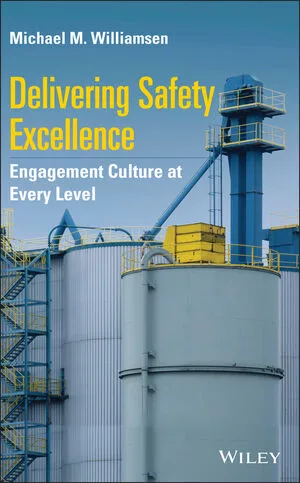
  • 1119772133.jpg

    Delivering Safety Excellence: Engagement Culture at Every Level

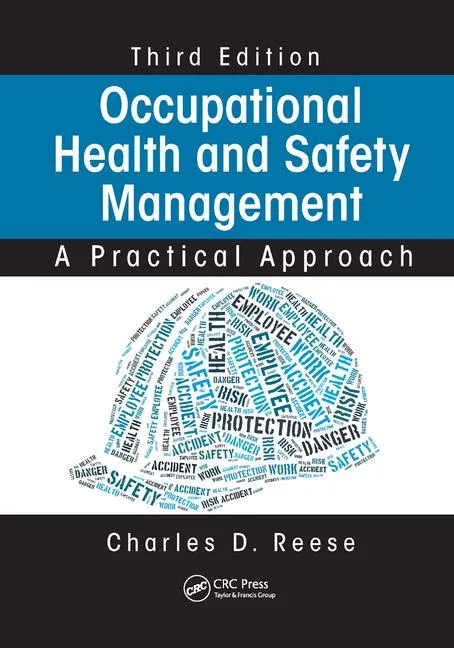
  • 9781138749573.jpg

    Occupational Health and Safety Management: A Practical Approach, Third Edition

  • 9780367861148.jpg

    LEAD Safety A Practical Handbook for Frontline Supervisors and Safety Practitioners

See More Products

Related Directories

  • SAS Safety Corp.

    SAS Safety Corp. offers head-to-toe safety products and solutions for respiratory, hearing, eyes, hands, body, face, first-aid kits, absorbents, spill containment, and other crucial safety accessories. Our goal is to provide safety managers, wholesalers, and DIY’ers with simple solutions for determining safety needs and solutions.
  • The Safety Knife Co. LLC

    The Safety Knife Company has developed a quality range of safety knives for all industries. These knives have no exposed blades and only cut cardboard deep, protecting employees against lacerations as well as product.
×

Become a Leader in Safety Culture

Build your knowledge with ISHN, covering key safety, health and industrial hygiene news, products, and trends.

JOIN TODAY
  • RESOURCES
    • Advertise
    • Contact Us
    • Directories
    • Manufacturing Division
    • Store
    • Want More
  • SIGN UP TODAY
    • Create Account
    • eMagazine
    • Newsletters
    • Customer Service
    • Manage Preferences
  • SERVICES
    • Marketing Services
    • Reprints
    • Market Research
    • List Rental
    • Survey/Respondent Access
  • STAY CONNECTED
    • LinkedIn
    • Facebook
    • YouTube
    • X (Twitter)
  • PRIVACY
    • PRIVACY POLICY
    • TERMS & CONDITIONS
    • DO NOT SELL MY PERSONAL INFORMATION
    • PRIVACY REQUEST
    • ACCESSIBILITY

Copyright ©2026. All Rights Reserved BNP Media, Inc. and BNP Media II, LLC.

Design, CMS, Hosting & Web Development :: ePublishing