Wearables align injury data with fatigue data to determine risk
Wake up to fatigue risks
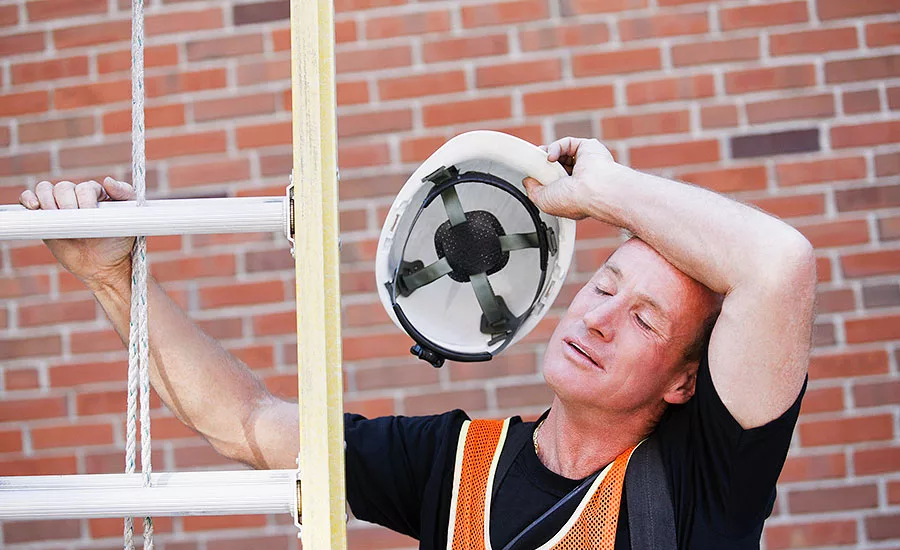
Over the past few months, I, along with some fellow Cority employees, had the opportunity to participate in a pilot with Fatigue Science to measure our sleep and fatigue levels. Fatigue Science combines wearable tech with biomathematical science from the U.S. Army Research Lab to offer unprecedented insight into sleep and fatigue. The purpose of the pilot was two-fold:
- Help employees understand and measure how fatigue impacts our lives
- Learn how to integrate data from the Fatigue Science Readibands into Cority’s Analytics program
Fatigues is a common injury factor
The latter provides our clients with a proof of concept where they will be able to assess whether fatigue elevates the risk of injury by lining up injury data with fatigue data. This is especially relevant for companies who are piloting and/or using wearables.
"In industrial environments – think of fields such as mining, construction, and transportation – studies have found that nearly half of all safety incidents have worker fatigue as a contributing causal factor," said Robert Higdon, director of corporate development at Fatigue Science. "With Readiband, we're finally enabling individual workers to visualize their own fatigue levels for their day ahead, so they can see fatigue before it strikes. Better yet, our Readiband app guides workers with specific tactics for sustainably reducing their fatigue levels in the future."
Widespread sleep deprivation
According to the Centers for Disease Control, more than one-third of Americans don't get enough sleep. Fatigue is officially a health problem. Participating in the Fatigue Science pilot provided our team members with the opportunity to really understand and visualize the impact sleeplessness has on our everyday lives.
"A lot of apps can show you how much you sleep," Higdon added, "but what does your sleep really mean for your well-being and safety on the job? How can sleep data actually help you do something to improve the situation? We believe in connecting the dots: showing each worker the scientific impact that their sleep is having on their daily, and even hourly, fatigue levels. With such data, it's possible to make better and safer choices, both on and off the job. At work, that means consciously being more cautious, well in advance of when fatigue is predicted to strike. At home, it means being motivated to improve sleep habits in a way that's actually sustainable – with a goal of seeing your fatigue levels go down and stay down over time."
Predicting drowsiness
Cority’s pilot participants were provided with a wristband (very similar to a FitBit) to wear over a 90-day period. The wristband connected to a smartphone and through a proprietary app, which enabled us to monitor our results.
What I found to be unique about the Readiband was its ability to predict and illustrate when I would become drowsy. Understanding the details about the quality of my sleep and sleep habits allowed me to make some positive changes to my bedtime routine – not always easy with a preschooler! It was enlightening to understand how time awake and nighttime awakenings impacted the overall reduction in sleep time and then correlate this to the effect of a good night’s sleep on my productivity.
Self-awareness is critical
“It wasn’t until this program that I realized that I get less sleep than I thought I did,” commented one of my colleagues. And many others felt the same. Additional feedback from participants stated:
“I enjoyed the gamification aspect which encouraged employees to meet a high Alertness Score as it encouraged positive change on my behalf.”
"We've all heard the saying 'what gets measured gets managed,' and I found this to be the case even with my sleep habits. With data literally at my fingertips, I was able to take proactive measures to reduce my fatigue level and increase my Alertness Score"
“Every company should have this program! Not only can it help in 24/7 industries like construction and manufacturing, but it even helps in office settings. Imagine understanding that your company has a collective dip in energy levels at around 2-3pm? You can plan your work schedules accordingly.”
Pilot results
As an organization, Cority’s results were reflective of a typical technology company. The pilot covered over 1,530 nights of combined sleep with 19,830 hours of alertness data analyzed. While the opportunity for workplace injury and error is quite low for a technology company, you can quickly imagine the increase in risk for manufacturing, oil and gas, or other high-risk sectors that rely on alert people.
Moreover, fatigue has also been shown to quantifiably lower productivity in office environments, so an opportunity to measurably reduce fatigue poses substantial benefits even for non-safety sensitive workforces.
That’s why we’ve been working to combine third-party data with our customers’ safety data in order to develop analytics models best suited to their industry. (NOTE: Cority removes all personally identifiable information prior to the data being imported into the model). The layering of different sources of information allows Cority to significantly add value to its algorithms – extending their accuracy and furthering the value of the solution for customers. This is data that cannot and would not otherwise be captured through traditional means, like inspections, surveys, or audits, and at the same time be free from subjectivity and human data entry issues of accuracy and completeness.
Impact of fatigue on driving
With our integrations, we’re moving beyond just observing fatigue data. Knowing that our customers prioritize their safety programs differently, we’ve integrated in-vehicle telemetry data through a second pilot in order to understand the impact that fatigue has on driving behaviors such as harsh breaking and rapid acceleration. From there, we intend to create an end-to-end picture of the impact of fatigue on concrete safety outcomes such as the likelihood of an employee being injured on the job.
It’s truly exciting – and pioneering – work that we are doing. The driving force behind our investments in this area is that we share the same goal all EHSQ professionals have: ensuring every employee returns home safely every day.
Looking for a reprint of this article?
From high-res PDFs to custom plaques, order your copy today!