Three imperative acclimatization steps for heat-related illness prevention
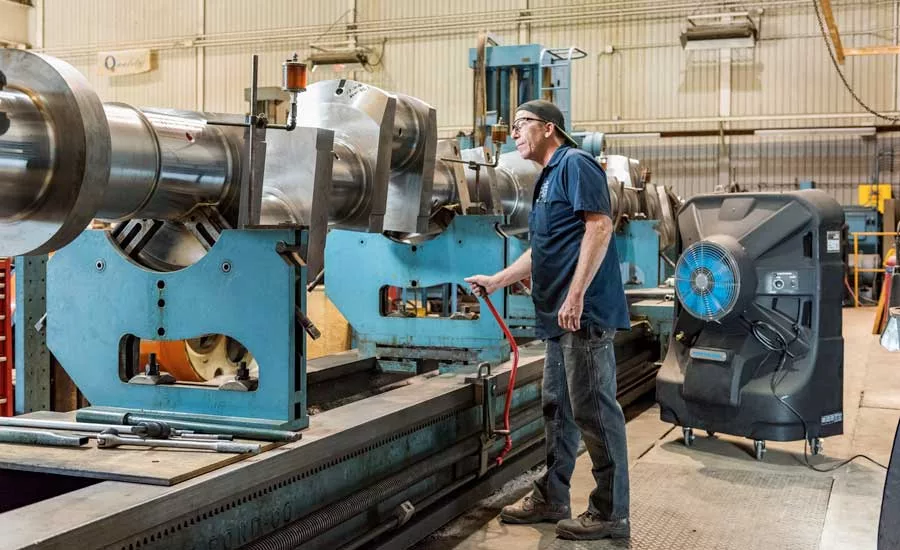
Every year, thousands of workers are exposed to heat on the job created by environmental conditions, clothing and workload. This heat exposure can lead to costly mistakes, time lost due to illness and even death in extreme heat illness situations. Government organizations, like OSHA, implement guidelines and regulations to ensure that heat-related prevention practices are in place to protect these workers. Ultimately, however, heat-related illness prevention is most effective when management commits to identifying and reducing exposure to heat hazards, which can range from lack of air movement to sources of radiant heat and temperature.
To spur management commitment and involvement relative to this safety issue, looking at OSHA guidelines is a good place to initiate an assessment of the changes necessary in an organization to eliminate harmful heat stress and protect its workers. Not only will it help define a benchmark for the fundamental approach to meet minimum guidelines, it will also help generate a proactive mind set for adopting best practices.
Defining heat stress
OSHA emphasizes that the objective of any heat index is to determine the risk of heat-related illness, outline what actions are needed and prevent a worker’s Core Body Temperature (CBT) from rising excessively. A worker’s CBT should not exceed 100.4° F, and a CBT of 102.2° F should lead to termination of exposure. When a CBT exceeds these levels, the rate of impaired judgement and errors increases, as does the risk of illness from heat stress.
One of the ways management can help to regulate a worker’s CBT is by allowing them to acclimate to their environment. While this may require additional staffing or precautions, ensuring workers have the chance to physiologically adapt to a hot environment can protect them from heat-related illness and injury and prevent costly mistakes.
Establishing action limits and threshold limit values
This principal of acclimatization has been championed by the American Conference on Governmental Industrial Hygienists (ACGIH®), a scientific association of leading industrial hygienists and experts dedicated to promoting health and safety within the workplace. Recognized by OSHA as a go-to resource for worker safety regulations, ACGIH has established parameters that outline the limits needed to maintain the core body temperature to within one degree Celsius of normal (37 degrees Celsius or 98.6 Fahrenheit for most people) based on two values. The Threshold Limit Value (TLV®) is the temperature at which there is a heat hazard present for an acclimatized worker, whereas the Action Limit (AL) is the temperature at which there is a heat hazard present for someone who is not acclimated.
ACGIH provides guidance for maintaining awareness when workers may be exposed to heat stress above the AL or TLV so that preventive actions can be taken. Once these limits are reached, either through environmental factors or workload, controls are necessary to prevent heat-related illness. These controls could include work/rest regimens, shade and hydration. How do you know which controls should be employed or when? Consider the three levels of defense that are defined as engineering controls, administrative controls and Personal Protective Equipment (PPE).
Level 1 – engineering controls
Engineering controls are strategies designed to protect workers by removing hazardous conditions or placing a barrier between the worker and the hazard. Engineering controls that help reduce heat stress include everything from large scale efforts such as installing reflective shields to block radiant heat, to easily implementable tools like providing cooling fans or access to shade. When considering fan options as a resource for acclimating workers to their surroundings more gradually, it is important to circulate cool air as opposed to moving around stagnant air, as most standard oscillating fans do. Assuming the installation of traditional air-conditioning is cost-prohibitive and inefficient, consider a portable evaporative cooler as a solution. Evaporative coolers, which come in a variety of sizes, utilize ambient air flow (making them conducive to open doors) and water to actually cool the air they circulate without emitting mist or spray. Smaller models are easily moved and can spot cool workers throughout facilities, but can be especially helpful near particularly hot areas (e.g., molding machinery or coating ovens). Larger portable evaporative coolers – which are mobile, but tend to be more stationary – are typically designed to cool people in spaces exceeding 5,000 square feet, like those on a manufacturing assembly line. With the broad range of options, evaporative coolers can be an effective engineering control in a variety of challenging and difficult-to-cool spaces.
Level 2 – administrative controls
When engineering controls are not enough to keep worker exposure below the AL or TLV, administrative controls are another way to prevent a worker’s CBT from rising. Administrative controls are changes in work procedures. This includes adapting worker activity to account for high heat conditions, whether that means scheduling work earlier or later in the day or implementing work/rest schedules. Acclimating workers is a necessary process even if it seems counterintuitive to generating productivity (e.g., a reduced work shift during excessive heat). An effective heat acclimatization program gradually increases an unacclimated worker’s exposure to heat over a 7- to 14-day period.By building up tolerance to the heat, this process can help ensure safety and increase productivity by reducing mistakes made as a result of heat fatigue. Keep in mind that acclimatized workers that take time off or are not exposed to heat stress for a week or more may need two to three days to effectively reacclimate.
Level 3 – PPE
If engineering and administrative controls are not enough, PPE is a way to provide supplemental protection as a last line of defense. PPE is defined by OSHA as “equipment worn to minimize exposure to hazards that cause serious workplace injuries and illnesses.” PPE that reduces or combats heat stress can include items such as fire proximity suits, water-cooled garments or neck bands, air-cooled garments and light-colored clothing. Appropriate apparel is crucial to protect workers from their environment, but what is deemed “appropriate” depends on the specific working conditions. For example, workers near ovens or heat-emitting machinery may need to wear long sleeves or even full-body suits to protect themselves. However, assembly line workers may have a more relaxed version of appropriate apparel. Even more so, workers in outdoor environments have the additional factor of protecting their skin, so they may opt for light colors and breathable, long sleeve options to avoid trapping excess heat. Choosing the right clothing is a key factor in regulating temperature while working in a physical role, much like exercising.
Conclusion
While certain environmental conditions may be unavoidable in the workplace, there are controls that you can put into place to help workers acclimate and stay safe in heat-related conditions. Since there is not a one-size-fits-all solution, it is crucial to evaluate your particular environment to customize your safety plan. Safety and acclimatization procedures are necessary and beneficial, and they can lead to safer employees, less mistakes and more productivity.
Looking for a reprint of this article?
From high-res PDFs to custom plaques, order your copy today!