ISHN logo
search
cart
facebook twitter linkedin youtube
  • Sign In
  • Create Account
  • Sign Out
  • My Account
ISHN logo
  • NEWS
    • Today's News
    • Global Safety News
    • Government Regulations
  • PRODUCTS
    • Product Innovations
    • Featured Products
  • TOPICS
    • Environmental Health and Safety
    • Facility Safety
    • Workplace Health
    • Occupational Safety
    • PPE
    • More Topics
  • CONSTRUCTION
  • TECHNOLOGY
  • COLUMNS
    • Best Practices
    • Dave Johnson: What’s going on
    • Editorial Comments
    • Leading Safety
  • MULTIMEDIA
    • ISHN Podcast
    • Videos
    • Cold Stress Education Quiz
    • Webinars
    • White Papers
  • MORE
    • Buyer's Guide
    • Newsletters
    • Convention Companion
    • Polls
    • Events
    • ISHN Store
    • Sponsor Insights
  • EMAGAZINE
    • eMagazine
    • Archived Issues
    • Contact
    • Advertise
  • JOIN TODAY!
Occupational SafetyWorkplace HealthWorkplace Training Strategies

Proactive vigilance key to preventing heat-related illness and injuries
By Terry DeRise
Portacool cooling
June 4, 2020

According to the Occupational Safety and Health Association (OSHA), thousands of workers become sick from occupational heat exposure each year.  However, heat-related illnesses are preventable. “The best way to prevent heat-related illness is to make the work environment cooler,” OSHA states.

It is important to understand how the body handles heat and hot conditions when evaluating the potential for employee heat-related illnesses. As temperatures rise, the body releases heat more slowly. As humidity increases, sweat evaporation decreases and stagnant air makes sweat evaporation even more difficult.  When these three factors are combined, you have a higher potential for health and safety concerns. The chances for accidents due to sweaty hands, dizziness and decreased mental alertness go up considerably.

Additionally, increased body temperature and discomfort can lead to irritability and frustration that could lend to more careless behavior.  This puts the worker and the work environment at risk when one is not properly prepared for the heat. 

Given that most heat-related health problems can be prevented, or at least the risk of developing them can be reduced, taking a proactive approach gives two-fold benefits. You will effectively ensure worker safety and in-turn, productivity. Both will positively benefit the company’s bottom dollar. 

Prevention – preventative steps on the jobsite

  1. Acclimating workers is a necessary process even if it seems counterintuitive to generating productivity (e.g., a reduced work shift during excessive heat). An effective heat acclimatization program gradually increases an unacclimated worker’s exposure to heat over a 7- to 14-day period. 
  2. Make sure to have plenty of fluids on hand. Workers need plenty of water throughout the day (approximately every 15 minutes) in hot conditions and shouldn’t wait until they feel thirsty. 
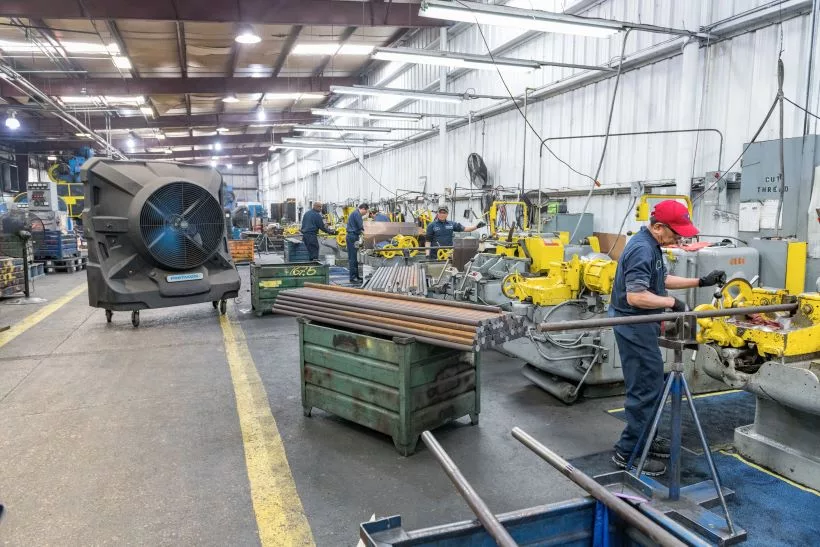
  3. Schedule rest breaks to help your body recover. OSHA advises workers to rest in the shade or in air-conditioning when possible to help cool down. Utilize or add cooling stations on worksites when possible with tools such as a portable evaporative cooler that work on a standard 110-V electricity supply.
  4. Stay aware of conditions with your phone or tablet, especially if working outdoors.  Working in full sunlight can increase heat index* values by 15°F. OSHA has an app (download info here) to help calculate the heat index for the worksite and helps to identify the risk level. 
  5. Be sure workers are informed by reviewing the heat illness signs and symptoms.  Training is this area is worthwhile.
  6. Use a buddy system.  Encourage workers to monitor each other for signs and symptoms of heat-related illness.

(*For more information about safety while working in the heat, see OSHA's heat illness webpage and online guidance page for employers that outlines how to use the heat index to protect workers.)

KEYWORDS: heat stress illness

Share This Story

Looking for a reprint of this article?
From high-res PDFs to custom plaques, order your copy today!

Terry DeRise is the Manufacturing Director for Portacool, LLC, where he oversees all Portacool portable evaporative cooler manufacturing.  With 27 years of experience, he leads a team of 130 at Portacool’s East Texas manufacturing facility where he is a believer in proactive planning to reduce workplace risks for all employees. For more information or to submit questions, send your email to: support@portacool.com.

Recommended Content

JOIN TODAY
to unlock your recommendations.

Already have an account? Sign In

  • forklift safety

    Exploring the latest technologies in forklift safety

    With more staff and more stock in warehousing now more...
    Facility Safety
    By: Josh Cramer
  • welding

    All about welder’s flash or arc eye

    A flash burn is a painful inflammation of the cornea,...
    Environmental Health and Safety
  • dangerous jobs

    The 10 most dangerous jobs in the U.S.

    On-the-job deaths have been rising — hitting the highest...
    Occupational Safety
    By: Benita Mehta
Manage My Account
  • eMagazine Subscriptions
  • ISHN Newsletter & Other Newsletter Alerts
  • Online Registration
  • Manage My Preferences
  • Subscription Customer Service

More Videos

Sponsored Content

Sponsored Content is a special paid section where industry companies provide high quality, objective, non-commercial content around topics of interest to the ISHN audience. All Sponsored Content is supplied by the advertising company and any opinions expressed in this article are those of the author and not necessarily reflect the views of ISHN or its parent company, BNP Media. Interested in participating in our Sponsored Content section? Contact your local rep!

close
  • man wearing the the Sundström SR200 Full Face Mask Respirator
    Sponsored byOHD

    5 Fit Testing Mistakes That Could Cost You

  • This image shows Magid AcuSpex polarized blue mirrored safety glasses.
    Sponsored byMagid Glove and Safety

    Construction PPE Guide: What Crews Need for Each Task

  • lone worker in confined space
    Sponsored byAlphasense Ltd.

    GET THE LEAD OUT of your Safety Oxygen Sensors!

Popular Stories

SpaceX 7 launch

OSHA Investigating Fatal Fall at SpaceX Starbase

Worker Impairment

How to Tell When a Co-Worker is Impaired? A Safety Pro’s Challenge

psychology in the workplace

Most Workplaces Measure Psychological Safety, Ignoring Psychosocial Risks

top 10 most dangerous jobs

Poll

Seasonal Readiness

With the federal heat stress prevention rule on the horizon, which area of your safety program needs the most attention?
View Results Poll Archive

Products

Surviving an OSHA Audit A Management Guide, 2nd Edition

Surviving an OSHA Audit A Management Guide, 2nd Edition

See More Products

ISHN Podcasts

Related Articles

  • 06107_F20_pic.jpg

    The key to preventing heat-related incidents

    See More
  • Portacool

    Three imperative acclimatization steps for heat-related illness prevention

    See More
  • Physical activity key to farmers' heat-related illness

    See More

Related Products

See More Products
  • Top Ten Pitfalls in OSHA Recordkeeping and How to Avoid Them

  • 1119906652.webp

    Alive and Well at the End of the Day: The Supervisor's Guide to Managing Safety in Operations, 2E

  • 0470387408.jpg

    Preparing for OSHA s Voluntary Protection Programs: A Guide to Success

See More Products
×

Become a Leader in Safety Culture

Build your knowledge with ISHN, covering key safety, health and industrial hygiene news, products, and trends.

JOIN TODAY
  • RESOURCES
    • Advertise
    • Contact Us
    • Directories
    • Manufacturing Division
    • Store
    • Want More
  • SIGN UP TODAY
    • Create Account
    • eMagazine
    • Newsletters
    • Customer Service
    • Manage Preferences
  • SERVICES
    • Marketing Services
    • Reprints
    • Market Research
    • List Rental
    • Survey/Respondent Access
  • STAY CONNECTED
    • LinkedIn
    • Facebook
    • YouTube
    • X (Twitter)
  • PRIVACY
    • PRIVACY POLICY
    • TERMS & CONDITIONS
    • DO NOT SELL MY PERSONAL INFORMATION
    • PRIVACY REQUEST
    • ACCESSIBILITY

Copyright ©2026. All Rights Reserved BNP Media, Inc. and BNP Media II, LLC.

Design, CMS, Hosting & Web Development :: ePublishing