ISHN logo
search
cart
facebook twitter linkedin youtube
  • Sign In
  • Create Account
  • Sign Out
  • My Account
ISHN logo
  • NEWS
    • Today's News
    • Global Safety News
    • Government Regulations
  • PRODUCTS
    • Product Innovations
    • Featured Products
  • TOPICS
    • Environmental Health and Safety
    • Facility Safety
    • Workplace Health
    • Occupational Safety
    • PPE
    • More Topics
  • CONSTRUCTION
  • TECHNOLOGY
  • COLUMNS
    • Best Practices
    • Dave Johnson: What’s going on
    • Editorial Comments
    • Leading Safety
  • MULTIMEDIA
    • ISHN Podcast
    • Videos
    • Cold Stress Education Quiz
    • Webinars
    • White Papers
  • MORE
    • Buyer's Guide
    • Newsletters
    • Convention Companion
    • Polls
    • Events
    • ISHN Store
    • Sponsor Insights
  • EMAGAZINE
    • eMagazine
    • Archived Issues
    • Contact
    • Advertise
  • JOIN TODAY!
Occupational SafetyEnvironmental Health and SafetySafety & Health Best Practices Workplace Health

A NIOSH Science Blog post

Effectiveness of new guidelines to prevent workplace hand-wrist MSDs

By Alysha Meyers PhD, CPE, Ann Marie Dale PhD, OTR/L, Bradley Evanoff, Marcus Yung PhD, CPE
September 6, 2019

Research confirms that new guidelines to prevent worker hand, wrist, and elbow musculoskeletal disorders (MSDs) better protect workers. MSDs can be debilitating and costly workplace safety and health issues. In Washington state alone, direct costs for hand, wrist, and elbow MSD workers’ compensation claims accounted for over $2 billion and 11.8 million lost work days from 1999-2013.[1] Carpal tunnel syndrome (CTS) is one of the more costly diagnoses and accounted for about half of those costs associated with 28% of the claims.

In 2001, the American Conference of Governmental Industrial Hygienists (ACGIH®) published a voluntary threshold limit value (TLV®) for Hand Activity as a guideline to help prevent hand, wrist, and elbow MSDs (including CTS) among workers with hand intensive tasks.[2] A TLV® is a limit where workers can be repeatedly exposed without adverse health effects; if exceeded, the risk of MSD is elevated, and control measures, such as engineering or administrative controls, should be employed to reduce exposure. A lower threshold, the Action Limit, identifies a “moderate” risk exposure and should trigger increased monitoring or surveillance to ensure health. Recent studies from the US and Italy concluded that too many workers were still exposed to harmful hand activity levels under the 2001 limits. The ACGIH® subsequently revised the TLV® for Hand Activity in 2018. A new study published in the Journal of Occupational and Environmental Hygiene summarizes the effect of applying the 2018 TLV® vs. the 2001 TLV®.[3]

CTS, an MSD caused by frequent, forceful hand exertions, is one of the most common and costly MSDs.[4] In 2013 US dollars, the estimated median medical care and total direct workers’ compensation costs of CTS were $10,000 and $18,000,[1] amounts that do not include indirect disability and other social costs[5]. Importantly, CTS has the second highest rate of opioid prescribing by injury type among workers treated under workers compensation.[6] Treatment of work-related disorders with prescription opioids has contributed to the current epidemic of opioid-related deaths,[7] with higher rates seen in industries with the highest injury rates.[8]

For this study, researchers analyzed exposure and incident CTS case data from a large study representing a diverse workforce in dozens of occupations and industries in the U.S. The goal was to evaluate how effective the recommended 2001 and 2018 TLV® and Action Limits could have been at preventing CTS if workers’ exposures had been reduced. The study found that the 2018 revision of the TLV® better protects workers from CTS. The results showed that eliminating exposure above the TLV® for all workers would have prevented 21 cases of CTS (11% of all cases in the cohort) using the 2001 limit, and 47 cases (25% of cases) using the 2018 TLV®. For both the 2001 and 2018 recommendations, further reductions would be achieved by eliminating exposures above the Action Limit.

The 2018 TLV® is a proven, easy-to-use tool for reducing risk of CTS. The TLV® can also be used for other hand and wrist conditions in addition to CTS. Practitioners may not realize that the method for applying 2018 TLV® and Action Limit has changed substantially compared to the 2001 version. There are several methods available for practitioners to estimate the Hand Activity Level (HAL). The 2018 TLV® now works similar to a familiar exposure assessment tool, the NIOSH Lifting Equation. Basically, the ratio of observed force to recommended force should be < 1.0 for a specific HAL score. The TLV® formulas are used to calculate a recommended force limit for any HAL score. In contrast, for the 2001 TLV®, practitioners categorized the ratio of HAL to normalized peak force into three distinct ranges: 1) below the Action Limit, 2) above the Action Limit but below the TLV®, or 3) at or above the TLV®. The NIOSH Lifting Equation is one of the most commonly used ergonomic assessment tools. Perhaps the new, familiar format of the TLV® for Hand Activity will improve adoption of this relatively simple, effective method.

If you have used the new TLV® for Hand Activity, please share your experiences in the comment section below. Public health professionals should work to ensure that these new guidelines are utilized and encourage employers to reduce hand intensive exposures to prevent CTS and other musculoskeletal disorders. A substantial number of workers in this study were exposed above both the 2001 and 2018 TLV®s recommended by ACGIH®. This indicates an ongoing need to reduce exposures to prevent CTS and other upper extremity MSDs among workers in hand-intensive jobs.

References

[1] Marcum J, Adams D. Work-related musculoskeletal disorder surveillance using the Washington state workers’ compensation system: Recent declines and patterns by industry, 1999–2013. Am. J. Industr. Med. 60:457-471, 2017.

[2] ACGIH: Threshold Limit Values for Chemical Substances and Physical Agents and Biological Exposure Indices. Cincinnati, OH: American Conference of Governmental Industrial Hygienists, 2001.

[3] Yung M, Dale AM, Kapellusch J, Bao S, Harris-Adamson C, Meyers AR, Hegmann KT, Rempel D, Evanoff BA. Modeling the Effect of the 2018 Revised ACGIH® Hand Activity Threshold Limit Value® (TLV) at Reducing Risk for Carpal Tunnel Syndrome. Journal of Occupational and Environmental Hygiene. 19 (6): 628–633, 2019. doi 10.1080/15459624.2019.1640366

[4] Foley, M., B. Silverstein, and N. Polissar: The economic burden of carpal tunnel syndrome: Long-term earnings of CTS claimants in Washington State. Am. J. Industr. Med. 50(3):155–172, 2007.

[5] Marcum J, Adams D. Work-related musculoskeletal disorder surveillance using the Washington state workers’ compensation system: Recent declines and patterns by industry, 1999–2013. Am. J. Industr. Med. 60:457–471, 2017.

[6] Thumula, V., and T.-C. Liu: Correlates of Opioid Dispensing. Cambridge, MA: Workers Compensation Research Institute, 2018.

[7] Cheng, M., B. Sauer, E. Johnson, C. Porucznik, and K. Hegmann: Comparison of opioid-related deaths by work-related injury. Am J. Industr. Med. 56(3):308–316, 2013.

[8] Massachusetts Department of Public Health, Bureau of Substance Addiction Services, Injury Surveillance Program, and Office of Special Analytic Projects: “Opioid-related Overdose Deaths in Massachusetts by Industry and Occupation, 2011–2015”, 2018.


KEYWORDS: injuries

Share This Story

Looking for a reprint of this article?
From high-res PDFs to custom plaques, order your copy today!

Alysha R. Meyers, PhD, CPE, is an epidemiologist in the NIOSH Division of Field Studies and Engineering, Center for Workers’ Compensation Studies, and a current member of the NORA Musculoskeletal Health Cross-Sector Council.
Ann Marie Dale, PhD, OTR/L is an epidemiologist and injury prevention specialist from the Occupational Safety and Research lab at Washington University in St. Louis and a current member of the NORA Musculoskeletal Health Cross-Sector Council.
Bradley Evanoff, MD, MPH, is the Sutter Professor of Occupational and Environmental Medicine at Washington University in St. Louis and Co-Chair of the NORA Musculoskeletal Health Cross-Sector Council.
Marcus Yung, PhD, CPE was a Post-Doctoral Research Associate in the Occupational Safety & Health Research Laboratory at Washington University School of Medicine in St. Louis.

Recommended Content

JOIN TODAY
to unlock your recommendations.

Already have an account? Sign In

  • forklift safety

    Exploring the latest technologies in forklift safety

    With more staff and more stock in warehousing now more...
    Facility Safety
    By: Josh Cramer
  • welding

    All about welder’s flash or arc eye

    A flash burn is a painful inflammation of the cornea,...
    Environmental Health and Safety
  • dangerous jobs

    The 10 most dangerous jobs in the U.S.

    On-the-job deaths have been rising — hitting the highest...
    Construction Industry Safety and Health
    By: Benita Mehta
Manage My Account
  • eMagazine Subscriptions
  • ISHN Newsletter & Other Newsletter Alerts
  • Online Registration
  • Manage My Preferences
  • Subscription Customer Service

More Videos

Sponsored Content

Sponsored Content is a special paid section where industry companies provide high quality, objective, non-commercial content around topics of interest to the ISHN audience. All Sponsored Content is supplied by the advertising company and any opinions expressed in this article are those of the author and not necessarily reflect the views of ISHN or its parent company, BNP Media. Interested in participating in our Sponsored Content section? Contact your local rep!

close
  • man wearing the the Sundström SR200 Full Face Mask Respirator
    Sponsored byOHD

    5 Fit Testing Mistakes That Could Cost You

  • This image shows Magid AcuSpex polarized blue mirrored safety glasses.
    Sponsored byMagid Glove and Safety

    Construction PPE Guide: What Crews Need for Each Task

  • lone worker in confined space
    Sponsored byAlphasense Ltd.

    GET THE LEAD OUT of your Safety Oxygen Sensors!

Popular Stories

SpaceX 7 launch

OSHA Investigating Fatal Fall at SpaceX Starbase

Automated loading dock equipment

After March 2026 Rivian Death, Safety Managers Reassess Loading Dock Systems Under OSHA's Warehouse Emphasis Program

chemical safety

It Was Just Sugar: Catastrophic Safety Failures in Louisville

top 10 most dangerous jobs

Poll

Seasonal Readiness

With the federal heat stress prevention rule on the horizon, which area of your safety program needs the most attention?
View Results Poll Archive

Products

Surviving an OSHA Audit A Management Guide, 2nd Edition

Surviving an OSHA Audit A Management Guide, 2nd Edition

See More Products

ISHN Podcasts

Related Articles

  • AIHA

    Occupational health experts recommend new guidelines to prevent workplace illness and injury

    See More
  • msd-grants700px.jpg

    NSC Invests $300,000 in Innovative Solutions to Prevent Workplace Injuries

    See More
  • ishn0821-Kinetic-mainpic.jpg

    How to prevent workplace injuries with artificial intelligence

    See More

Related Products

See More Products
  • 1119010160.jpg

    Guidelines for Combustible Dust Hazard Analysis

  • 9781482217148.jpg

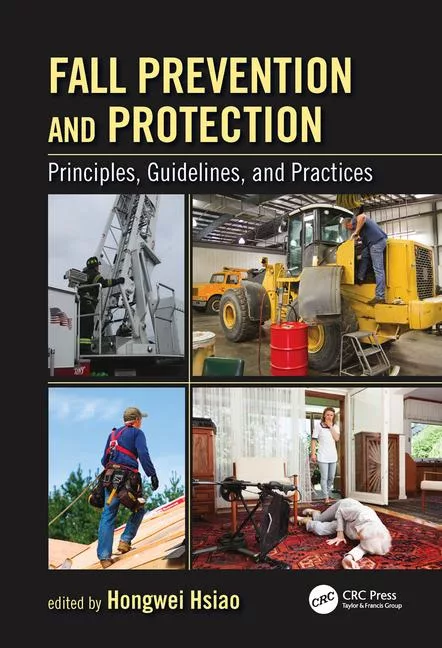
    Fall Prevention and Protection: Principles, Guidelines, and Practices

  • 111894948X.jpg

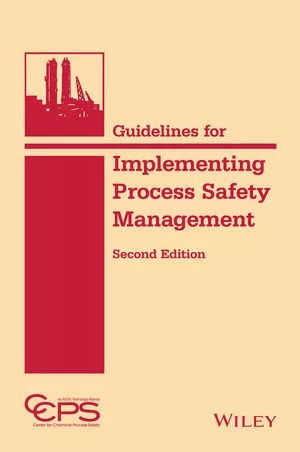
    Guidelines for Implementing Process Safety Management, 2nd Edition

See More Products

Events

View AllSubmit An Event
  • September 22, 2016

    Bang! Damage from impulse noise and the effectiveness of hearing protection

    Some of the most hazardous sounds we hear are brief sounds – noises from impacts and impulses. These arise from sources like household tools, construction, industrial noise, firecrackers, guns, and even automotive airbags.
View AllSubmit An Event

Related Directories

  • Hand Tools Institute

    An important objective of the Hand Tools Institute is to facilitate training on safe and proper use of hand tools.
  • New Pig

    The world leader in absorbent products, New Pig provides innovative products to help maintain cleaner, safer, more productive work environments.
×

Become a Leader in Safety Culture

Build your knowledge with ISHN, covering key safety, health and industrial hygiene news, products, and trends.

JOIN TODAY
  • RESOURCES
    • Advertise
    • Contact Us
    • Directories
    • Manufacturing Division
    • Store
    • Want More
  • SIGN UP TODAY
    • Create Account
    • eMagazine
    • Newsletters
    • Customer Service
    • Manage Preferences
  • SERVICES
    • Marketing Services
    • Reprints
    • Market Research
    • List Rental
    • Survey/Respondent Access
  • STAY CONNECTED
    • LinkedIn
    • Facebook
    • YouTube
    • X (Twitter)
  • PRIVACY
    • PRIVACY POLICY
    • TERMS & CONDITIONS
    • DO NOT SELL MY PERSONAL INFORMATION
    • PRIVACY REQUEST
    • ACCESSIBILITY

Copyright ©2026. All Rights Reserved BNP Media, Inc. and BNP Media II, LLC.

Design, CMS, Hosting & Web Development :: ePublishing