Thought Leadership
A tangled web: subjective perspectives, risk assessments and ethical dilemmas
Part 1 of 3
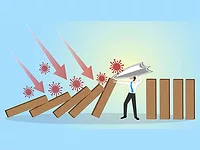
In this three-part series, the role of personal perceptions and the influence of invalidated information on them used in risk assessments will be explored. Part 1 will discuss how perceptions are developed while part 2 will discuss how these perceptions are applied, sometimes unknowingly, to risk assessments. Part 3 will then discuss why ethics are so important in ensuring these perceptions do not have a negative impact on risk assessments and hazard controls.
“There is no truth. There is only perception.” (Stankovich, 2000, ix).
Beginning in March of 2020, concepts of risk assessment, the varied perceptions that come along with them and the ethical dilemmas that follow became ever more prevalent in safety and health discussions regarding the COVID-19 pandemic. While many discussions of risk assessments – projections of the frequency and severity of a hazard – are held within organizations during a job safety or process analysis or even sometimes during a review and comment period on a proposed federal regulation or national consensus standard, the conversation during the spring of 2020 became nothing less than a heated, back and forth exchange between the President of the United States of America; the most senior public health officials in the country; each states’ Governor; groups of physicians, interest groups and others seeking to convey a message all the way to multiple individual social media account holders (Feuer, 2020).
With this much variance, volatility and vitriol in the perceptions of the pandemic hazard – regardless of scientific evidence or the lack thereof – the validity, reliability and effectiveness of hazard controls intended to prevent exposures to the virus became reliant on these same perceptions (Lantry & Ebbs, 2020) . Ultimately, this same phenomenon – the reliance of safe work practices and safe work conditions on an organization’s or even an individual’s perception of a risk – applies to any hazard, whether it is a virus; needlestick and sharps injuries; natural disasters; workplace violence or even driving to and from work each day .With this, this same reliance on risk perceptions can lead to (and has led to) ethical dilemmas and whistleblower situations exposing unfortunate perception-based decisions having led to injuries, exposures and deaths (Briefings on hospital safety, 2011).
To prevent this phenomenon of risk perceptions negatively influencing hazard control decisions, there must first be an understanding of how the phenomenon exists; from there, a methodical series of objective checks and balances must exist as deterrents against those who may – even unknowingly – allow unsafe practices and conditions. For organizations seeking high reliability operations – systemic and systematic prevention of potentially catastrophic incidents through continual improvement in hazard identification, assessment and control with consistent, lateral feedback and performance validation – this removal of subjective assessment is absolutely necessary (Shrivastava, Sonpar & Pazzaglia, 2009).
Perceptions
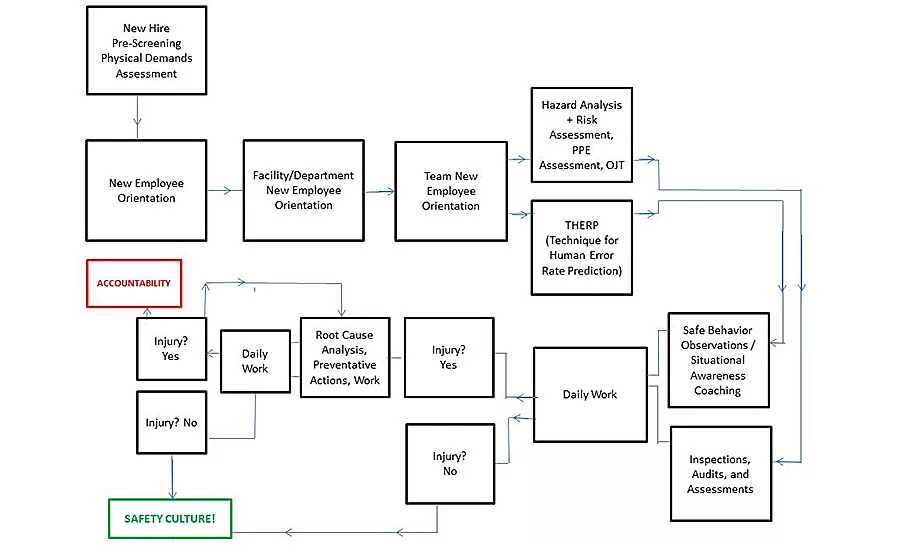
When team members join an organization, their perceptions of how that organization values safety is affected by several factors throughout the journey. The new employee orientation process may or may not include safety information such as specific hazard information or leadership information such as open-door policies and stop-work authority. Team members may or may not be encouraged to report near-miss or good-catch reports. Factors as such immediately affect whether the new employee feels the employer cares about their safety at work. Further into their journey with the organization, team members will of course notice whether they receive notifications of workplace hazards, whether they receive training to work safely with these hazards, whether they are issued Personal Protective Equipment and more. Even further into their journey, team members will notice whether supervisors and peers are expected to inspect facilities and equipment for safe working conditions, observe work processes for safe work practices and report near-miss events.
More importantly, team members will notice if, should there be findings on inspections, observations or near-miss reports, whether the findings are followed up with preventative and corrective measures. And, should there be a near-miss or an incident, team members will notice if an analysis is completed to determine how and why the situation occurred so that it can be improved. If an organization does not distribute and analyze a safety perception survey to determine team members’ thoughts and feelings about the way safety is being valued, this will likely be noticed. If none of these cultural attributes apply to an organization, a team member may perceive that the organization does not value safety and, by effect, may not feel themselves valued (Worden, 2020).
Risk Assessments and gray areas
Looking at the points of safety interaction with each team member’s employment cycle at his or her organization, many of these interactions appear to be simple. For example, team members are correct to expect training. Team members are correct to expect safety leadership. Team members are correct to expect safety analysis and preventative and correct measures should an incident occur. These interactions are often regulatory requirements (OSHA, 1970) and/or elements of safety management systems (Abrams, 2007) and ethical matters in ensuring team members have what they need to work safely (Walter, 2011). In many cases, hazard controls are prescriptive with pre-identified hazards ranging from broad topics such as Respiratory Protection (OSHA, n.d.) to very particular topics such as Formaldehyde (OSHA, n.d.). In other cases, incident reporting requirements are defined by algorithms (OSHA, n.d.).
However, not each hazard and hazard control decision are laid out like these. In cases like COVID-19 where there are not precedents or required controls or in situations where direct intervention from OSHA or another agency is not expected, some situations require organizational leaders to use critical thinking aligned with operational feasibility to determine courses of action. Situations like these can easily become proverbial gray areas where team members’ expectations of a safe workplace with safe work practices does not align with the determined hazard controls from leadership. In this case, in an ethical organization, risk management processes linked to leading indicators such as surveys and observations will allow for a series of checks, balances and adjustments to ensure safety along with employee satisfaction. If not, dangerous precedents and even more dangerous outcomes can come from the situation.
In part two of this series, the process of risk management and how perceptions pertain to it will be explored.
Looking for a reprint of this article?
From high-res PDFs to custom plaques, order your copy today!