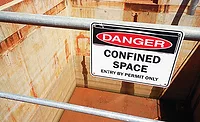
Safe confined space entry for chutes, silos and hoppers
An estimated 7% of the U.S. fatalities recorded by MSHA between 1995 and 2011 occurred in a confined space. To reduce that number, conveyor operators are wise to understand exactly how a confined space is defined, and to consider what they can do to prevent serious injuries.
Many factors can cause bulk materials to adhere to the sides of chutes, silos and hoppers -- including humidity, moisture content, size/texture of the raw material or increased production volume -- resulting in lost capacity or clogging. Ongoing accumulation reduces flow and eventually stops production in order to address the issue, causing expensive downtime and requiring extra labor to clear the obstruction.
“Clearing extensive buildup often involves confined space entry, but the consequences of untrained staff entering a chute, silo or hopper can be disastrous, including physical injury, burial and asphyxiation,” said Product Engineer Daniel Marshall. “Without proper testing, ventilation and safety measures, entering vessels containing combustible dust could even result in a deadly explosion.”
What is Confined Space Entry?
The Occupational Safety and Health Administration (OSHA) defines “confined space” as an area not designed for continuous employee occupancy and large enough for an employee to enter and perform assigned work, but with limited or restricted means for entry or exit.[1] Permit-required confined space” means a confined space that has one or more of the following characteristics:
- The vessel contains or has the potential of containing a hazardous atmosphere such as exposure to explosive dust, flammable gas, vapor, or mist in excess of 10 percent of its lower flammable limit (LFL). Atmospheric oxygen concentration below 19.5 percent or above 23.5 percent;
- There is the potential for material to engulf, entrap or asphyxiate an entrant by inwardly converging walls or by a door which slopes downward and tapers to a smaller cross-section; or
- Contains any other recognized serious safety or health hazards.
Entering a Confined Space
Working in confined spaces typically requires:
- Special personnel training
- Safety harness and rigging
- Extensive preparation
- Added personnel for a ‘buddy system’
“Systems designed to minimize permit-required confined spaces can provide a significant return on investment, and the best time to reduce the amount of confined-space entry for component maintenance and replacement is during the specification and design stages of a project,” Marshall continued. Many manufacturers offer systems and products that can reduce the need for confined space entry. Examples would include:
- Modular chute designs with abrasion-resistant liners.
- Chutes that hinge open and lay down for liner replacement.
- Skirtboards with external liners.
- Belt cleaners that can be serviced without confined space entry.
- Flow aids such as air cannons and vibrators to reduce buildup.
- Modular air cleaners for specific locations rather than centralized dust collection.
Global Regulations, Standards and Best Practices
Rules regarding confined space entry vary greatly depending on the country, even down to the state, province or prefecture level. As always, regional and local codes should be identified and followed, but general rules can be drawn from regulations established in major industrial markets such as Australia / New Zealand, Canada and the United States.[2] Commonalities between governmental regulations provide employers with a measured approach to safety. These procedures include:
Prior to Starting the Job
- Review the permit and the job-specific work procedures.
- Gather and inspect all necessary PPE.
- Test and/or calibrate any safety gear, test instrumentation or communication tools.
- If a current Job Safety Analysis (JSA) or safety check list does not exist, perform a risk assessment.
- Hold a pre-job meeting making sure all workers are aware of the hazards and safe work practices.
- Conduct proper tests for toxins, vapor, dust levels, oxygen levels and material-specific hazards.
- Perform as much cleaning and maintenance as possible outside of the vessel.
- Post completed confined space entry permit outside of the vessel.
- Isolate contaminants and moving parts to prevent the accidental introduction of materials.
- Proper lock-out/tag-out/block-out/test-out procedures must be completed and documented prior to entry.
During Procedure
- Perform maintenance/cleaning using non-toxic substances such as water and avoid using heat/fire in the confined space. Never use oxygen to purge a confined space, as this can create a fire and explosion hazard.
- Provide ventilation if possible.
- Select personal protective/safety equipment such as safety helmet, gloves, hearing protectors, safety harness and lifeline and breathing apparatus.
- Assign a trained observer to monitor the procedure and internal conditions, and provide escape assistance if needed.
- Practice fast evacuation of the confined space.
Closing Thoughts: Covering Your Access
“Over time, well-designed access improves safety and saves money,” Marshall added. “Safe access that is carefully located and adequately sized will increase dependability and also reduce the downtime and associated labor required for maintenance.” He advises that companies consider equipment designs which minimize the need for confined space entry, including improved access doors, vibrators, air cannons or silo cleaning services. “Conveyor systems that are properly outfitted with appropriate cleaning and material discharge equipment create a safer workplace, while experiencing longer life and less downtime,” he concluded.
© 2020 Martin Engineering Company. All rights reserved. Martin Engineering products are protected by U.S. and foreign patents and patents pending. Additional intellectual property information is provided at www.martin-eng.com/trademarks.
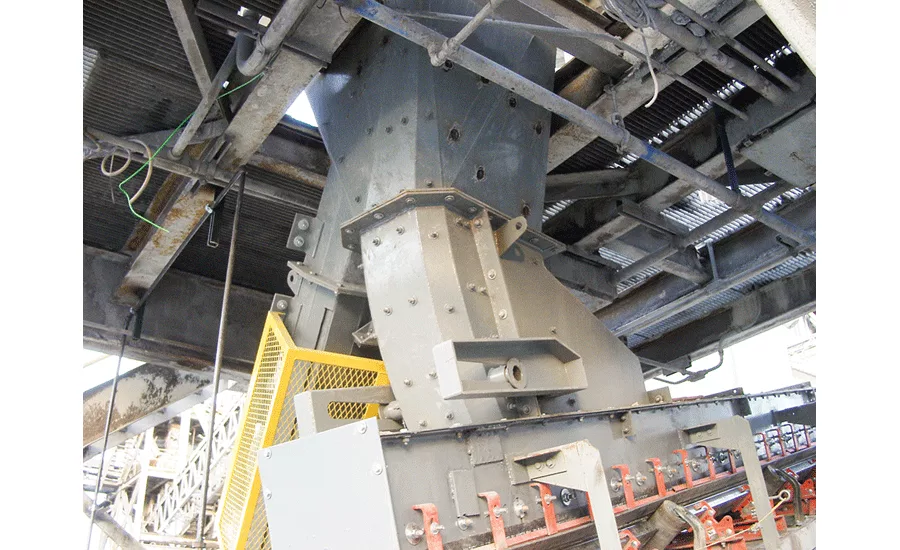
Shown above: The rear chute wall in this image is bolted onto side flanges, allowing safer access. [© Martin 2020]
References
[1] Dougherty, Dorothy: “Permit-Required Confined Spaces,” Occupational Safety and Health Administration, Department of Labor, Dec. 12, 2011. https://www.osha.gov/pls/oshaweb/owadisp.show_document?p_id=9797&p_table=STANDARDS
[2] Swinderman, Marshall & Marti: Foundations for Conveyor Safety, Chapter 18, pp.249-251. https://hubs.ly/H0mLk2t0
Martin Engineering is a global innovator in the bulk material handling industry, developing new solutions to common problems and participating in industry organizations to improve safety and productivity. The company’s series of Foundations books is an internationally-recognized resource for safety, maintenance and operations training -- with more than 20,000 print copies in circulation around the world. The entire 500+ page volumes can also be downloaded as free PDFs from the Martin web site. Martin Engineering products, sales, service and training are available from 19 factory-owned facilities worldwide, with wholly-owned business units in Australia, Brazil, Chile, China, Colombia, France, Germany, India, Indonesia, Italy, Japan, Mexico, Peru, Russia, Spain, South Africa, Turkey, the USA and UK. The firm employs more than 1,000 people, approximately 400 of whom hold advanced degrees. For more information, contact info@martin-eng.com, visit www.martin-eng.com, or call (800) 544-2947.
Looking for a reprint of this article?
From high-res PDFs to custom plaques, order your copy today!