Safety Technology
Eliminating workplace distractions with Joe Boyle, CEO of TRUCE
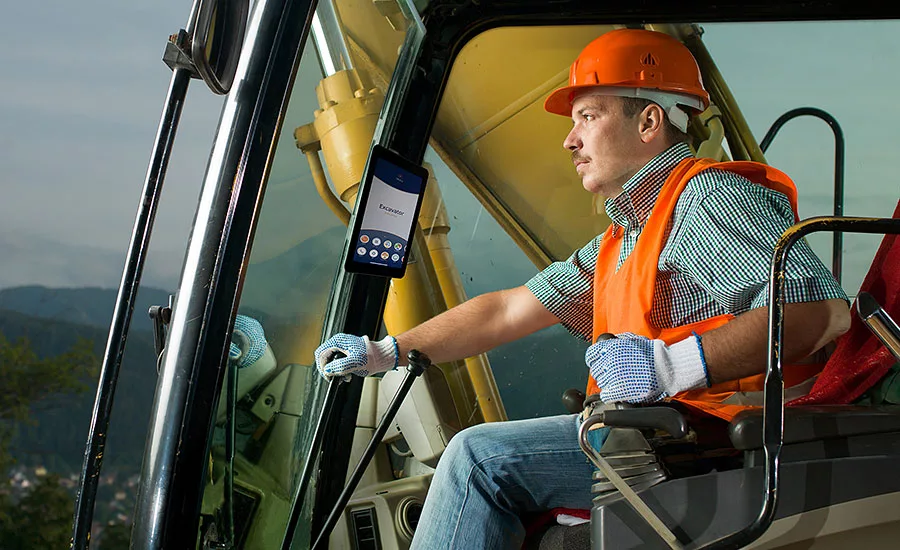
ISHN Magazine sat down with Joe Boyle, CEO of TRUCE, to discuss strategies for eliminating workplace distractions. The following are excerpts from that conversation.
What is the history of TRUCE?
TRUCE nine years ago was really into R&D, perfecting technology to improve vehicle safety. Last year we took TRUCE software to market to manage and combat distraction in our personal and professional lives. This year we relaunched TRUCE software. TRUCE’s patented technology offers employers the ability to manage employee access to mobile apps in designated work zones and company vehicles using contextual indicators and location-specific beacons. We help workers and companies balance the competing interests around mobile technology. We expanded our vision of what we do beyond vehicle safety.
What are competing interests?
Mobile technology boosts productivity, but it has some real challenges regarding health and safety. Phone texting for instance. Eighty percent of workers have mobile devices, mobile computing is now in the workforce. Distractions go beyond just talking or texting and driving. We’re seeing behaviors like consuming video content while driving, Facetime chats, social media use. Mobile tech is really designed to keep us engaged and connected, but continuous engagement is distracting. There are also productivity implications. Employees spend five hours every week engaged with non-work activities on mobile devices.
What is an effective policy-based approach to manage employee access to mobile apps?
Here’s how you can really break it down: 1) Your policy needs to take into account the specific nature of the work and the work environment; what are the safe and allowable uses of mobile tech; 2) You need to recognize that context matters. You need to be smart enough to know when the environment has changed. For instance, you use our software to enforce a ban on texting and driving starting 8 a.m Monday, but not at 9 p.m. on a Friday night when you’re hailing an uber ride; 3) You need to enforce your policy.
This isn’t a matter of blocking usage; it’s serving up safe and allowable access; defining what’s acceptable mobile usage. The software gets deployed on every mobile device; it’s implemented on a local level so your policy can be managed all the time. The internet could be down, but our software still functions and protects workers.
How does your product account for mobile devices expanding in workplaces in ways that couldn’t have been thought of before?
The first bring-your-own-device to work (BOYD) were laptops, not a super computer in your phone. Now with so many mobile apps on phones, the game has changed and organizations are catching up with their policies.
What is important today is core competency. Companies must define and understand mobile app usage and context. Leadership must know the essential usage competencies to be able to use smart technology in workplaces to drive productivity.
Here’s an example of a competency: our software was deployed with a public utility company with workers on foot doing repairs – not in vehicles. Whether you’re on foot or in a vehicle, distractions can be dangerous. You want to enable just those apps and functions that are relevant to the task while minimizing the interrupting pings, buzzes and other diversions. This company is rolling out smartphones. We see a mix of both company devices being issued and personal devices being allowed.
Another example involves a planned community construction project in Europe. In this environment, you want to protect workers on 20th floor when using welding equipment. It’s just like using PPE. You want your workers to be safe in how you allow them to use mobile tech.
What about privacy concerns with monitoring use of mobile apps?
This is something very near and dear to our heart. There is a privacy issue, no doubt. Mobile devices are deeply personal pieces of technology. We are not in the tracking business. We never record usage on weekends. We don’t sell our data.
How do you build workers’ trust around privacy concerns?
Workers will trust this technology if you properly explain your policy. Trust also comes from experiencing how your policy works. Workers need to know when I’m driving the company vehicle my phone is policy enforced. But not in a parking lot or at my son’s soccer game. A well-explained policy using our technology makes workers’ recognize the technology makes work better and safer. People recognize mobile devices can be dangerous, but they see the risk in others, not themselves. Trust also comes from the knowledge that you’ve made my job of driving easier. I don’t have to respond to barrage of text messages; it’s less stressful now. When productivity goes up and crashes go down, workers tend to be greatest advocates of our technology.
How do you determine the value added by your tech?
Return on investment is derived from 1) increased productivity; 2) reduced costs from less accidents and liability; and 3) the value of information security. Employees working out in the field are like a mobile billboard for your brand. We help you protect your reputation as a company that values employee safety, privacy and productivity.
Information security also regards proprietary data that roams the halls of any workplace; say a spreadsheet that is sometimes in electronic form. Now workers comes to the job with basically a super computer (smartphone or tablet), internet connectivity, the device has its own camera and video. Fortune 500 companies check mobile devices when workers and visitors check in. There can be highly sensitive environments. You want apps to only serve up what is acceptable, and stop someone from recording in the board room or in R&D.
The most immediate and recognizable ROI are cost reductions that return cash to your bottom line. On average, 20 percent of all vehicles have an accident in a year. Say you have 100-200 workers in field. If 20 percent have an accident the average cost of those accidents is north of $20,000. Look at the root cause. Forty to sixty percent of motor vehicle accidents are caused by distracted driving. Take half of those accidents and multiply by $20,000 to repair just sheet metal. Take away the root cause of the accident – distraction – and customers see almost a 30-40 percent decline in their vehicle accident rate.
Looking for a reprint of this article?
From high-res PDFs to custom plaques, order your copy today!