Five tips for health and safety managers to better protect workers’ hands
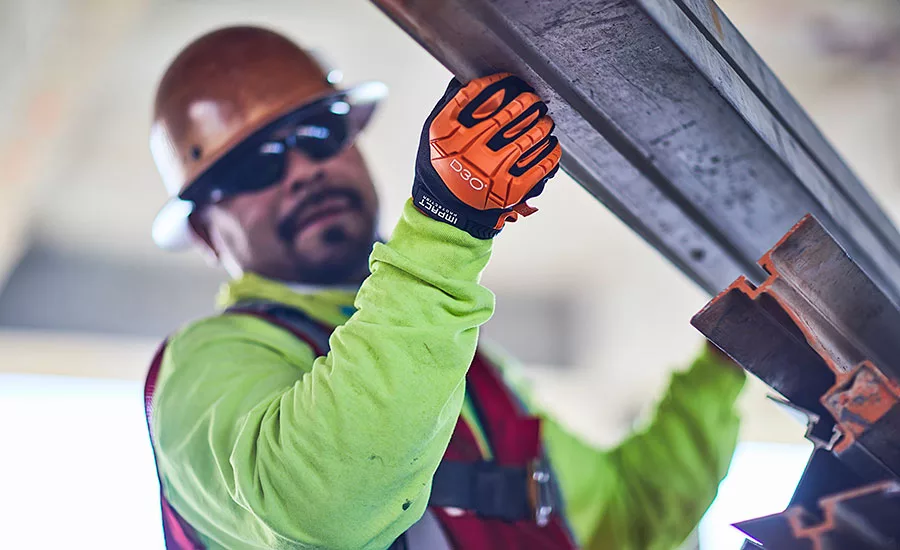
Comprising 27 bones, 48 nerves and 123 ligaments and tendons, it’s little surprise that the hand is the second most frequently injured part of the body (after the back).
According to the U.S. Bureau of Labor Statistics1, almost 120,000 injuries to hands and fingers in 2016 involved days away from work – 13 percent of the total injury toll. Statistics from the International Association of Drilling Contractors2 show that in 2018 more than 34 percent of all recordable incidents in the oil and gas industry affected the hands, wrists and fingers.
Even with rigorous workplace safety protocols in place, the bones and tissues in the back of the hand remain particularly vulnerable to impact injuries – from a bruise to the knuckles to pinching fingers between two pieces of equipment to a severe bone fracture. How can occupational health and safety (H&S) managers reduce their incidence? Below are five tips to help specify PPE that better protects workers’ hands.
Identify risks and hazards
Job Safety Analysis (JSA) is a key tool within occupational health and safety. A typical JSA process breaks down a task into a sequence of steps, identifies the potential hazards in each step, and specifies any preventative measures needed to overcome them. This approach usually considers “hazard and control,” but does not take account of any risk components such as “How often is a hazard encountered?” or “What is the potential impact energy of the hazard?”
The greater the frequency of the hazard, such as the number of times a rail-car door is opened, the greater the risk. Likewise, with impact energy: as well as the hazard of a hammer strike, for example, how much risk is attached to the force delivered by each strike?
Including both of these risk components will make a JSA more comprehensive. By then applying ANSI/ISEA 138, the new American national standard for impact resistant hand protection, to each step of a task, it will be possible to make risk-based decisions on the most appropriate performance level of gloves to assign where impact protection is required.
Recognize value
Knowing the true performance of PPE is critical to reduce the risk of injury. The hand protection market is growing at an accelerated pace, so it can be challenging for H&S managers and specifiers to navigate available options and choose the right protective product for the given task. Performance standards are an essential tool for both PPE specifier and manufacturers to ensure the decisions they make are the correct ones.
Standards for cut, puncture, chemical, and thermal protection in gloves have existed in the U.S. for many years but, until recently, there was no performance standard for back of hand impact resistance. This gap has now been filled by ANSI/ISEA 138.
Cutting occupational injuries through the application of performance standards can have a positive impact on a company’s bottom line. The financial impact of workplace injuries can be calculated with the $afety Pays tool developed by the Occupational Safety and Health Administration (OSHA)3.
Use standards to specify more accurately
A common approach among H&S managers is to obtain a variety of gloves advertised as offering impact protection, ask employees to try them out, get feedback, and go with those most preferred by the workers, provided the gloves selected also satisfy budget constraints. Then, if an employee sustains an injury, the cycle of field-testing has to start all over again.
Quite apart from the hit-and-miss nature of this method, the fact that a hand injury costs an average of $20,000 before surgery or lost time is factored in points to a clear financial benefit from more accurate specifying.
ANSI/ISEA 138 helps eliminate trial and error by giving clarity about the energy level being transferred through gloves. The simplified approach of the standard, with performance levels identified by pictograms on the gloves, has made testing and choosing the most appropriate protection a more precise exercise.
Educate your workforce
Faced with an array of gloves to choose from and no specific guidance, a worker may pick a pair they recognize from a previous task, or simply grab the nearest available. Furthermore, two gloves may look the same to a wearer, but the difference in the level of protection offered can be significant.
Providing a core range of gloves along with education and visual management on how they match glove selection to specific tasks reduces confusion and makes it easier for workers to select the most appropriate pair.
Continually reassess risks
Applying ANSI/ISEA 138 involves decisions to choose the right performance level of gloves for a particular task. H&S managers can use standards and the performance levels within them as day-to-day tools – not only to help continually reduce the risk of injuries, but also to provide clarity when seeking approval on spend for worker protection.
The standard provides a starting point that is reliable and evidence-based, allowing end-users to then apply their own specific variables, such as workforce, tasks, budgets and working environments. Armed with this information, H&S managers are in a better position to align the different hazards or risks that a wearer might face to protection of the appropriate performance level. In this way, the choices made can truly meet the needs of the workforce.
Sources:
1 “25 Years of Worker Injury, Illness and Fatality Case Data,” https://tinyurl.com/yx2pzpql
2 IADC 2018 ISP Program Annual Reports, https://tinyurl.com/v493kkv
3 Available at www.osha.gov/safetypays
Looking for a reprint of this article?
From high-res PDFs to custom plaques, order your copy today!