Large concrete installations call for closer CO2 monitoring

Over the past few decades, shopping at big box stores, like Costco, has become common place, but the first time you walked into a superstore you were probably struck by its expanse of space – and for good reason. An average neighborhood supermarket, a Kroger or Albertsons, sits atop 40,0001 square feet of concrete. Compare that to your local Home Depot at 125,0001 square feet or a Wal-Mart supercenter at twice that size – often 250,000 square feet1 – and you start to get a sense for their enormity.
The continuing popularity of such stores translates to massive volumes of concrete poured into commercial construction projects in the United States every day. Most shoppers see little beyond the surface of the concrete. Architects, engineers and construction crews, however, all recognize the potential damage that can lie beneath due to a phenomenon known as “carbonation.”
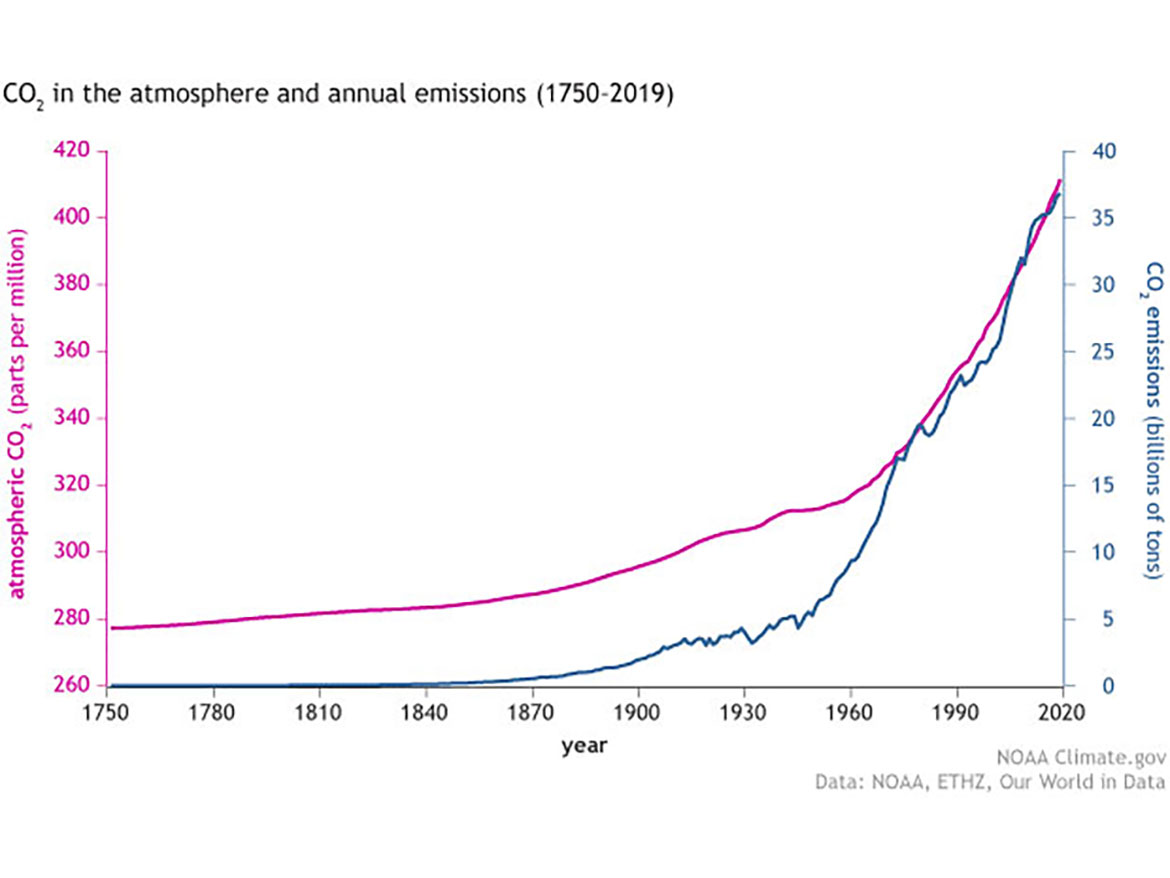
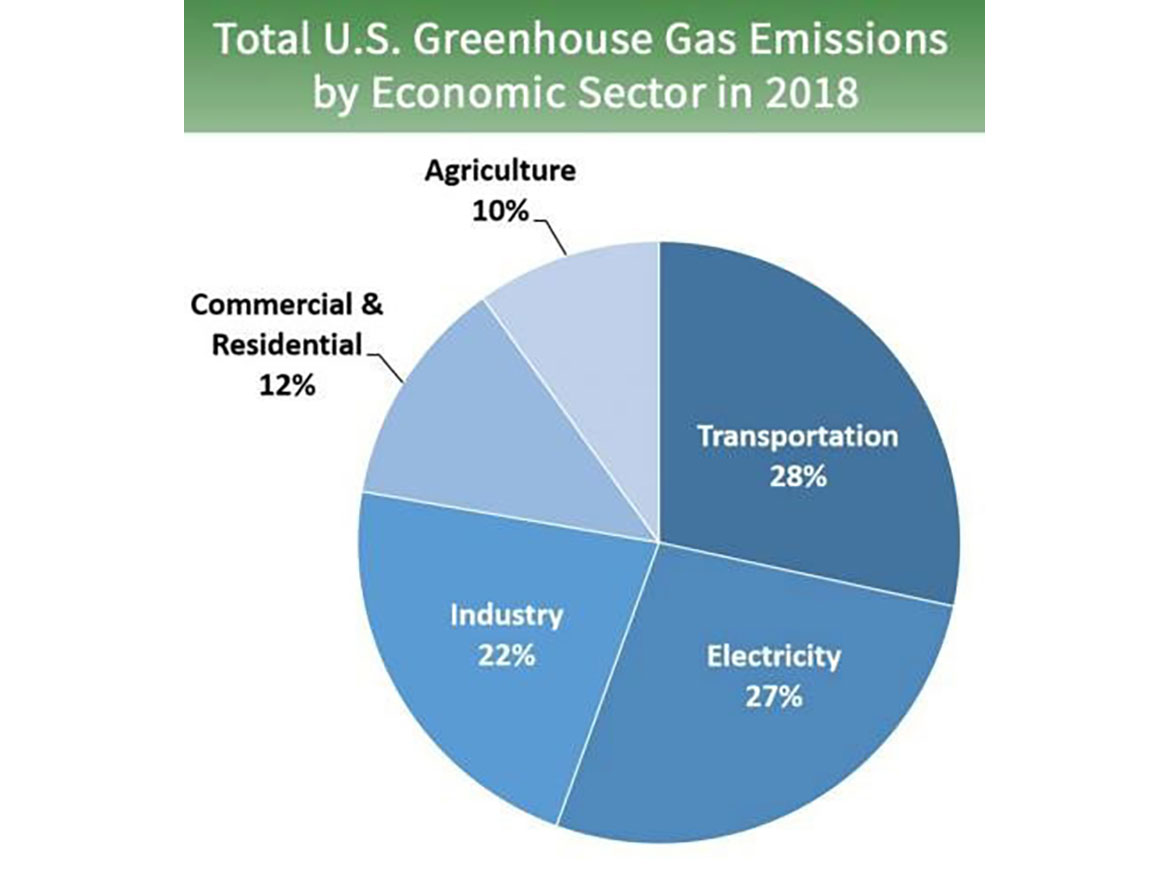
Carbonation adds the beloved fizz to our favorite soft drinks and enables fire extinguishers to function, but the chemical process is not as welcomed in construction projects. Carbon dioxide (CO2) is a colorless, odorless, incombustible gas that is released into the atmosphere primarily by the energy industry, industrial facilities and agriculture. While CO2 is naturally present in the air we breathe and in our water, the increased levels found in the atmosphere – from approximately 340 ppm in 1990 to 400 ppm in 2020 – are showing that the ubiquitous gas, especially in these higher concentrations, can penetrate concrete surfaces faster than previously expected.
Through a series of complex chemical reactions (i.e., “carbonation”), CO2 can reduce concrete’s pH and increase its porosity – ultimately impairing the overall strength and durability of concrete.2 Because CO2 is all around us, some degree of carbonation is inevitable as concrete ages. The phenomenon is hastened in humid climates and in large cities or industrial areas where fossil fuels are likely to be burned at higher rates.
In August 2018, 200 meters of the Morandi Bridge in Genoa, Italy collapsed, killing 43 people. Completed in 1967, the bridge was considered an engineering marvel in its day. Named after its chief engineer, Riccardo Morandi, the kilometer-long bridge used a pre-stressed concrete specifically-designed to resist traction – because steel was scarce in post-WWII Italy, even the bridges cables were constructed of concrete. But in the 1960s, very little was known about the impact of pollution (i.e., carbonation) or climate on corrosion, and by the late 1970s, the bridge had already begun to show signs stress. In 1979, Morandi, who was surprised to see the structure age faster than he had anticipated, recommended a number of interventions to protect the structure against pollution from nearby factories and the salty sea air, but sadly, none were taken.3
Age and environment are not the only factors that contribute to carbonation. Another common culprit is how concrete is cast and cured during construction. If you’ve ever walked a new construction site and found a layer of soft white dust on your shoes from the freshly laid concrete, it is most likely the result of carbonation. Combustion heaters are frequently used during construction to help set newly placed concrete and keep it from freezing in colder climates. Those heaters, which often burn natural gas or propane, emit gases in the form of exhaust that contain CO2.
If the air is relatively still, carbon dioxide “clouds” can settle near the ground and react with moisture on the fresh concrete surface to form carbonic acid (H2CO3). This acid then combines with hydrated lime, a.k.a. calcium hydroxide or Ca(OH)2, that occurs during the hydration of cement and creates weak calcium carbonate (CaCO3).4 The greater the concentration of CO2, the deeper the potential impact of carbonation – if carbonation affects multiple layers of the concrete, the floor’s resilience can be significantly impaired. Conversely, when CO2 is dispersed properly, calcium silicate hydrate forms instead of calcium carbonate to help harden the setting cement.
It becomes important, therefore, that construction crews not only ensure adequate ventilation to help prevent the buildup of CO2, but that they also monitor for high levels of CO2. In fact, construction specifications for some big box stores require monitoring for CO2 with a maximum of 4500ppm.5
Some retail analysts speculate that as more shoppers turn to online purchasing6, big box stores could soon go the way of shopping malls and other brick and mortar stores. However, considering that an average Amazon fulfillment center is roughly 800,000 square feet7, changing consumer behaviors are unlikely to lessen large-scale concrete installations. That means carbonation – and the careful monitoring of it – will continue to be a key concern for construction projects for years to come.
Sources
1 “How Big are Big-Box Stores?” ; Institute for Local Self-Reliance; https://ilsr.org/how-big-are-bigbox-stores/#:~:text=Supercenters%20typically%20range%20from%20180%2C000,size%20of%20the%20store%20itself
2 ”Understanding Carbonation;” National Precast Magazines, 2015 July-August; https://precast.org/2015/07/understanding-carbonation/
3 “What Caused the Genoa Bridge Collapse – And the End of an Italian National Myth?” The Guardian, February 26, 2019; https://www.theguardian.com/cities/2019/feb/26/what-caused-the-genoa-morandi-bridge-collapse-and-the-end-of-an-italian-national-myth
4 “The Basic Facts about Carbonation of Fresh Concrete Floor Services;” file:///Users/paigepr/Downloads/Concrete%20Construction%20Article%20PDF_%20Carbonation%20of%20Fresh%20Concrete%20Floor%20Surfaces.pdf
5 “Checking Carbon Dioxide;” Concrete Construction Magazine; February 2009; https://www.concreteconstruction.net/how-to/checking-carbon-dioxide_o
6 “What Big Box Store Closures Mean for the Independent Retailer,” Forbes, February 13, 2020; https://www.forbes.com/sites/forbesbusinessdevelopmentcouncil/2020/02/13/what-big-box-store-closures-mean-for-the-independent-retailer/?sh=4cd03c961df8
7 “Amazon Facilities”; Amazon; https://www.aboutamazon.com/workplace/facilities#:~:text=Around%20800%2C000%20square%20feet%20in,books%2C%20toys%2C%20and%20housewares
Looking for a reprint of this article?
From high-res PDFs to custom plaques, order your copy today!