ISHN logo
search
cart
facebook twitter linkedin youtube
  • Sign In
  • Create Account
  • Sign Out
  • My Account
ISHN logo
  • NEWS
    • Today's News
    • Global Safety News
    • Government Regulations
  • PRODUCTS
    • Product Innovations
    • Featured Products
  • TOPICS
    • Environmental Health and Safety
    • Facility Safety
    • Workplace Health
    • Occupational Safety
    • PPE
    • More Topics
  • CONSTRUCTION
  • TECHNOLOGY
  • COLUMNS
    • Best Practices
    • Dave Johnson: What’s going on
    • Editorial Comments
    • Leading Safety
  • MULTIMEDIA
    • ISHN Podcast
    • Videos
    • Cold Stress Education Quiz
    • Webinars
    • White Papers
  • MORE
    • Buyer's Guide
    • Newsletters
    • Convention Companion
    • Polls
    • Events
    • ISHN Store
    • Sponsor Insights
  • EMAGAZINE
    • eMagazine
    • Archived Issues
    • Contact
    • Advertise
  • JOIN TODAY!
Today's Safety NewsOccupational SafetyFacility SafetyPPEWorkplace HealthWorkplace Training Strategies Construction Industry Safety and Health

Protect workers from harmful industrial noise

Hearing loss is a common but preventable occupational injury
By Thiago Zambotti
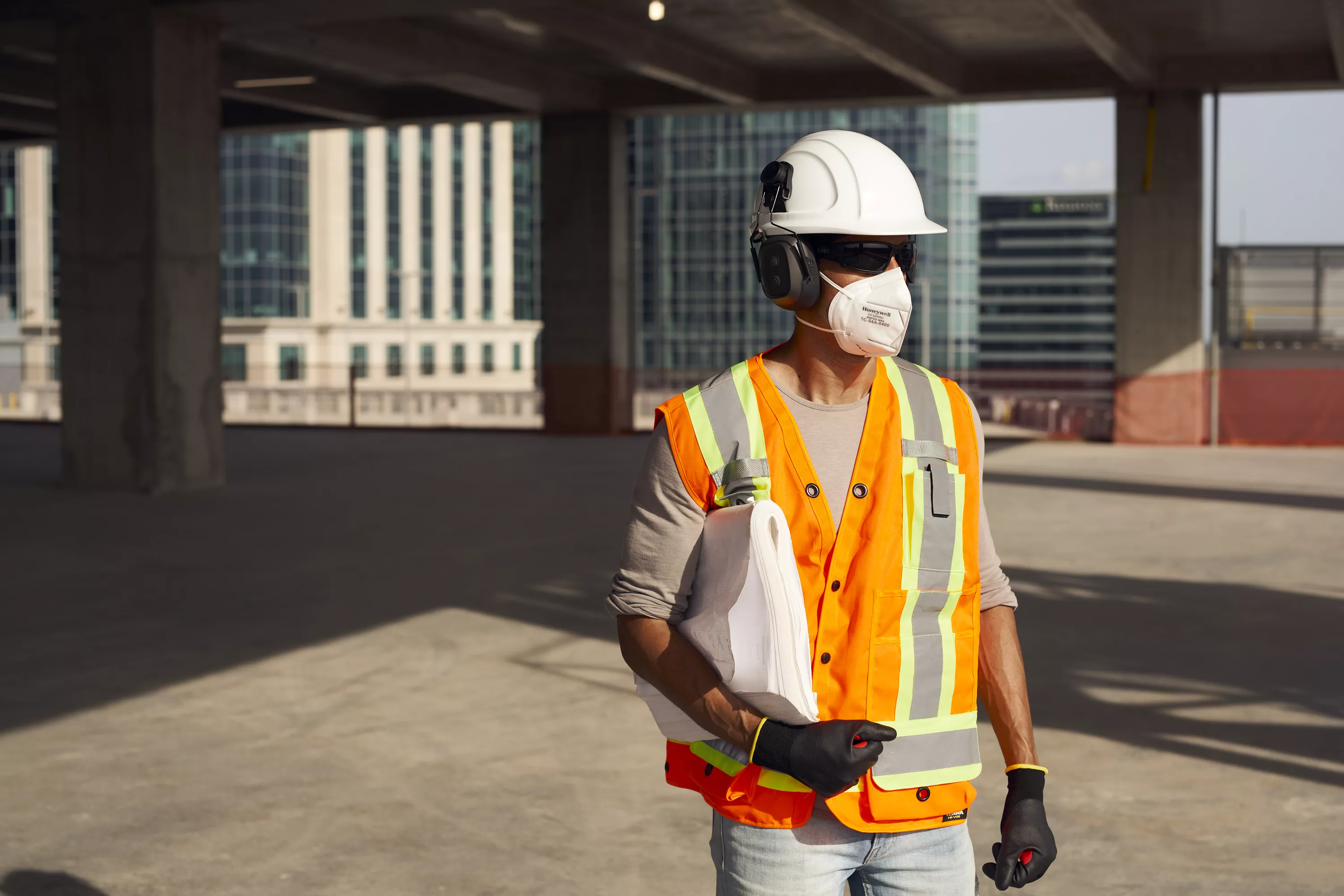
Honeywell hearing pro
Honeywell

Courtesy of Honeywell.

April 6, 2022

According to the Centers for Disease Control and Prevention, about 22 million workers are exposed to hazardous noise each year. Potentially harmful levels of industrial noise can arise for many different reasons in various working environments – from indoors in a factory to outdoors working with machinery and tools.

And, did you know that the CDC lists hearing loss as the third most common chronic physical condition among adults in the United States?

It’s OK if you answered no. However, it’s important to know that noise-induced hearing loss (NIHL) is the most common permanent but preventable occupational injury.

In industrial settings, workers operate heavy machinery, power tools and are exposed to other hazards that could inflict immediate physical harm at any moment, while hearing damage occurs over time. For many, hearing loss goes unnoticed until later in life once the damage is already done.

Noise hazards are everywhere when working on-site, but taking the proper precautions can mitigate risk and prevent injuries.

There are many ways to protect worker hearing, including a variety of earmuffs and ear plugs that can be used from the simplest to most complicated tasks.

Here’s what you should know when choosing the best hearing protection for your industrial job.


Understand and assess the risk 

When looking to determine the best-fit hearing protection for a dangerous environment, safety managers must first identify the equipment that is causing noise exposure to fully understand the levels of risk associated with each tool and piece of equipment. Whenever possible, immediately eliminate or reduce extreme noise levels, or offer workers suitable hearing protection.

For reference, any noise above 85 decibels (dB) has the potential to cause long-term hearing loss. Some examples of common noise hazards on-site are when using a bulldozer (100 dB) and a chainsaw (110 dB). Impact-noise exposures are enough to be harmful too. Repeated short spurts of noise, such as hammering in a nail (120 dB), can cause hearing damage.


Ensure proper fit and comfort

There is no one-size-fits-all solution when it comes to hearing protection. If a worker’s hearing protection doesn’t fit properly, it cannot provide the proper protection from harmful noise. An eighth of an inch can be the difference between receiving the stated level of protection based on the noise reduction rating on a hearing protection device and getting no protection at all. Fit-testing provides an accurate, real-world picture of your employees’ hearing protection and helps safety managers identify comfortable, convenient and compatible solutions.

Another aspect to consider is a hearing protection device’s compatibility with other personal protective equipment (PPE), such as safety eyewear and head and face protection.  

For example, safety eyewear with thick frames (6mm) can cause a gap between the head and earmuffs, providing an easy way for sound to penetrate the earcup. In this situation, ear plugs would be the best fit hearing protection solution based on the holistic PPE required for the job.


Educate teams 

Workers won’t prioritize hearing protection if they don’t understand the dangers of noise induced hearing loss. So, make it a priority to educate teams on site-specific noise hazards. There are multiple ways to educate your team, including:  

  • educating workers on the life-changing consequences of noise induced hearing loss through anecdotes, audio files and videos
  • inviting safety specialists to speak on hearing protection
  • encouraging compliance through positive incentives
  • using visible posters detailing the importance of hearing protection


Prioritize protecting your workers’ hearing 

Noise induced hearing loss is painless and causes no visible signs of damage. And, while potentially damaging noises may not cause immediate issues, the slowly progressing damage can accumulate over time and can be 100 percent permanent. 

The solution to preventing occupational noise induced hearing loss is having a continuous focus on hearing loss prevention, providing proper training and fit-testing and offering the appropriate hearing protection device styles and sizes. 

When hearing protection is used correctly, it does a great job of keeping workers safe.

KEYWORDS: fit testing hearing loss hearing protection

Share This Story

Looking for a reprint of this article?
From high-res PDFs to custom plaques, order your copy today!

Thiago Zambotti is Vice President and General Manager, General Safety, of Honeywell Personal Protective Equipment.

Recommended Content

JOIN TODAY
to unlock your recommendations.

Already have an account? Sign In

  • forklift safety

    Exploring the latest technologies in forklift safety

    With more staff and more stock in warehousing now more...
    Facility Safety
    By: Josh Cramer
  • welding

    All about welder’s flash or arc eye

    A flash burn is a painful inflammation of the cornea,...
    Environmental Health and Safety
  • dangerous jobs

    The 10 most dangerous jobs in the U.S.

    On-the-job deaths have been rising — hitting the highest...
    Construction Industry Safety and Health
    By: Benita Mehta
Manage My Account
  • eMagazine Subscriptions
  • ISHN Newsletter & Other Newsletter Alerts
  • Online Registration
  • Manage My Preferences
  • Subscription Customer Service

More Videos

Sponsored Content

Sponsored Content is a special paid section where industry companies provide high quality, objective, non-commercial content around topics of interest to the ISHN audience. All Sponsored Content is supplied by the advertising company and any opinions expressed in this article are those of the author and not necessarily reflect the views of ISHN or its parent company, BNP Media. Interested in participating in our Sponsored Content section? Contact your local rep!

close
  • man wearing the the Sundström SR200 Full Face Mask Respirator
    Sponsored byOHD

    5 Fit Testing Mistakes That Could Cost You

  • This image shows Magid AcuSpex polarized blue mirrored safety glasses.
    Sponsored byMagid Glove and Safety

    Construction PPE Guide: What Crews Need for Each Task

  • lone worker in confined space
    Sponsored byAlphasense Ltd.

    GET THE LEAD OUT of your Safety Oxygen Sensors!

Popular Stories

SpaceX 7 launch

OSHA Investigating Fatal Fall at SpaceX Starbase

Worker Impairment

How to Tell When a Co-Worker is Impaired? A Safety Pro’s Challenge

Automated loading dock equipment

After March 2026 Rivian Death, Safety Managers Reassess Loading Dock Systems Under OSHA's Warehouse Emphasis Program

top 10 most dangerous jobs

Poll

Seasonal Readiness

With the federal heat stress prevention rule on the horizon, which area of your safety program needs the most attention?
View Results Poll Archive

Products

Surviving an OSHA Audit A Management Guide, 2nd Edition

Surviving an OSHA Audit A Management Guide, 2nd Edition

See More Products

ISHN Podcasts

Related Articles

  • Honeywell

    Honeywell smart hearing solution combines connected headsets with cloud software to protect workers from noise-related injuries

    See More
  • Ga. manufacturer fails to protect workers from dust, noise hazards

    See More
  • heat stress

    Secretary Walsh, VP Harris announce national program to protect workers from heat hazards

    See More

Related Products

See More Products
  • industrial hy.jpg

    Industrial Hygiene: Improving Worker Health through an Operational Risk Approach

See More Products

Events

View AllSubmit An Event
  • September 22, 2016

    Bang! Damage from impulse noise and the effectiveness of hearing protection

    Some of the most hazardous sounds we hear are brief sounds – noises from impacts and impulses. These arise from sources like household tools, construction, industrial noise, firecrackers, guns, and even automotive airbags.
View AllSubmit An Event

Related Directories

  • Grace Industries

    How Do You Protect Your Lone Workers? Working at Heights? Check out our new WorkForce product line - Fall Detection with Immediate Notification – Prevent Suspension Trauma. Fixed Facility – No Monthly Fees. Working in the field? Check out Grace Connected Safety – Cellular and Satellite Cloud Connect
×

Become a Leader in Safety Culture

Build your knowledge with ISHN, covering key safety, health and industrial hygiene news, products, and trends.

JOIN TODAY
  • RESOURCES
    • Advertise
    • Contact Us
    • Directories
    • Manufacturing Division
    • Store
    • Want More
  • SIGN UP TODAY
    • Create Account
    • eMagazine
    • Newsletters
    • Customer Service
    • Manage Preferences
  • SERVICES
    • Marketing Services
    • Reprints
    • Market Research
    • List Rental
    • Survey/Respondent Access
  • STAY CONNECTED
    • LinkedIn
    • Facebook
    • YouTube
    • X (Twitter)
  • PRIVACY
    • PRIVACY POLICY
    • TERMS & CONDITIONS
    • DO NOT SELL MY PERSONAL INFORMATION
    • PRIVACY REQUEST
    • ACCESSIBILITY

Copyright ©2026. All Rights Reserved BNP Media, Inc. and BNP Media II, LLC.

Design, CMS, Hosting & Web Development :: ePublishing