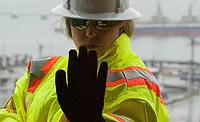
Safety requires enabling robots and employees to work in harmony
Upkeep is only one part of industrial robotic maintenance
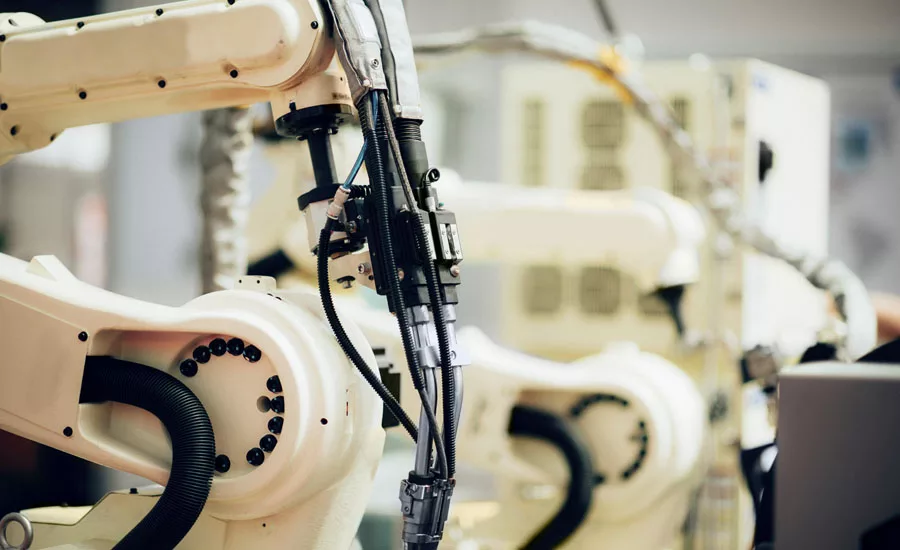
Today’s decision-makers have many reasons to focus on industrial robot maintenance. Some of them want to reduce the downtime associated with unplanned outages. Others understand that keeping robots well-maintained is a proven way to prolong their useful life spans.
Those are valid reasons. However, safety should be the single factor driving all decisions made about robot maintenance.
Today’s robots aren’t foolproof
Many industrial robots on the market have a full range of safety features that make it safer for humans to work closely with them. Collaborative robots, more commonly known as cobots, feature softer surfaces and technology that makes them slow down when people get too close. Individuals are highly unlikely to get hurt if a collision occurs.
Robots not intended to work directly with humans still have mechanisms such as safety cages and machine guards. They establish boundaries that significantly reduce, but don’t eliminate, the chance of harm.
Industrial robots do often make factories and similar environments safer. Consider the example of a beverage company where leaders noticed frequent safety incidents associated with manual parts of the packaging process. They overcame those issues by purchasing two cobots that can collectively handle up to 500 packaging cartons every hour.
The factory’s employees have a reduced risk of injury and can spend more time on higher-value tasks, including line maintenance. However, if a company’s leaders neglect industrial robot maintenance, problems are more likely to occur.
Overlooking the necessary upkeep measures could even mean certain built-in safety features fail to work. Regular maintenance is one of the most practical ways to keep robots in the appropriate condition for functioning safely and effectively.
A safer work environment leads to a better workforce
Industrial leaders do numerous things to make employees feel better about where they work. They might raise their salaries or give them more paid vacation days. Those things can help, but safer workplaces often make an even bigger impact on people.
A safe workplace can emphasize that leaders hear and care about workers and want to keep them from harm. Employees are less likely to have unplanned absences and may remain more loyal to their employers. Relatedly, people who feel content with their work are often more productive and may even recommend that their friends apply for open positions.
Industrial robot maintenance can and should play a major role in how safe people feel at work. Imagine a scenario where someone reports unusual robot behavior for weeks but is ignored by supervisors. That could make people feel unsafe, coupled with the belief that managers won’t listen to them when things genuinely go wrong.
Conversely, workplaces that prioritize their robots upkeep send a signal of safety that employees should notice and appreciate. One way to do that is to use Internet of Things (IoT) sensors within a maintenance strategy.
The connected sensors can help keep people safer around robots, even when they make mistakes. It’s also useful to have an easy way for employees to report potential problems with robots and receive feedback when maintenance crews or other professionals investigate.
Working together
Letting robots do specific jobs is often an excellent way to relieve humans of physically taxing work that could cause long-term strain. However, they don’t always make things easier for people. It all depends on how the respective organizations deploy them.
A recent investigative report about using robots at Amazon found injury rates are often above-average at the company’s robotic fulfillment centers. Workers were often pushed past their limits when working alongside robots. Employees now have to pick 400 items hourly with the help of robots, but the quota was only 100 without those machines.
A person who used to inspect Amazon’s robotic facility commented about the study, highlighting why robots can sometimes make injuries more likely. She explained that they move products faster, which results in humans handling those goods more quickly than they previously did. Such conditions can make injuries and accidents more likely.
A big part of industrial robot maintenance involves performing checks at certain time intervals. Technicians must become well aware of the intended uses for highly advanced machines. Each one has specifications for operating temperatures, total usage time per session and more. Maintenance professionals also become familiar with what constitutes expected performance for a robot. That makes it easier to recognize when something’s wrong and troubleshoot the issue.
However, the upkeep of robots is only one aspect of keeping people safe as they work around them. A facility’s leaders must know what employees and machines can safely do as they work together. That may mean not running the robots at top speed if that makes injuries more likely.
Encouraging trust
Researchers have been increasingly interested in whether humans trust industrial machines. One recent study used functional near-infrared spectroscopy to capture information about workers’ brain activity as they interacted with robots. The results revealed evidence of distrust when the machines showed faults.
However, the research team also said if people become tired, they may let down their guards and become overly trusting of automation. It’s easy to understand how prioritizing maintenance for robots could help people feel more open and willing to work with the machines. Doing so may be a wholly new experience for them. However, if they believe it’s safe and the robots are maintained to the proper standards, they should be more accepting and less fearful.
It’s also important for industrial leaders to realize that transitioning to using more robots in the workforce could put people under more emotional and mental strain. A study from the University of Pittsburgh showed a significant increase in drug and alcohol-related fatalities in areas where people had an above-average likelihood of working alongside robots. The researchers said the pressure of having to retrain or face job loss due to robots may have contributed to those deaths.
One way to keep people safer around robots is to teach them the early signs that one of the machines may need maintenance. That way, they can alert the appropriate parties. However, safety also involves periodic check-ins with people with the same regularity and frequency as scheduled equipment upkeep.
How are employees coping with the stresses caused by learning to work with robots? How could managers ease those challenges and help workers feel reassured? Answering those questions is another way to focus on people’s well-being.
How will you improve industrial robot maintenance?
This overview shows why people cannot ignore robot upkeep and must prioritize it. Now is an excellent time to examine how you might do that in your organization.
Looking for a reprint of this article?
From high-res PDFs to custom plaques, order your copy today!