Mental health and workplace safety: Is there a connection?
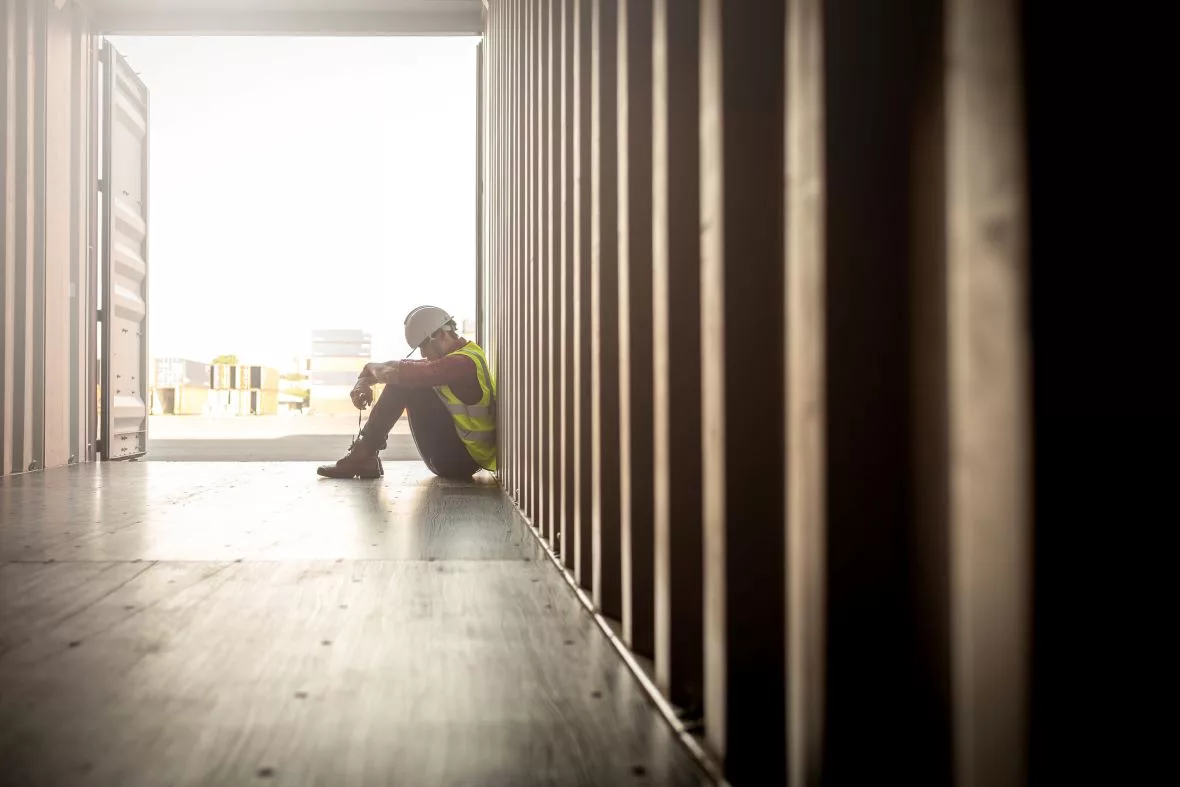
Credit: insterstid / iStock / Getty Images
Securing employees' physical safety is a top priority for employers in the construction industry. But what about psychological safety? Keeping your employees’ minds in a safe, healthy space is essential if you want the most productive, secure construction workplace environment.
But unfortunately, mental health care in the construction industry is falling short.
Mental health and the construction industry
Construction was among the top five industries with the highest suicide rates, according to data from the Center for Disease Control (CDC). The same research also shows that most who committed suicide lived with a mental health challenge.
Mental health disorders and challenges may develop for various reasons. But if we’re referring to how construction work could influence poor mental health, we’d have to look at the overall working conditions within the construction industry that contribute to a decline in mental health. For one, you need to factor in the intense physical nature of construction jobs and the long hours that often accompany them.
You’d also have to examine how employees are often asked to work in extreme weather and dangerous conditions that could easily prompt anxiety and increased stress. Spending so much time away from loved ones and not being able to form a life outside of work contributes to poor mental health in construction as well.
Effect on the workplace
When employees don’t get the support they need to navigate their mental health challenges, they become a safety hazard.
For example, mental health issues can inhibit focus and concentration. Operating heavy machinery under these conditions can lead to serious injury to themselves or a coworker. Or an employee can be so fatigued by their bout with anxiety or depression that they forget to dispose of hazardous materials.
In addition, mental health problems can incite performance issues. For example, the severe anxiety that comes with Post-Traumatic Stress Disorder (PTSD) can be highly debilitating. Employees experiencing this daily will eventually disengage from their work, causing their productivity and quality to diminish.
The effect employee mental health has on workplace safety, productivity, and engagement can’t be ignored. But just as the effect can be negative, it can quickly swing in the positive direction.
Employers can help mitigate mental health concerns
Employees shoulder much of the responsibility for nurturing their mental health. However, employers should want to be heavily involved in securing their employees’ mental wellness if they want a positive, productive, safe workplace. Take these steps to address employee mental health adequately.
1. Analyze each employee’s impact on the workplace
Preventing workplace safety issues in construction start with a comprehensive inspection of the physical environment. You need to identify what about your layout, machinery, systems, and processes can lead to a potential safety hazard.
Construction, in particular, is rife with workplace hazards — something that it shares in common with other industries such as manufacturing. Although you should look at these hazards with a checklist in mind, it’s important to simultaneously think critically about all hazards — known and unknown— especially if you’re concerned about employee mental health.
You should also examine how each employee impacts the workplace environment. For example, what’s their demeanor, and how does it affect their coworkers? Is the way the employee communicates affecting the way others work? Do they make the workplace feel unsafe?
Not only will you discover how people affect workplace safety, but a deeper discussion with a disruptive employee could reveal a need for help navigating specific mental health issues.
2. Encourage socialization in and outside the workplace
According to 2021 data from the Bureau of Labor Statistics, 42 is the average age of someone working in the construction industry. When we further analyze the data from BLS, we find that the majority of people within the construction industry are 35 years or older.
Even if we go with the sentiment “age is just a number,” there’s no denying its contribution to physical ailments such as joint and muscle pain. Older individuals are more at risk for slips, trips, and falls too — all of which may make construction employees more susceptible to on-the-job physical injuries.
Moreover, age is also connected to other mental health ailments as well. Nearly 20% of people 55 years or older experience a mental health issue, some stemming from isolation and lack of social interaction. Luckily, these concerns can be assuaged by encouraging employees to socialize in and outside the workplace. Socialization stimulates the mind, increases happiness, and reduces the risk of mental health issues like depression.
Activities such as traveling, art classes, book clubs, exercising, and birdwatching provide an excellent opportunity to meet, mingle with, and develop lasting relationships with new people. Share resources around these and other social activities outside of work with your employees.
A company culture that encourages and facilitates team bonding is also crucial. The workplace is a much more uplifting place when employees are connected. So, host a formal team bonding event each month and open up opportunities for casual networking daily.
3. Incorporate mental health care into each day’s work
However, construction leaders should do more in the way of mental health than encourage employees to seek out resources outside of work. They should also make it a part of their company culture — something more leaders are increasingly prioritizing. According to a 2021 Pulse Survey, 77% of the Presidents, CEOs, and Owners surveyed addressed mental health as a priority in the workplace. Many do so by raising awareness, reducing its stigma, and encouraging workers to get mental health help.
There are plenty of benefits to this practice. For one, better mental health overall among employees may improve overall productivity — a factor that is increasingly vital in a busy construction field. In addition, employees will have more incentive to keep themselves and those around them safe.
To do the above, you must normalize mental health conversations and care in the workplace. This can take on many forms. But here are some ideas to get you started:
- Share mental health resources;
- Schedule more breaks in the day;
- Allow employees to take extended lunches;
- Have a workplace counselor or therapist on call;
- Create a space for exercise or encourage gym time on lunch;
- Do a mental health check with each employee before the day starts.
Keep your employees safe by prioritizing their mental health
There’s an unmistakable link between mental health and workplace safety in the construction industry. Enhanced workplace safety will follow if employers take the time to help their employees navigate their mental health challenges.
Looking for a reprint of this article?
From high-res PDFs to custom plaques, order your copy today!