ISHN logo
search
cart
facebook twitter linkedin youtube
  • Sign In
  • Create Account
  • Sign Out
  • My Account
ISHN logo
  • NEWS
    • Today's News
    • Global Safety News
    • Government Regulations
  • PRODUCTS
    • Product Innovations
    • Featured Products
  • TOPICS
    • Environmental Health and Safety
    • Facility Safety
    • Workplace Health
    • Occupational Safety
    • PPE
    • More Topics
  • CONSTRUCTION
  • TECHNOLOGY
  • COLUMNS
    • Best Practices
    • Dave Johnson: What’s going on
    • Editorial Comments
    • Leading Safety
  • MULTIMEDIA
    • ISHN Podcast
    • Videos
    • Cold Stress Education Quiz
    • Webinars
    • White Papers
  • MORE
    • Buyer's Guide
    • Newsletters
    • Convention Companion
    • Polls
    • Events
    • ISHN Store
    • Sponsor Insights
  • EMAGAZINE
    • eMagazine
    • Archived Issues
    • Contact
    • Advertise
  • JOIN TODAY!
Occupational SafetyPPEWorkplace HealthConstruction Industry Safety and Health

The long-term ramifications of head injuries at construction jobs
By Joe Brandel
MIPSFeature-0323-imageForWeb.jpg

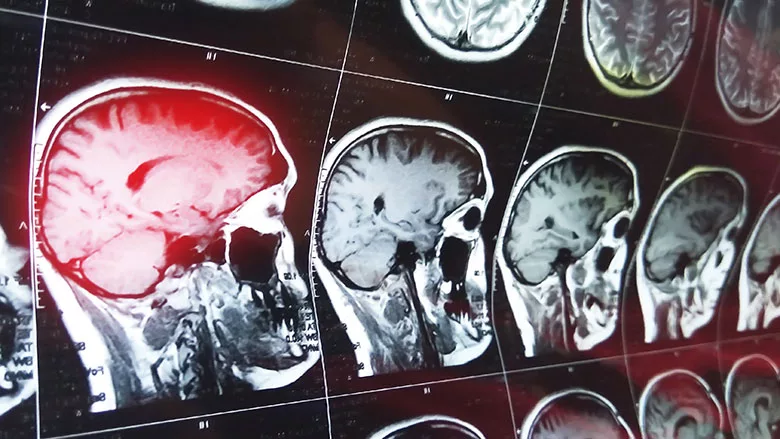
Ildar Imashev / iStock / Getty Images Plus

March 16, 2023

Between 2003 and 2010, a total of 2,210 construction workers died due to traumatic brain injuries. The construction industry in particular faces a high risk of traumatic brain injuries, and sees higher rates of both fatal and non-fatal traumatic brain injuries than any other industry.1

The Occupational Health and Safety Administration (OSHA) requires that hard hats and head protection be used for workers at risk of head injuries on the job. Yet despite growing awareness of the need for job site safety, construction workers will always be exposed to a certain level of risk.

 Common accidents in construction

 The primary causes of both fatal and non-fatal traumatic brain injuries in construction are contact with objects and equipment, and slips, trips and falls.2 These accidents can be especially dangerous when someone’s head makes impact, with either the ground or a falling object, at an angle. This is often the case, as most impacts are likely to occur at an oblique angle, exposing the head to rotational motion.

What is rotational motion?

 A combination of rotational forces (angular acceleration) and rotational energy (angular velocity), rotational motion is a result of angled impacts to the head. When rotational motion is transferred to the brain, the brain cells can start to move relative to each other and shearing can occur. This may damage the axons, or the cable transmitters of neurons, inside the brain.

During most impacts, both linear motion, primarily caused by straight impacts, and rotational motion occur together. Notably, the two different types of motions often cause different types of injuries. For example, focal injuries such as skull fractures and contusions are primarily caused by linear motion, while diffuse injuries such as diffuse axonal injury and subdural hematoma are more often caused by rotational motion.3,4 

Experiments have shown that the brain is more sensitive to rotational motion than linear motion in regard to concussions.5 When rotational motion is involved, even impacts that were considered light have the potential to cause concussions, due to the brain’s sensitivity. 

Prioritize helmet safety

To try and increase protection against potential traumatic brain injuries, those at risk of head injuries in any industry should wear a helmet. Make sure that it fits securely and is comfortable. The best helmet is the one that you’ll want to wear. Then, you may also consider a helmet that has a system in place intended to help mitigate rotational motion. 

Generally, most helmets available today are designed and tested to protect wearers from linear motion, protecting against linear impacts to the crown of the helmet, which they do quite well. However, more attention should be paid to addressing rotational motion, which can be a big threat to workers’ risk of traumatic brain injuries.

Despite the fact that off-center impacts to the head are considered to be common among accident scenarios and known to potentially cause brain injuries, regulatory standards today don’t take this into account. It’s important to note that helmets are not certified based on their ability to mitigate against the impacts of rotational motion from off-center or angled impacts. Other standards in the moto and sports industries are beginning to test angled impacts, which demonstrates the growing awareness of the harm that rotational motion may cause.

What next?

Those in the construction industry should take note as many jobsite accidents, whether a trip or a falling object, are not caused by a purely linear impact to the head. In real life scenarios, most falls occur at angle, which can create rotational motion.

Increasing awareness of the harmful effects of rotational motion, and how it can be caused, is one of the first steps towards workers’ safety. Additionally, the importance of helmet safety and safe PPE practices cannot be overstated. A survey conducted by J.J. Keller Safegear, a PPE provider, reported 50% of the respondents did not wear PPE because they didn’t think it was necessary.6 

Alerting the industry to rotational motion and its risks is just part of the journey. Workers must practice safe helmet usage and should prioritize using helmets that are designed to also address rotational motion. 


Sources: 

1. https://blogs.cdc.gov/niosh-science-blog/2016/03/21/constructiontbi/

2. https://www.bls.gov/opub/ted/2021/fatal-and-nonfatal-falls-slips-and-trips-in-the-construction-industry.htm

3. Gennarelli et.al. (1987). “Directional dependence of axonal brain injury due to centroidal and non-centroidal acceleration,” in Proceedings of the 31st Stapp Car Crash Conference (Warrendale, PA: Society of Automotive Engineers).

4. Gennarelli et. al. (1972). “Pathophysiological responses to rotational and translational accelerations of the head,” in Proceedings of the 16th Stapp Car Crash Conference, 1972 (Warrendale, PA: Society of Automotive Engineers).

5. Kleiven, S (2007). “Predictors for traumatic brain injuries evaluated through accident reconstructions,” Stapp Car Crash J, vol. 51, pp. 81–114, Oct. 2007.

6. https://cdn.jjkeller.com/wcsstore/CVCatalogAssetStore/whitepapers/workplace/68307_PPE_PainPoints.pdf


KEYWORDS: brain health Head protection injuries

Share This Story

Looking for a reprint of this article?
From high-res PDFs to custom plaques, order your copy today!

Joe Brandel currently serves as Business Development Manager for North America Industrial Safety Market at Mips, a market leader in helmet-based safety. He has been in the construction and industrial safety business for over twenty years. Specializing in head protection, hand protection, fall protection and other personal protective equipment, Joe has provided training for large and small companies throughout the Midwest. He has also provided solutions for a variety of industries, which have not only helped reduce costs, but most importantly, created safer working environments for employees.

Recommended Content

JOIN TODAY
to unlock your recommendations.

Already have an account? Sign In

  • forklift safety

    Exploring the latest technologies in forklift safety

    With more staff and more stock in warehousing now more...
    Workplace Training Strategies
    By: Josh Cramer
  • welding

    All about welder’s flash or arc eye

    A flash burn is a painful inflammation of the cornea,...
    Environmental Health and Safety
  • dangerous jobs

    The 10 most dangerous jobs in the U.S.

    On-the-job deaths have been rising — hitting the highest...
    Government Safety Regulations
    By: Benita Mehta
Manage My Account
  • eMagazine Subscriptions
  • ISHN Newsletter & Other Newsletter Alerts
  • Online Registration
  • Manage My Preferences
  • Subscription Customer Service

More Videos

Sponsored Content

Sponsored Content is a special paid section where industry companies provide high quality, objective, non-commercial content around topics of interest to the ISHN audience. All Sponsored Content is supplied by the advertising company and any opinions expressed in this article are those of the author and not necessarily reflect the views of ISHN or its parent company, BNP Media. Interested in participating in our Sponsored Content section? Contact your local rep!

close
  • man wearing the the Sundström SR200 Full Face Mask Respirator
    Sponsored byOHD

    5 Fit Testing Mistakes That Could Cost You

  • This image shows Magid AcuSpex polarized blue mirrored safety glasses.
    Sponsored byMagid Glove and Safety

    Construction PPE Guide: What Crews Need for Each Task

  • lone worker in confined space
    Sponsored byAlphasense Ltd.

    GET THE LEAD OUT of your Safety Oxygen Sensors!

Popular Stories

SpaceX 7 launch

OSHA Investigating Fatal Fall at SpaceX Starbase

Worker Impairment

How to Tell When a Co-Worker is Impaired? A Safety Pro’s Challenge

Automated loading dock equipment

After March 2026 Rivian Death, Safety Managers Reassess Loading Dock Systems Under OSHA's Warehouse Emphasis Program

top 10 most dangerous jobs

Poll

Seasonal Readiness

With the federal heat stress prevention rule on the horizon, which area of your safety program needs the most attention?
View Results Poll Archive

Products

Surviving an OSHA Audit A Management Guide, 2nd Edition

Surviving an OSHA Audit A Management Guide, 2nd Edition

See More Products

ISHN Podcasts

Related Articles

  • Select hard hats that prevent back-of-head traumatic injuries

    See More
  • highway construction zone

    Fatal injuries at road construction sites among construction workers

    See More
  • How to prevent backing vehicle injuries at roadway construction sites

    See More

Related Products

See More Products
  • 1119906652.webp

    Alive and Well at the End of the Day: The Supervisor's Guide to Managing Safety in Operations, 2E

See More Products

Related Directories

  • MSA - The Safety Co.

    WE KNOW WHAT'S AT STAKE. Unpredictable work environments are often part of the job. That's why it's critically important to have the right safety equipment at the moment it matters most. MSA's complete lines of safety solutions help protect those workers at the heart of your operation.
  • The Back School

    The Back School facilitates reducing work-related injuries; increasing employee productivity, safety, efficiency and job satisfaction; and reducing absenteeism.
×

Become a Leader in Safety Culture

Build your knowledge with ISHN, covering key safety, health and industrial hygiene news, products, and trends.

JOIN TODAY
  • RESOURCES
    • Advertise
    • Contact Us
    • Directories
    • Manufacturing Division
    • Store
    • Want More
  • SIGN UP TODAY
    • Create Account
    • eMagazine
    • Newsletters
    • Customer Service
    • Manage Preferences
  • SERVICES
    • Marketing Services
    • Reprints
    • Market Research
    • List Rental
    • Survey/Respondent Access
  • STAY CONNECTED
    • LinkedIn
    • Facebook
    • YouTube
    • X (Twitter)
  • PRIVACY
    • PRIVACY POLICY
    • TERMS & CONDITIONS
    • DO NOT SELL MY PERSONAL INFORMATION
    • PRIVACY REQUEST
    • ACCESSIBILITY

Copyright ©2026. All Rights Reserved BNP Media, Inc. and BNP Media II, LLC.

Design, CMS, Hosting & Web Development :: ePublishing