Work zone safety
Best practices to protect roadside construction workers
Credit: United Rentals
Roadside work zones pose extreme risk for the laborers who build and maintain our highways, roads, bridges, tunnels and utilities. That’s why highway maintenance jobs are among the most dangerous in the U.S. According to the Bureau of Labor Statistics, from 2003 to 2021 they claimed the lives of 123 laborers each year on average, most of whom were struck by moving vehicles.
Many road crew accidents and fatalities can be avoided without sacrificing productivity by establishing safe work zones and training workers in safety best practices when working in roadside construction zones. The high-level basics are outlined below.
Create a traffic control plan that adheres to federal, state and local laws
A temporary traffic control plan outlines the flow of vehicles around the work zone to provide a safer work area. It uses words and schematic diagrams to detail traffic flow changes, the placement of signs, arrow displays, pavement markings, shadow vehicles, cones, barrels, barricades, flagger positions and other control measures. Planners should take into account obstructions such as hills or vegetation that could block a motorist’s view of the work zone. Traffic control plans should adhere to Department of Transportation regulations and state and local laws.
A buffer space that’s free of personnel, vehicles and equipment is an important feature of a traffic control plan. It provides a protective perimeter around the work area to help prevent vehicles from striking workers. If a driver breaches the cones or other barriers set up around the work zone, the buffer zone gives them more time to come to a stop before striking a worker.
Create an internal traffic control plan
Workers are sometimes struck by construction vehicles inside the work zone. To prevent these accidents, create a plan to control the flow of equipment and workers on foot within the work zone perimeter. Designate separate paths for pedestrians and equipment using cones and barriers.
Designate one or more competent persons to oversee work zone safety
Assign a competent person who will be responsible for safety in the work zone. This person should be able to identify existing and predictable hazards and be authorized to take prompt corrective measures to eliminate them. It’s a good idea to designate more than one competent person so that one competent person is on site at all times.
The competent person should inspect the work zone throughout the project and keep an eye out for skid marks, tipped cones, damaged barricades and other evidence that the traffic plan inside or outside the work zone isn’t working well. Workers should report any hazards to site supervisors and competent persons as part of a daily site evaluation. Traffic control plans inside and outside the work zone should be modified as needed in response to near misses and changing traffic conditions.
Use trained flaggers when necessary
Flaggers who have undergone traffic control flagging training can play an important role in maintaining the safety of workers and motorists in work zones. They use a stop/slow paddle and standardized flagging signals to communicate with drivers, and they warn workers of dangerous traffic situations to help avert accidents. When possible, however, use alternative traffic management systems instead of flaggers, especially in high speed zones, at night and during inclement weather to avoid putting flaggers at risk.
Light the work zone
For nighttime or low-light work, add lighting sufficient to meet the illumination requirements of the space and the task while controlling glare for motorists.
Train workers in safety best practices
In addition to establishing a safe work zone, companies can help protect work zone personnel from serious injury and death by training and reminding them to:
- Work facing traffic. Facing traffic allows crews to see potential hazards and move out of the way to avert a disaster. If facing traffic isn’t an option, the use of spotters can increase worker safety.
- Communicate clearly. In noisy work zones, use communications that are easy to understand by the entire crew. Hand signals, two-way radios and eye contact are effective ways to share information between equipment operators and on-foot workers.
- Avoid walking in equipment blind spots. Employees should avoid walking behind or near heavy equipment. To help prevent backovers, ensure that audible vehicle backup signals are operational. When possible, operators should use a spotter to help them back up safely.
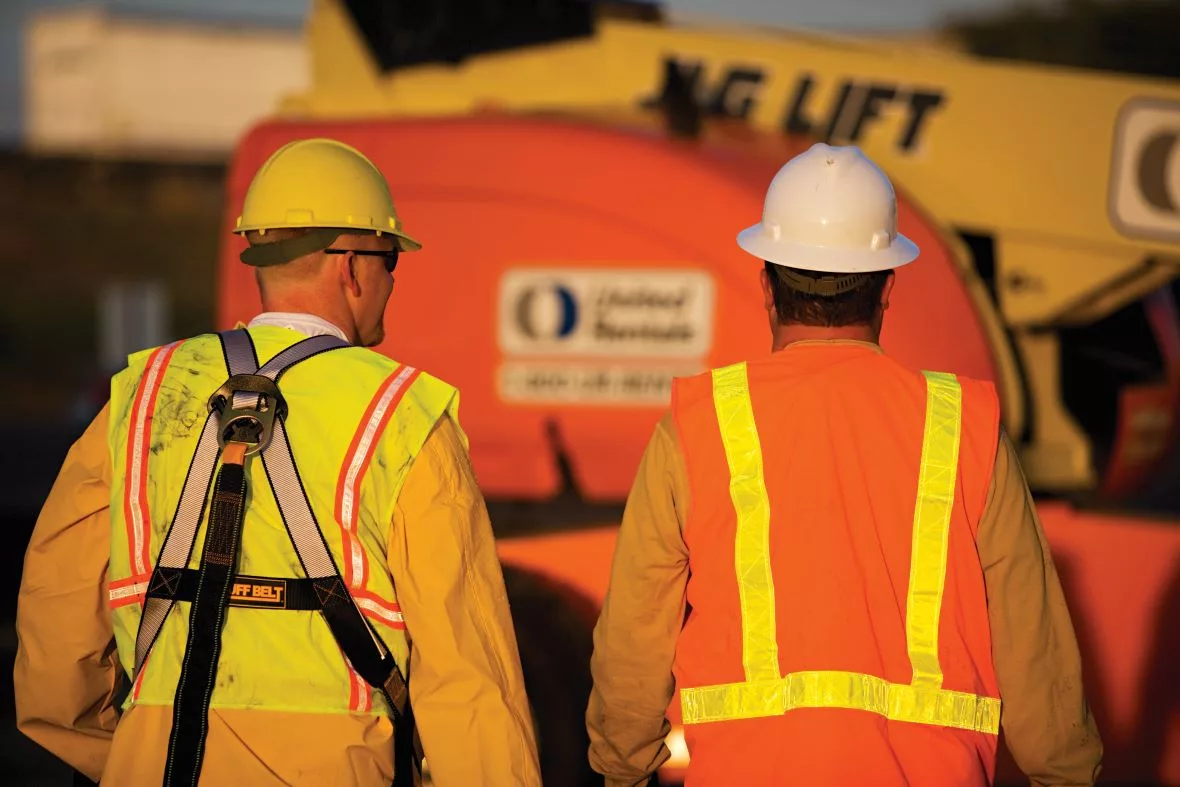
- Wear high-vis clothing day and night. OSHA requires roadside construction workers to wear high-visibility apparel to make themselves more visible to other workers and motorists.
- Dress for the weather. Sun, heat and cold exposure are real dangers for crews that work outside. Employees should dress appropriately, stay hydrated and take regular breaks.
Equipment operators should take additional safety precautions, such as wearing a seatbelt to protect them in case of a rollover and setting the parking brake and placing chock blocks when parking construction vehicles.
Distracted motorists, lead-footed drivers, low visibility and inclement weather all pose hazards for roadside construction workers. Strictly adhering to safety best practices for roadside work zones is critical to reducing the number of work zone accidents and fatalities and allowing crews to return home safely at the end of each shift.
Looking for a reprint of this article?
From high-res PDFs to custom plaques, order your copy today!