The foreman’s impact on safe performance
Role requires strong initiative and management skills to guide workers
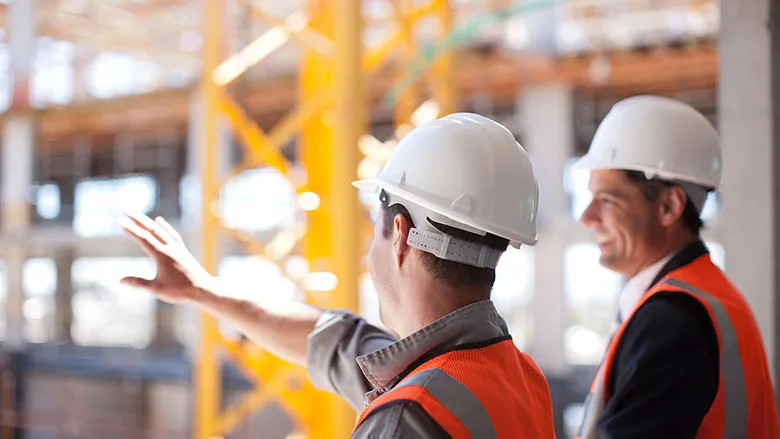
Photo credit: Paul Bradbury / Getty Images Plus
Most organizations produce a product or service. Depending on the industry they are in or the product they produce, their operational risk will vary. They generally need a workforce overseen by supervision (foreman) to produce their output. The foreman is responsible to ensure that the workforce meets and/or exceeds the expected task performance goals, by engaging in accepted work practices and follows prescribed procedure. This paper will focus on construction which is a challenging industry, due to its inherent diverse nature, complexity, variability and a large number of entities (subcontractors, vendors, suppliers) involved.
Starting out as a new foreman
Usually, the foreman position is filled from the existing workforce. When the need for a new foreman arises management looks for a worker who is exceptionally good at their job. One who is productive and usually exceeds goals, has good technical skills, is self-directed, a good problem solver, and show initiative, to name a few. The worker is informed that they have been promoted to foreman and then assigned to the new job. Usually, newly promoted foremen are not given any structured management training. The expectation is that they should be able to adequately handle the job’s demand.
They bring their worker skill with them. To perform their work properly the worker has to control their own actions and behavior. Their required skill set includes physical ability to perform the work. Possess the knowledge to effectively perform the task, the experience in order to efficiently do the work, as well as the motivation to excel in their assignment. As foreman they oversee the crews, are responsible to enable them to efficiently and effectively perform their tasks, which requires management skills.
It takes a while for the “new” foreman to handle the new challenges and responsibility at an acceptable level. They will have to go through a period of trial and error in order to modify, and expand their existing skills, as well as develop new skills in order to succeed as a foreman. Some arrive at this faster than others, some struggle and some eventually fail. During this adjustment period, the crews the new foreman oversees are going to be somewhat less productive, and possibly fall short in other operational performance.
Positional skill and training
The foreman is responsible for the performance of the crew, some of whom will be less skilled than the foreman. So, the foreman will be able to utilize the worker skills they possess to help improve some of the crew members shortcomings by improve their knowledge and capability. To achieve this the foreman must be an effective trainer. The primary responsibility of the foreman is to enable the crew to meet or exceed their assigned production goals.
The primary responsibility of the foreman is to enable the crew to meet or exceed their assigned production goals.
But to properly manage crews the foreman needs some management skills. This includes planning, organizing, directing, staffing, and controlling in order to help the workforce successfully achieve project goals and expectations. This also requires effective delegation, expediting, problem solving, coordinating, decision making, time management, quality control, attention to risk & safety, and provide constructive feedback, impart timely recognition, etc. To achieve this effectively the foreman will also need leadership skills by articulating a compelling vision, creating a conducive work climate, motivating and effectively communicating as ell as motivate, be empathic, effectively deal with people, recognize potential, to name a few.
Bifurcation of responsibility
Most construction organizations assign production oversight and responsibility to “line management” (foreman, superintendent and manager), and the management and control of safety to the safety management function (manager, practitioner, etc.). This primarily places the workforce under line management’s operational control. Usually, the safety manager has limited interaction with the workforce as he may visit the site on a monthly or weekly basis. and focus primarily on physical hazards and the workers behavior.
Contractually the general contractor must complete the project by a certain date, so production and performance goals are the primary focus in operations. They have a project schedule which is utilized to track and control daily operations. Primarily, inspections, accidents and losses are the metrics utilized to manage safety. BLS accident statistics are utilized to compare a company’s overall performance against their industry.
Accidents are rare events. There is research that shows a worker can work 5 to 7 years before having an accident. Engaging in at risk or unsafe acts or behavior does not routinely or necessarily result in accidents. Due to rare negative consequences, after a while such behavior becomes the prevalent, natural and acceptable way to perform similar tasks. Also, for most organizations, particularly smaller ones, recordable injury rates have little statistical validity. An accident may likely be designated as bad luck resulting in no or cursory evaluation and/or assessment.
And even a typical accident report may have very little value in providing "real-time" information leading to appropriate operational solutions. Moreover, injury statistics are downstream measures, and what is really needed are upstream operational metrics and measures that highlight what is going on. More importantly, if a change is made, indicating whether the systems, practices, procedures, and processes are getting any as a result. For more information see numerous past articles by this author involving fundamental issues with managing safety.
Operational risks
Construction operations are managed by field staff. They plan, schedule, organize, and control work flow, etc. During the planning process the staff generally has different option when selecting means and methods. Since their primary responsibility is for time and money their tendency may be to select option that best meet or exceed that end. As a result, the selected option may have built-in risks affecting task design, and task demand facing the workers when performing the work.
These risks could have been eliminated by project staff through the evaluation of accident risks there by effecting the selection of different as well as safer means and methods. Had the organization made safety a part of the field staff’s responsibility their choices during the planning process would have diminished the residual risks facing workers during construction. Primarily having a production focus during planning, may create additional risky conditions which the workers and the safety function will have to deal with at a later point in time.
If the organization had integrated the safety function into operations, then safety personnel could have assisted planning staff to more effectively identify and manage worksite risk effecting field operations. The greater body of risk makes the task more complicated and difficult to perform, as well as increases the likelihood of an accident occurring. By diminishing risks through task design workers have less risks to contend with performing their work. This approch also diminish the risks associated with task demand. This makes the workers more efficient and thereby more productive.
Integrated operations management
This highlights the structural issues organizations create with the bifurcation of construction responsibility by separating safety management responsibility from field staff responsibilities. This requires restructuring the field operations. Fields staff takes on safety as part of their responsibilities and the safety function operate as a consultant to them. One of the benefits of this results from the fact that the foreman who virtually works side by side with the workers can stop unsafe behavior as it happens instead of waiting days or weeks before the safety manager visits the site to deal with it.
The foreman can make sure that the workforce has access to the proper tools with which to safely perform their work. He can ensure that their access to the location of their tasks is fee of risk, etc. The oversight responsibility of the foreman enables him the more effectively deal with some physical hazards. He has the ability to respond quickly to correcting and mitigating risky conditions and/or behavior. Thereby making the work environment safer for the workers performing their tasks.
Conclusion
With the restructuring of responsibilities, the foreman can provide guidance to improve the workforce’s knowledge and capability. The foreman is in a better position to assist in task assignment by effectively aligning each worker’s capability with the task demand. He can more rapidly and effectively ensure that the workers can perform their work safely. In turn the safety practitioner can have effective input to operational staff during preconstruction as well as construction, by providing input during planning, organizing, staffing, and control decision making. And provide inspections to assess the status of safety and the effectiveness of field operation by meeting and/or exceeding organizational goals.
Looking for a reprint of this article?
From high-res PDFs to custom plaques, order your copy today!