Balancing efficiency and reducing human error in manufacturing
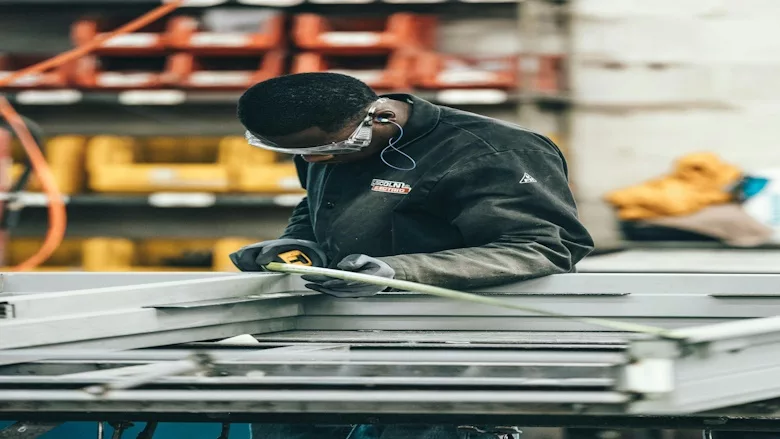
Credit: Unsplash
Alexander Pope so wisely wrote, “To err is human” — but in manufacturing, errors can be catastrophic. The wrong button pressed at the wrong time might cause the entire manufacturing line to shut down; the wrong component installed in the wrong place could cost a company millions. Human error can result in the destruction of equipment, the waste of materials, or the injury of staff. This means it’s in every company’s best interest to reduce the incidence of human errors as much as possible.
Unfortunately, even attempting to mitigate human error can negatively impact manufacturing efficiency, and inefficiencies can be almost as expensive and frustrating as the human errors themselves. It takes time and money to ensure that operators are comprehensively trained, that parts are correctly assembled, and that equipment is properly calibrated and maintained. Yet, skipping these tasks is often what causes human errors in the first place. Finding that golden balance between efficiency and effective reduction of human error is a continuous process distinct for each manufacturing environment.
The cobot revolution
It is hardly surprising that manufacturers are interested in turning to technology to try and find that balance. There are dozens of examples of automation software that help reduce mistakes in scheduling, inventory, workflow monitoring, and more, but among the most interesting solutions to preventing errors while improving efficiency could be robots.
Talk of robots often dwells on autonomous machines, which can work without human input. That said, collaborative robots, or robots that work alongside human operators, may be more practical for manufacturing environments. So-called cobots merge the strengths of technology with the strengths of human workers, allowing for improved productivity and safety while reducing errors and waste. Because cobots rely on the expertise of human operators, they’re more adaptable than autonomous technologies. What’s more, they don’t eliminate jobs — which can harm workforce morale — but rather improve the employee experience by eliminating opportunities for error.
Most varieties of cobots are robot arms designed for specific manufacturing applications, such as lifting large, unwieldy components or welding those components together. However, other types of robotic equipment, like 3D printers, are also useful in manufacturing environments. Innovation in robotics is rampant, and as the global cobot market continues to grow, companies are sure to find all manner of prefabricated cobot options. They may even be able to order custom cobots to perfectly meet the needs of their unique manufacturing lines.
Factoring in humans
That said, technology isn’t the only solution; equally important is looking to human employees themselves, as well as the environment in which they work.
When a human error occurs, many supervisors place all the blame for the incident on the workers who made the mistake. Unfortunately, this rarely solves the underlying problem that allowed the error to occur in the first place. Even if the worker at fault is removed from the team, the uninvestigated original issue may continue to increase the incidence of human errors. The correct response to a human error in manufacturing, especially one that continues to reoccur, is to try and determine the root cause.
By understanding the driving reason, or reasons, for these issues, you can then take the necessary steps to reduce human error in your organization. For instance, if you’ve set unreasonable goals for your employees to meet, they may rush through their work, resulting in mistakes. Simply shifting goals to something more achievable can make a significant difference and allow employees to focus on the quality of their work. In manufacturing settings specifically, it can also help to prioritize compliance training to mitigate potentially dangerous accidents, as well as improve communication and ensure employees have access to all necessary procedures.
Additional low-tech steps you can take include reorganizing supplies and better signage, which will keep workers safer. Cumulatively, these steps can promote a culture that’s focused on safety in addition to productive and efficient work—and ultimately, this can have lasting beneficial impacts on efficiency and employee morale.
Communicating about human error
Sometimes, the simplest solution is the best one. Business leaders may find that honest and frequent communication with staff helps reduce human error without any need for additional tools or changes to existing systems.
By keeping lines of communication open, leaders and employees can provide one another with consistent feedback about the manufacturing environment, which can make it easier for human errors to be addressed and mitigated in the future. Communication can also cultivate a culture of accountability, in which employees learn to recognize and avoid risky behaviors that may result in dangerous and expensive mistakes.
Balancing the bottom line
It’s impossible to eliminate human errors entirely. It simply isn’t feasible to replace an entire manufacturing line with autonomous robots. Even if the technology were available (and affordable), businesses would continue to see human error in decision-making, robot installation and maintenance, and more.
Companies will always run on humans, and humans will always be prone to mistakes. By equipping human operators with equipment like cobots that can reduce the opportunity for errors and by designing manufacturing spaces with human capabilities and limitations in mind, manufacturers can keep the costs of human errors low — all while promoting high levels of efficiency.
Looking for a reprint of this article?
From high-res PDFs to custom plaques, order your copy today!