Ask a Medic: 911 Skills for Safety
Common Questions for Paramedics to Spark Conversation and Foster Understanding
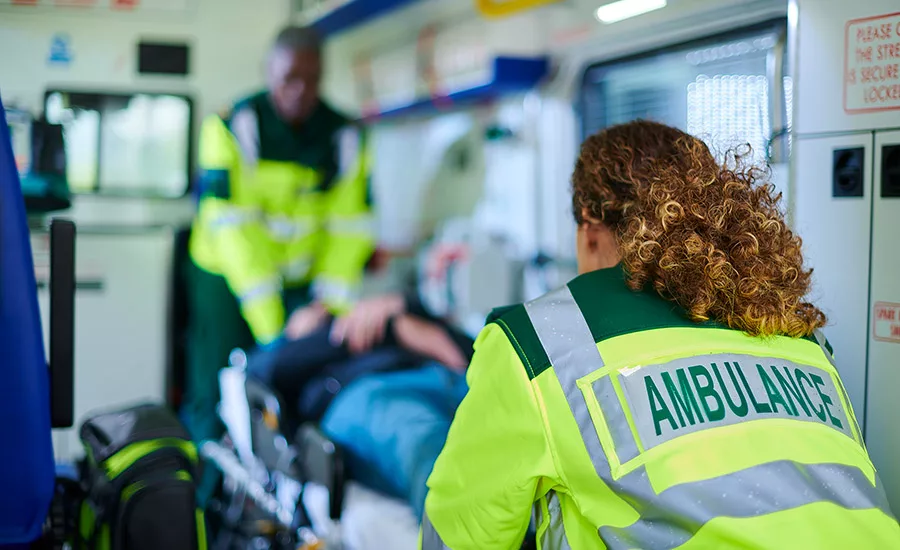
Photo credit: sturti / iStock / Getty Images Plus
Of all the public safety roles in society, EMS is often the most misunderstood. This series aims to achieve three goals: first, to address common questions paramedics are frequently asked; second, to connect these questions to emergency response in industrial and commercial settings with the goal of improving your response teams; and third, to spark conversation that can help us build stronger response teams.
In this first article, I used Google Analytics to see what questions people were asking about EMS and paramedics. A common question that came up was, "Why do paramedics walk instead of run?" I thought this would be a great topic to start this series because, at different points in my career, I've found myself on both sides of this debate. While I’m eager to share my perspective as a paramedic, I’m even more excited to hear the views of the responders and team leaders reading this article. Later on, we’ll explore both sides of the walk-vs-run debate in emergency response. But first, let’s address the question.
What we were taught
All emergency responders, regardless of their certification level, feel a pressure to find solutions to the problems they’re responding to. Early in their training, paramedics are taught to avoid panic and maintain clear thinking during high-stress situations. Many EMTs, AEMTs, and paramedics have had instructors role-play as frantic bystanders to distract them while they work through a simulated emergency. Whether this teaching method is truly beneficial is still up for debate, but the intent behind it is clear: Stay calm when no one else is.
When paramedics are new to the field, they often look up to seasoned EMTs and medics as role models. One of the most impressive qualities these experienced providers bring to the scene is a sense of calm. Like panic, calm is contagious. Walking at a normal pace, rather than rushing, projects an image of control. The presence of a calm, composed provider can help bring a sense of calm to even the most chaotic emergencies. This calmness enhances clarity of thought and often leads to more effective decision-making, which can improve bad situations. Early in my career, I followed this "walk, don’t run" approach, believing it would help inspire calm in myself and my team. I believed, and still do to some extent, that appearing calm helps keep me calm. But what made me question this approach?
After several years on the job, I responded to a routine 911 call that made me rethink this strategy. My partner and I were greeted by a frantic wife who had found her husband without a pulse. With our equipment in hand, we walked into the house, where we found a man in his 50s in cardiac arrest. His skin was cold enough to suggest he had been down for a while, but warm enough to justify attempting resuscitation. The call itself went smoothly, but unfortunately, the outcome was not a return of spontaneous circulation.
After the coroner was called, we shifted our focus to comforting the wife. She became upset and said, "Why did you walk? It was like you didn’t even care." That comment hit me hard because we did care, deeply. In that moment, I was forced to ask myself: Why didn’t we run? Do I believe that running those last 25 feet would have changed the outcome? No, I don’t. However, I do believe that showing a greater sense of urgency would have given the grieving wife the comfort of knowing we tried everything we could.
After that call, I started questioning something that hadn’t been challenged before: Do we run to a call to show genuine concern, or do we walk to project a sense of calm and control over the situation?
My peers and I were divided. Responders make critical, life-altering decisions in environments that are far from ideal, with little time for reflection. Our decisions need to be made with all of our knowledge and mental faculties intact. If even a hint of panic creeps in, our focus begins to narrow. Knowledge slips away. Decision-making becomes impaired. Our ability to overcome obstacles fades. The physical appearance of calm can help foster a mental calmness that is vital in emergency situations.
On the other hand, running can take advantage of the one thing we are all bound by: time. While a few seconds here and there might not make a huge difference, they can add up and contribute to better outcomes. Walking projects a sense of calm control, but running conveys a sense of urgency and a desire to resolve the situation quickly. If you were the one receiving care during an emergency, would you want a responder who you believe genuinely cares about the outcome? Would you want their actions to reflect a sense of urgency?
Personally, I’ve tried to find a middle ground. As an EMS educator, I incorporate training that teaches students to maintain a calm mind in a hurried body. Imagine a body of water with a turbulent surface, but calm and still just beneath the waves. It’s not as easy as it sounds. Running and frantic movement release hormones that naturally impair cognition. Students need more than just knowledge—they need an understanding of how to make decisions during an emergency. In other words, decision-making skills should be developed in the classroom. Watching videos during a recertification course won’t cut it. It might earn a certification, but it won’t produce skilled responders. So, what are we after — skills or certification?
Questions for the reader
What do you think? There are obviously extreme situations where walking would be inappropriate, and other situations where running would be unnecessary. But what about the situations that are both time-sensitive and require a provider who can keep their head in the game? If you hold a leadership position on a response team, how would you want them to react? If you are a responder, should you run or walk? And if you were the victim, would you want responders running or walking?
Now we know why paramedics don’t run. Right or wrong, good or bad, it’s an attempt to bring calm to the call. The question remains: Should responders in any setting walk or run to these calls? There are many experienced leaders and responders who read ISHN magazine. I’m interested in hearing their perspectives on this topic.
If you have questions about EMS that you'd like to see explored in a similar way, feel free to email me: glynnemergencytraining@gmail.com Active engagement from our readers will make this series not just educational, but a tool to improve all of our responses.
Looking for a reprint of this article?
From high-res PDFs to custom plaques, order your copy today!