How to Make Workplaces Safer With Help From AI
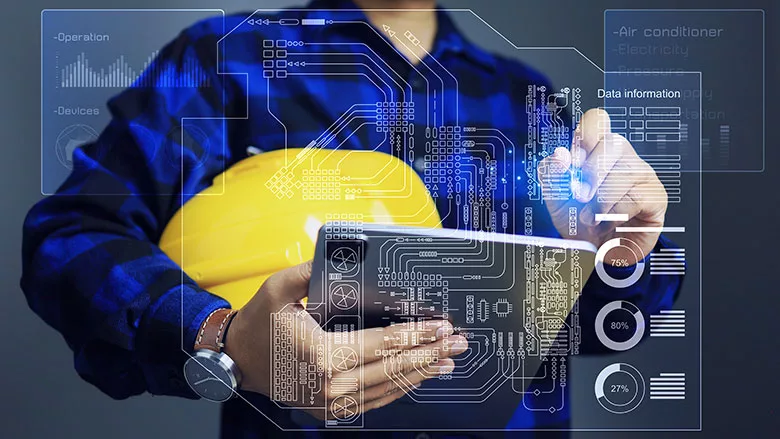
Photo: Aree Sarak / iStock / Getty Images Plus
It has become almost cliché to talk about how AI can improve virtually everything under the sun, and Environmental Health and Safety (EHS) is no exception. Nonetheless, having the conversation about what AI can and is doing to improve EHS is critical because it amounts to much more than just bells and whistles.
In particular, it’s important to note that AI isn’t just another way to sift through EHS data or assess risks. That’s part of why AI matters in the EHS space, but its ultimate benefit lies in helping to improve the effectiveness of safety controls and reduce the risk of serious workplace safety incidents.
Allow me to explain by discussing what AI can do to make workplaces safer, as well as the challenges and limitations businesses should consider as they seek to leverage AI-powered EHS solutions.
Key use cases for AI in Environmental Health and Safety
In the context of EHS, as elsewhere, the killer feature of AI is that it can process data and identify patterns on a scale massively greater than what humans could manage manually. By taking advantage of this capability, businesses can improve EHS in a variety of ways.
Interpreting workplace safety regulations
Safety regulations evolve constantly as existing rules change and new ones come online. Meanwhile, the typical business’s safety management teams are stretched thin, leaving them little time to follow regulation updates and ensure that their businesses are complying.
AI is a natural solution to this challenge. Using AI, safety managers can automatically parse regulations, identify changes and summarize what they need to know. In this way, AI can substantially reduce the time and effort necessary to keep pace with the EHS regulatory environment and align safety controls with the best practices mandated by workplace safety rules.
Tracking diverse regulations
Along similar lines, AI can streamline the task of managing differences in workplace safety regulations between different jurisdictions or sites. Rules can vary widely across countries and states and based on the nature of the workplace environment, resulting in additional detail that safety managers often struggle to track manually.
Here again, the result is an enhanced ability to identify relevant rules and assess workplace risks accordingly.
Improving incident reporting
Moving beyond regulation interpretation and risk assessment, AI can also improve the efficiency and efficacy of incident reports. This is a very valuable use case because often, frontline staff who create safety reports have limited safety experience, meaning they may not know which information to report or how best to report it.
AI tools can automatically review reports to ensure that the data is complete. In turn, businesses can benefit from an enhanced ability to understand what went wrong during an incident and how they can improve safety controls to prevent a recurrence.
Interpreting safety reports
Of course, safety reports are only useful for enhancing safety controls if the organization can review and act on relevant report data. And while safety managers often closely review incidents that result in serious harm, less critical reports (such as first-aid cases and near-miss incidents) can easily fall through the cracks.
AI can help here by automatically reviewing all reports and generating recommendations for businesses to improve safety. This capability is especially valuable in situations where a minor incident could easily have been much more serious.
For example, imagine a near-miss incident where one employee starts the conveyor belt unexpectedly. The hands of another employee who is working to clear a jam on the belt are almost caught in the machinery and crushed, but are spared because the worker pulls back quickly. The employee clearing the jam thought that the machinery was properly locked out. An identical set of circumstances, with this or another employee, could result in a serious injury, making it essential to control this safety risk.
In a scenario like this, analysis of the near-miss incident would highlight the importance of reviewing the lock out/tag out procedure and training on similar conveyors or perhaps even more broadly based on the finding of the root cause analysis. By getting ahead of the issue before serious harm occurs, the business can prevent a major injury in the future.
Managing AI’s limitations
While AI opens the door to powerful opportunities for assessing and mitigating workplace risks more effectively, it also presents some challenges that businesses need to navigate to take full advantage of AI-powered EHS solutions.
One key consideration in this regard is ensuring that AI systems actually notify the right people. Generating workplace safety insights using AI is one thing; ensuring that those insights are routed in the appropriate form to the appropriate stakeholders — such as safety professionals, worksite managers or frontline workers — is another. AI-enabled EHS systems can do this, but they must be configured properly based on the notification and collaboration priorities the business sets.
Keeping humans in the loop when reacting to AI-generated EHS insights is also critical. There will always be a risk that AI will make the wrong decisions. Plus, even when it’s accurate, compliance rules typically mandate that a human sign off on or oversee the workplace safety process. Expecting AI to assume full responsibility for EHS is just not realistic.
Conclusion: Getting the most from AI in EHS
We’re quickly moving toward a future where AI-powered EHS capabilities are not merely a means of saving time and effort. As these features grow in sophistication, they’re becoming critical tools for helping not just to assess risk, but also to minimize it by implementing the most effective safety controls for each workplace.
This means that AI has become much more than a way to make life easier for safety professionals. It’s also a step toward a safer workplace for everyone – and that’s the ultimate reason why now is the time to get on board with AI-enhanced EHS.
Looking for a reprint of this article?
From high-res PDFs to custom plaques, order your copy today!


