It’s the Culture, Silly: Why Our Best Safety Policy Wasn’t a Policy at All
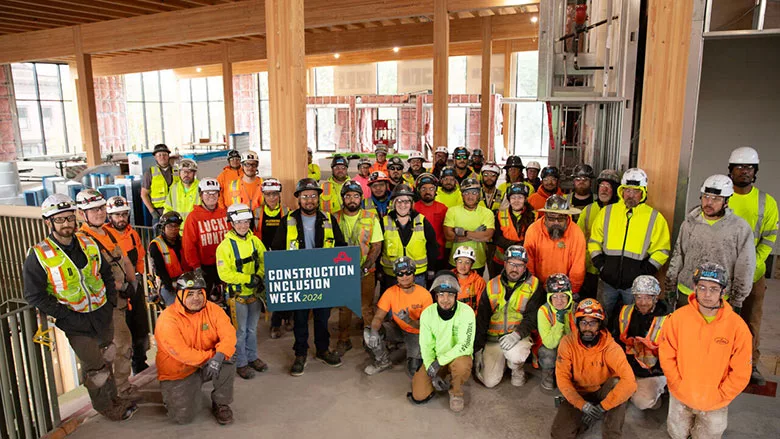
Photo credit: Chad Sproule
In construction, you can write all the policies you want — hang them in the trailer, put them in the bid package, staple them to someone's forehead. But if your team doesn't believe in the culture behind them, it won’t matter.
A few years ago, our team at Andersen Construction hit a wall. Recordable injuries were up. Morale was down. Our EMR was creeping toward 1.0. We had jobs running and policies in place, but the truth was . . . we didn’t know where we actually stood. Underreporting was common. Trust among workers had thinned. And what we were calling a “safety program” was mostly enforcement and form-filling.
On paper, we were fine — but we weren’t succeeding where it mattered.
The scariest part? The market was hot, so the work kept coming in. But we knew we weren’t getting it for our safety culture. We were adrift.
That’s when we stopped looking at our policies and started looking in the mirror.
Rebuilding from the Inside
Our cultural overhaul began not with new rules but with listening. We launched a Safety Steering Team made up of field leaders, office staff, and superintendents. Then, we ran company-wide perception surveys. The message was clear: our people believed in Andersen, but they didn’t know what was expected of them.
We started by overhauling onboarding. Now, every new hire — from project executive to apprentice — begins their employment the same way: with a safety orientation grounded in our values, history, and expectations. No more HR handbook in the office and jobsite rules in the field — everyone is aligned on the same rules.
We redesigned training around accessibility and engagement. Our “Safety Passport” program included 15 core courses and gave workers a tangible reason to want more training: every 5 classes completed earned a branded reward. The results? Roughly $200 in small incentives generated a groundswell of demand.
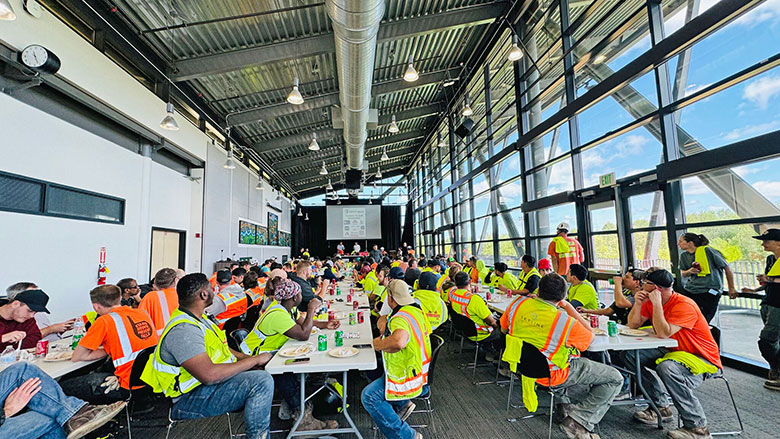
Photo credit: Chad Sproule
Shift in Tone, Not Just Policy
We also changed how we talk about safety. Supervisors were coached to stop using phrases like “What were you thinking?” or “You should have known better.” Instead, we focused on coaching language: “Help me understand what happened,” or “Let’s talk through this together.”
You can’t enforce your way to excellence.
Field inspections were simplified and reframed. Instead of catching what was wrong, we started recognizing what was right. We ran an "Inspection-Athon" to drive participation and used inspection data to identify where training or support was needed. Leading indicators, not lagging ones, began shaping our response.
We launched a Safety Revival — a full-company gathering every nine months that wasn’t about compliance but culture. There were shirts, food, prizes, and meaningful talks on communication, inclusion, and leadership. It’s the only event where executives, craft workers, and support staff all sit together. And that’s the point.
Enforcement Still Matters
Culture without accountability is chaos.
Let’s be clear: None of this replaces discipline. Culture without accountability is chaos. We drew red lines and committed to enforcing them consistently, regardless of title or tenure. At the same time, we made sure that when someone reported an issue — especially one involving themselves — they never regretted the call. If someone speaks up and gets punished for it, they won’t speak up again.
What Changed
Admittedly, it’s not all sunshine and Traeger giveaways. For every safety revival and custom hoodie, there’s a new helmet mandate that takes some time to catch on. Some things in safety are unavoidably dorky — and that’s okay. What matters is that the cultural capacity is there. If your team never doubts that your decisions are made for their benefit, they'll keep showing up.
For every safety revival and custom hoodie, there’s a new helmet mandate that takes some time to catch on.
Since beginning this cultural shift, we’ve seen tangible results:
- Significant reduction in recordables and SIFs
- Lower turnover and stronger field engagement
- Higher participation in training and reporting
- A drop in EMR that reflects both culture and consistency
We’re not done. We still have policies to fix, systems to improve, and red lines to hold. But now, we’re moving with clarity and momentum.
Bigger Than “Our Safety”
Over the course of this transition, we faced a series of moral dilemmas that challenged our commitment to culture. One of the most defining came when we inherited a trade partner that didn’t align with our expectations — especially in safety.
From day one, we were concerned. They were in a high-risk scope, and early on, a major near-miss confirmed our fears: a piece of steel was dropped from height due to substandard equipment and unsafe rigging practices. No one was injured, but it easily could have been catastrophic. It was a clear sign that their systems — and expectations — weren’t where they needed to be.
This led to a hard conversation among our team. We realized that if we fired them and months later saw a major incident on the news, we wouldn’t feel validated — we’d feel responsible. We had the opportunity to make an impact. And we took it.
Instead of termination, we paused their work, brought in leadership, and delivered a message they didn’t expect. With attorneys on all sides, we rolled out a training and oversight plan. Work wouldn’t resume for nearly two weeks — but when it did, it was with a crew that was trained, equipped, and empowered. Clear expectations were set. And they met them.
That trade partner went on to perform outstanding work — not just on our site but across the industry. Years later, we still work with them.
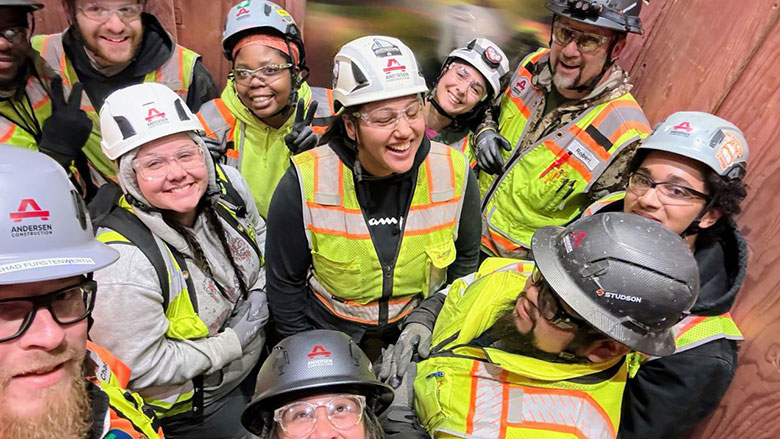
Photo credit: Chad Sproule
Final Takeaway
Culture isn’t what you write down — it’s what you walk by, what you tolerate, and what you celebrate. You can’t enforce your way to excellence. But with trust, clarity, and consistency, you can build a culture where safety isn’t just a rule — it’s a shared belief.
Just remember: Culture isn’t static. It’s earned and re-earned daily. The moment you stop investing in it, the drift begins again. If it feels like you're doing the hard thing for the right reason—that’s when you’re probably on the right path.
Cultural Health Check: Are You Leading or Just Managing?
Use this 10-question self-assessment to evaluate the strength of your team's culture. Each question should be answered honestly using the following scale:
- 3 points – Strongly Agree
- 2 points – Somewhat Agree
- 1 point – Disagree
- 0 points – We don’t know / haven’t discussed it
- Do people on your team clearly understand what’s expected of them beyond the rulebook?
- When someone makes a mistake, is the default response coaching—not punishment?
- Are safety wins consistently celebrated, not just incidents reviewed?
- Would field teams describe your leadership as visible, approachable, and consistent?
- Do leading indicators (like inspections, huddles, and check-ins) drive more attention than lagging metrics?
- Have people who reported issues been thanked, not burned?
- Does onboarding feel like the start of belonging—not just orientation?
- Are the words we use in safety conversations supportive and curious, not critical or defensive?
- Are cultural expectations actively reinforced by superintendents and PMs—not just safety staff?
- Can you point to a recent moment where culture was chosen over convenience?
Scoring:
- 24–30 points – Cultural Muscle: You’re aligned, active, and consistent. Now stay vigilant.
- 16–23 points – Cultural Tension: You’ve built something real, but it needs reinforcement.
- 8–15 points – Cultural Drift: There’s belief, but it’s getting buried in pressure or process.
- 0–7 points – Cultural Debt: The team may be functioning but not thriving. It’s time to reset.
Use this tool to spark honest dialogue — not judgment. Culture isn’t about perfection. It’s about commitment.
Looking for a reprint of this article?
From high-res PDFs to custom plaques, order your copy today!