ISHN logo
search
cart
facebook twitter linkedin youtube
  • Sign In
  • Create Account
  • Sign Out
  • My Account
ISHN logo
  • NEWS
    • Today's News
    • Global Safety News
    • Government Regulations
  • PRODUCTS
    • Product Innovations
    • Featured Products
  • TOPICS
    • Environmental Health and Safety
    • Facility Safety
    • Workplace Health
    • Occupational Safety
    • PPE
    • More Topics
  • CONSTRUCTION
  • TECHNOLOGY
  • COLUMNS
    • Best Practices
    • Dave Johnson: What’s going on
    • Editorial Comments
    • Leading Safety
  • MULTIMEDIA
    • ISHN Podcast
    • Videos
    • Cold Stress Education Quiz
    • Webinars
    • White Papers
  • MORE
    • Buyer's Guide
    • Newsletters
    • Convention Companion
    • Polls
    • Events
    • ISHN Store
    • Sponsor Insights
  • EMAGAZINE
    • eMagazine
    • Archived Issues
    • Contact
    • Advertise
  • JOIN TODAY!
Columns

POSITIVE SAFETY CULTURES: Yes, you too can influence change

February 1, 2005
ISHN is pleased to introduce a new column this month on how to build and sustain a positive safety culture in your organization, written by Dr. John Kello. Dr. Kello is an organizational development expert and professor at Davidson College.

Could this be you? As a safety & health pro, you often encourage people to make change, to do things differently, to challenge longstanding habits.

You’re usually more of an influencer than a director. Even with the full backing of top management, you probably don’t have line authority over the folks whose behavior you hope to change.

You aim to drive safety as a core value, to create and implement systems that will build a self-sustaining safety culture in your organization.

You sound to me like an internal consultant/change agent, with safety as your primary strategic focus. You help to weave positive change into the fabric of your organization — something I’ve done over a 25+ year career as an organizational development (OD) consultant.

So what can we do to increase our effectiveness in the change agent role? Here are some strategies used by successful OD consultant/change agents, and I think they can increase your impact, too.

1) Accept it — change really is hard.

It’s a Great Truth: most of us simply don’t want to “be changed” by someone, even when it’s in our best interest. Change is a major source of stress for many of us. If pressure is applied to change people, the natural, predictable response is resistance.

Push too hard and you go beyond “mere” resistance and encounter what psychologists call “reactance.” In a reactance mode, I not only fail to be persuaded by your idea — I actively fight against it, and try to invalidate it.

A full-frontal assault on resistance is intuitively appealing, but often it actually backfires. The “you oughtta wanna” strategy doesn’t work, and indeed may make matters worse.

2) Remember three natural laws.

In the 1960s, OD consultant Dick Beckhard saw clearly the futility of the “hardball,” full frontal assault approach to driving change.

He argued people are more willing to “be changed” only when three conditions prevail:

  • Personal “dissatisfaction” exists with the status quo. In one way or another people come to understand and accept that “good enough is not good enough.”

  • A vision of the organization’s “future-state” helps make sense of the internal change people must make. Leadership presents a compelling, inspiring image of an ultimate target we are aiming at.

  • Immediate marching orders are clear. Most organizations do this third step reasonably well, but short-sheet the first two crucial steps. As a stand-alone strategy, giving others short-term direction — telling them what we want them to do right now — is not sufficient.

    To the extent there is a personal sense of dissatisfaction, an understanding of an overall vision, and clarity on the first steps, people may overcome their own natural resistance to change. So to help people embrace change, you should be clear about the need for change, the ultimate goal, and the first necessary steps — not focused on trying to somehow directly reduce resistance.

    3) Move from “technical expert” to “trusted advisor.”

    As a safety and health pro, you have one key client: your employing organization. If your employer views you as a sort of internal contractor, someone to provide a service on demand, a one-dimensional specialist, your ability to make any significant, durable change in safety — or broader aspects of your organization’s culture — will be limited.

    As a trusted advisor, as a “deep generalist” with core areas of expertise surrounded by breadth of knowledge, you have the power to increase your impact, and even to get your client to take ultimate responsibility for safety. Like an effective consultant, you should build strong relationships and partner with your clients, know them deeply, and get clients to “own” issues and act on them without “push” from the consultant. A “fire-extinguisher” technical expert can’t bring about this kind of change.

    4) Make each contact count.

    Don’t “go through the motions… take a play off… mail it in.” Your value to the organization decreases proportionally to the extent you take clients for granted and become a reactive order-taker. Think, “what information will be most helpful to this individual or group in meeting their objectives?” Provide it better and faster, in a form that is easier to use and ultimately more likely to be effective, than anyone else.

    5) Think beyond your current “project.”

    Cultivate the ability to operate in the present (what I am working on now for my client), the past (what I need to be following up), and the future (what I need to be planning and preparing for) at all times. When you’re not delivering your service, attend to your own education and self-development.

    Keep networking with your internal clients, and keep expanding that critical network. Who do you need to keep in touch with in your organization? Market your services, increase your market penetration, and build the visibility and credibility of your role — build your practice — constantly.

    You are an agent for positive change in your organization. Use these five strategies to build deep relationships that allow you to effect constructive change through influence, even when your “clients” might not want to change.

  • Share This Story

    Looking for a reprint of this article?
    From high-res PDFs to custom plaques, order your copy today!

    Recommended Content

    JOIN TODAY
    to unlock your recommendations.

    Already have an account? Sign In

    • forklift safety

      Exploring the latest technologies in forklift safety

      With more staff and more stock in warehousing now more...
      Facility Safety
      By: Josh Cramer
    • welding

      All about welder’s flash or arc eye

      A flash burn is a painful inflammation of the cornea,...
      Environmental Health and Safety
    • dangerous jobs

      The 10 most dangerous jobs in the U.S.

      On-the-job deaths have been rising — hitting the highest...
      Occupational Safety
      By: Benita Mehta
    Manage My Account
    • eMagazine Subscriptions
    • ISHN Newsletter & Other Newsletter Alerts
    • Online Registration
    • Manage My Preferences
    • Subscription Customer Service

    More Videos

    Sponsored Content

    Sponsored Content is a special paid section where industry companies provide high quality, objective, non-commercial content around topics of interest to the ISHN audience. All Sponsored Content is supplied by the advertising company and any opinions expressed in this article are those of the author and not necessarily reflect the views of ISHN or its parent company, BNP Media. Interested in participating in our Sponsored Content section? Contact your local rep!

    close
    • man wearing the the Sundström SR200 Full Face Mask Respirator
      Sponsored byOHD

      5 Fit Testing Mistakes That Could Cost You

    • This image shows Magid AcuSpex polarized blue mirrored safety glasses.
      Sponsored byMagid Glove and Safety

      Construction PPE Guide: What Crews Need for Each Task

    • lone worker in confined space
      Sponsored byAlphasense Ltd.

      GET THE LEAD OUT of your Safety Oxygen Sensors!

    Popular Stories

    SpaceX 7 launch

    OSHA Investigating Fatal Fall at SpaceX Starbase

    Worker Impairment

    How to Tell When a Co-Worker is Impaired? A Safety Pro’s Challenge

    Automated loading dock equipment

    After March 2026 Rivian Death, Safety Managers Reassess Loading Dock Systems Under OSHA's Warehouse Emphasis Program

    top 10 most dangerous jobs

    Poll

    Seasonal Readiness

    With the federal heat stress prevention rule on the horizon, which area of your safety program needs the most attention?
    View Results Poll Archive

    Products

    Surviving an OSHA Audit A Management Guide, 2nd Edition

    Surviving an OSHA Audit A Management Guide, 2nd Edition

    See More Products

    ISHN Podcasts

    Related Articles

    • POSITIVE SAFETY CULTURES: Can people really change?

      See More
    • POSITIVE SAFETY CULTURES: When the choice is to change or die

      See More
    • POSITIVE SAFETY CULTURES: So you want to be best-in-class?

      See More

    Related Products

    See More Products
    • human resources.jpg

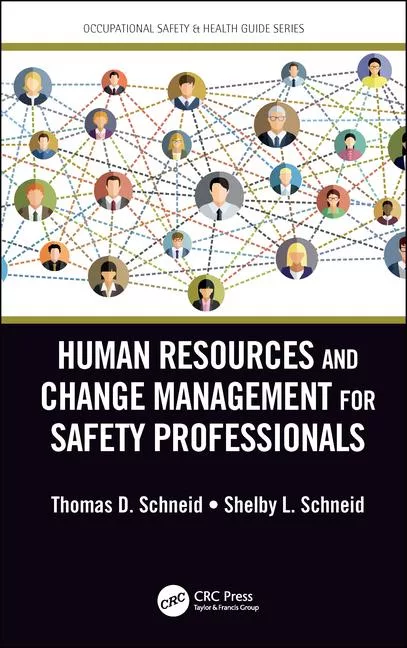
      Human Resources and Change Management for Safety Professionals

    • download (1).jpg

      Safety Rebels Real-World Transformations in Health and Safety

    See More Products

    Related Directories

    • Magid Glove and Safety

      As your true partner in safety, our mission is to provide the expertise and revolutionary innovations in PPE that help you keep your workers safe. The relationships we build with our customers drive everything we do as we get to know you and your unique needs. Our skilled manufacturing provides the latest innovations and technologies in PPE that you can’t get anywhere else. Our worldwide network of suppliers gives you access to the top brands in safety. We have everything you need to increase safety, reduce spend, and supercharge your workers! Since 1946, fourth generation and family-owned, safety isn't just a job, it's our legacy.
    • EME Safety LLC

      EME Safety offers non-ionizing radiation training and survey services. We can provide EME safety training with CEUs through our IEEE credentialed courses. We can also provide survey services and in-person training. Training can be provided for a few hours to multiple days to meet your learning needs.
    ×

    Become a Leader in Safety Culture

    Build your knowledge with ISHN, covering key safety, health and industrial hygiene news, products, and trends.

    JOIN TODAY
    • RESOURCES
      • Advertise
      • Contact Us
      • Directories
      • Manufacturing Division
      • Store
      • Want More
    • SIGN UP TODAY
      • Create Account
      • eMagazine
      • Newsletters
      • Customer Service
      • Manage Preferences
    • SERVICES
      • Marketing Services
      • Reprints
      • Market Research
      • List Rental
      • Survey/Respondent Access
    • STAY CONNECTED
      • LinkedIn
      • Facebook
      • YouTube
      • X (Twitter)
    • PRIVACY
      • PRIVACY POLICY
      • TERMS & CONDITIONS
      • DO NOT SELL MY PERSONAL INFORMATION
      • PRIVACY REQUEST
      • ACCESSIBILITY

    Copyright ©2026. All Rights Reserved BNP Media, Inc. and BNP Media II, LLC.

    Design, CMS, Hosting & Web Development :: ePublishing