ISHN logo
search
cart
facebook twitter linkedin youtube
  • Sign In
  • Create Account
  • Sign Out
  • My Account
ISHN logo
  • NEWS
    • Today's News
    • Global Safety News
    • Government Regulations
  • PRODUCTS
    • Product Innovations
    • Featured Products
  • TOPICS
    • Environmental Health and Safety
    • Facility Safety
    • Workplace Health
    • Occupational Safety
    • PPE
    • More Topics
  • CONSTRUCTION
  • TECHNOLOGY
  • COLUMNS
    • Best Practices
    • Dave Johnson: What’s going on
    • Editorial Comments
    • Leading Safety
  • MULTIMEDIA
    • ISHN Podcast
    • Videos
    • Cold Stress Education Quiz
    • Webinars
    • White Papers
  • MORE
    • Buyer's Guide
    • Newsletters
    • Convention Companion
    • Polls
    • Events
    • ISHN Store
    • Sponsor Insights
  • EMAGAZINE
    • eMagazine
    • Archived Issues
    • Contact
    • Advertise
  • JOIN TODAY!
Columns

POSITIVE SAFETY CULTURES: Can people really change?

By Dr. John Kello
June 3, 2010


Say a new leadership team in an organization is not working well internally. There are turf wars, unhealthy caution and withholding of information instead of openness, and a prevailing lack of mutual trust and support. The consultant brought in to do “teambuilding” hopes and intends to help the team cope more effectively — to change people’s behavior and attitude, from maladaptive and personally and organizationally distressing, to more healthy and positive.

But can they get there from here? Can people really change, and make it last?

My short answer is “yes, people really can change, and make it stick.” But I will also admit that change, especially when it is major change, often does not come easily.

Yes, you can change those stripes. But will those new stripes last?

Comfort zones

There are many comfortable ways for us to feel and act. Most of us wouldn’t change those comfortable ways unless we personally embraced the idea that we either simply had to, or for some reason we chose to ourselves.

Change imposed from the outside usually does breed resistance, which can be very hard (though not impossible) to overcome.

In general, we are most willing to change when we can personally see and accept a driving need, when there is some overall goal we want and need to get to (and the change will take us there), and when the immediate steps to take are clear. When those conditions are fulfilled, all but the most rigid among us are able and willing to “do it differently”.

But experts have noted for many years the hardest part of change is not making it — it is making it stick. Diet and exercise programs, smoking cessation programs, etc., even when launched with great enthusiasm, often yield only transient change. Safety programs all too often fade when the banners and posters are taken down and the next “new direction” is launched.

How to make change durable? There are no surefire recipes — too many variables affect it — but there are strategies to make it endure. Here are five of the central ones:

1) Go public with the commitment — the buddy system works. Social support is one of the most potent mechanisms for sustaining a change. Let others know what you are working on, and how they can help. The public declaration helps you use all your resources, internal and external, to build support and momentum from all directions. Broadcast it.

2) Give it time — there are many estimates of how long it takes to break an old habit, and truly replace it with a new one. None of the estimates is “instantaneous.” Behavior change is more a growth process than the flick of a switch. Expect it to be a journey, with forward progress sometimes coming very slowly.

3) Track results — a core principle of behavioral science is “what gets measured gets attended to.” Highlight and focus on your progress by charting it regularly. If/when the curve starts going flat or in the wrong direction, call on all those internal and external resources to get it righted.

4) Reward yourself for improvement — another core principle of behavioral science is what gets rewarded gets strengthened. Indeed, it is a centerpiece of behavioral psychology that positive reinforcement “works.” There is much debate in the research literature about the effectiveness of money as a motivator (believe it or not), but we do know that money is not the only reward.

5) When you relapse, don’t throw in the towel — so you had a bad day; get back on track. Charting your progress will reveal that durable change is not always, in fact not usually, a “linear process.” While there are steps forward, there are also “steps to the side,” and sometimes “steps backward.” This is a predictable part of the change process. The central idea of effective relapse prevention programs is not to interpret a relapse as the end of the program. It is a blip. The program restarts today.

Change is hard, yet people can change, and the change can stick. With a better understanding of how the change process works, we can become more effective at self-management and personal change. We can be more effective in our change-management roles at work, helping others make constructive and durable change, and helping ultimately to build more positive cultures.

Share This Story

Looking for a reprint of this article?
From high-res PDFs to custom plaques, order your copy today!

John is professor of industrial-organizational psychology at Davidson College, and president of the organization development consulting firm J.E. Kello & Associates, Inc. John can be reached at (704) 894-2024; jokello@davidson.edu.

Recommended Content

JOIN TODAY
to unlock your recommendations.

Already have an account? Sign In

  • forklift safety

    Exploring the latest technologies in forklift safety

    With more staff and more stock in warehousing now more...
    Workplace Training Strategies
    By: Josh Cramer
  • welding

    All about welder’s flash or arc eye

    A flash burn is a painful inflammation of the cornea,...
    Environmental Health and Safety
  • dangerous jobs

    The 10 most dangerous jobs in the U.S.

    On-the-job deaths have been rising — hitting the highest...
    Occupational Safety
    By: Benita Mehta
Manage My Account
  • eMagazine Subscriptions
  • ISHN Newsletter & Other Newsletter Alerts
  • Online Registration
  • Manage My Preferences
  • Subscription Customer Service

More Videos

Sponsored Content

Sponsored Content is a special paid section where industry companies provide high quality, objective, non-commercial content around topics of interest to the ISHN audience. All Sponsored Content is supplied by the advertising company and any opinions expressed in this article are those of the author and not necessarily reflect the views of ISHN or its parent company, BNP Media. Interested in participating in our Sponsored Content section? Contact your local rep!

close
  • man wearing the the Sundström SR200 Full Face Mask Respirator
    Sponsored byOHD

    5 Fit Testing Mistakes That Could Cost You

  • This image shows Magid AcuSpex polarized blue mirrored safety glasses.
    Sponsored byMagid Glove and Safety

    Construction PPE Guide: What Crews Need for Each Task

  • lone worker in confined space
    Sponsored byAlphasense Ltd.

    GET THE LEAD OUT of your Safety Oxygen Sensors!

Popular Stories

SpaceX 7 launch

OSHA Investigating Fatal Fall at SpaceX Starbase

dust explosion

Tennessee OSHA Issues Record $3.1M Fine After Deadly Explosion at Munitions Plant

Worker Impairment

How to Tell When a Co-Worker is Impaired? A Safety Pro’s Challenge

top 10 most dangerous jobs

Poll

Seasonal Readiness

With the federal heat stress prevention rule on the horizon, which area of your safety program needs the most attention?
View Results Poll Archive

Products

Surviving an OSHA Audit A Management Guide, 2nd Edition

Surviving an OSHA Audit A Management Guide, 2nd Edition

See More Products

ISHN Podcasts

Related Articles

  • POSITIVE SAFETY CULTURES: Safety's place at the table

    See More
  • POSITIVE SAFETY CULTURES: The benefits of positive emotions

    See More
  • POSITIVE SAFETY CULTURES: Being mindful of safety

    See More

Related Products

See More Products
  • human resources.jpg

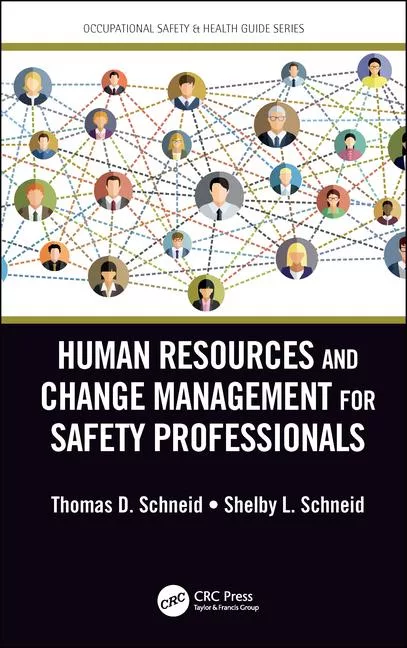
    Human Resources and Change Management for Safety Professionals

  • download (1).jpg

    Safety Rebels Real-World Transformations in Health and Safety

See More Products

Events

View AllSubmit An Event
  • Gas Detectors: The most common mistakes people make when using atmospheric monitors

    Learn the most common mistakes people make when using atmospheric monitors. Join Bob Henderson from GFG Instrumentation for this educational webinar.
View AllSubmit An Event

Related Directories

  • EME Safety LLC

    EME Safety offers non-ionizing radiation training and survey services. We can provide EME safety training with CEUs through our IEEE credentialed courses. We can also provide survey services and in-person training. Training can be provided for a few hours to multiple days to meet your learning needs.
×

Become a Leader in Safety Culture

Build your knowledge with ISHN, covering key safety, health and industrial hygiene news, products, and trends.

JOIN TODAY
  • RESOURCES
    • Advertise
    • Contact Us
    • Directories
    • Manufacturing Division
    • Store
    • Want More
  • SIGN UP TODAY
    • Create Account
    • eMagazine
    • Newsletters
    • Customer Service
    • Manage Preferences
  • SERVICES
    • Marketing Services
    • Reprints
    • Market Research
    • List Rental
    • Survey/Respondent Access
  • STAY CONNECTED
    • LinkedIn
    • Facebook
    • YouTube
    • X (Twitter)
  • PRIVACY
    • PRIVACY POLICY
    • TERMS & CONDITIONS
    • DO NOT SELL MY PERSONAL INFORMATION
    • PRIVACY REQUEST
    • ACCESSIBILITY

Copyright ©2026. All Rights Reserved BNP Media, Inc. and BNP Media II, LLC.

Design, CMS, Hosting & Web Development :: ePublishing