ISHN logo
search
cart
facebook twitter linkedin youtube
  • Sign In
  • Create Account
  • Sign Out
  • My Account
ISHN logo
  • NEWS
    • Today's News
    • Global Safety News
    • Government Regulations
  • PRODUCTS
    • Product Innovations
    • Featured Products
  • TOPICS
    • Environmental Health and Safety
    • Facility Safety
    • Workplace Health
    • Occupational Safety
    • PPE
    • More Topics
  • CONSTRUCTION
  • TECHNOLOGY
  • COLUMNS
    • Best Practices
    • Dave Johnson: What’s going on
    • Editorial Comments
    • Leading Safety
  • MULTIMEDIA
    • ISHN Podcast
    • Videos
    • Cold Stress Education Quiz
    • Webinars
    • White Papers
  • MORE
    • Buyer's Guide
    • Newsletters
    • Convention Companion
    • Polls
    • Events
    • ISHN Store
    • Sponsor Insights
  • EMAGAZINE
    • eMagazine
    • Archived Issues
    • Contact
    • Advertise
  • JOIN TODAY!

When Group Decisions Go Bad

By E. Scott Geller
May 20, 2000
On January 28, 1986, at 11:30 a.m., many Americans were "glued to the tube" watching the takeoff of the Challenger on another NASA space shuttle launch. Suddenly, the unthinkable happened. Only 73 seconds into the flight, the spacecraft exploded and burst into flames. TV cameras captured this disaster as a right flash in the sky followed by a white trail of smoke.

From one perspective, the root cause of this catastrophe was an engineering flaw. The rocket seals did not hold up under freezing temperatures. But the engineers of the rocket booster had anticipated a potential seal problem under the weather conditions and warned against the launch. Unfortunately, the NASA executive who made the final "go" decision was shielded from the engineers' warnings. Frustrated by several launch delays, but emboldened by prior successes, a NASA management group decided to silence the engineers' warnings.

This group decision was perhaps the real root cause of the Challenger explosion. Social psychologists call this phenomenon "groupthink" a deterioration of mental effectiveness, practical considerations, and moral judgment as a result of various group process factors. These factors have been extensively studied in social psychology research. Let's review them and explore their relationship to safety management. After all, group decisions based on the right values, principles and methodology will increase a work culture's commitment to safety, and facilitate behavior change. But "groupthink" can obviously have disastrous effects on safety.

Group gambles

A number of decision-making studies in the 1960s showed that groups generally make riskier decisions than individuals. This is contrary to the common sense belief that groups tend to be more conservative than their individual members. More specifically, researchers asked subjects to:

1. Make a series of decisions individually on a questionnaire;

2. Form a group to discuss each choice on the questionnaire and arrive at a consensus; and

3. Complete the questionnaire again individually.

Not only were the group consensus decisions more risky than the average of the initial decisions; but after the group discussions, the individual choices became more risky. What's going on here? Actually, there are several dynamics being played out:

Group polarization: When group members discuss an issue that the majority favors or opposes, they become more certain and confident in their viewpoint. This exaggeration of individual opinion is called "group polarization," which can either work for or against safe decisions.

Diffused responsibility: Individual group members feel they cannot be held responsible for the failure of a group decision. The risk of failure is spread around. Think about it: How often does a group or team decide to bypass a safety procedure, perhaps to be more productive? If someone gets injured as a result, no one individual can be held responsible. The risk was a group decision.

Deindividuation: People lose their sense of self-awareness and individuality in the group context. As with group polarization, this can be positive or negative, depending on the values and principles of the group. When team members compromise to achieve goals consistent with their organization's purpose and mission statement, the effects of deindividuation are likely to be beneficial. But deindividuation can lead to abandoning fundamental individual constraints and to less careful or less safe decisions and behaviors.

Deindividuation is facilitated when group members wear uniforms and cut their hair in similar ways, as in prisons, cults, monasteries, and the military. In a study of obedience (see ISHN article, February, 1995), women at New York University who wore depersonalizing Ku Klux Klan-like hoods delivered twice as much electric shock to a victim than women who could be identified.

Work teams certainly don't experience this degree of deindividuation. But group meetings of all sorts often stifle individual contributions, and this can lead to a loss of self-consciousness and self-control for some people. Individuals may fail to speak up when they disagree. Silence is interpreted as consent and leads to an illusion of group unanimity. And, with the whole group on the same wavelength (even if risky), individuals feel protected and develop an illusion of invulnerability.

So here we have some of the factors that can lead groups to make riskier decisions than individuals. Social conformity and obedience also play roles. It's important to realize that these dysfunctions can occur in group meetings, and we should consider ways of overcoming them. Members of a group might be introduced to these concepts and then entertain ways to decrease their prominence.

For instance, a group facilitator who embraces diverse opinions, invites input and critiques of a developing solution, or assigns task forces to explore alternative action plans, will decrease the probability of "groupthink" and increase the likelihood of synergy. Also, when a group has a well-defined purpose and mission statement that is principle-centered and compatible with the organization's vision, the group process of polarization and deindividuation will lead to group commitment, loyalty, trust, and a win/win perspective.

Share This Story

Looking for a reprint of this article?
From high-res PDFs to custom plaques, order your copy today!

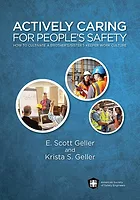
E. Scott Geller, Ph.D., is Alumni Distinguished Professor, Center for Applied Behavior Systems, Virginia Tech, and senior partner with Safety Performance Solutions, Blacksburg, VA. For more information visit www.safetyperformance.com. "Actively Caring for People's Safety: How to cultivate a brother’s/sister’s keeper work culture," co-authored by Scott’s daughter Krista, was recently published by ASSE. Scott’s 15-minute TEDX talk on You Tube can be accessed at: https://www.youtube.com/watch?v=7sxpKhIbr0E


Recommended Content

JOIN TODAY
to unlock your recommendations.

Already have an account? Sign In

  • forklift safety

    Exploring the latest technologies in forklift safety

    With more staff and more stock in warehousing now more...
    Facility Safety
    By: Josh Cramer
  • welding

    All about welder’s flash or arc eye

    A flash burn is a painful inflammation of the cornea,...
    Environmental Health and Safety
  • dangerous jobs

    The 10 most dangerous jobs in the U.S.

    On-the-job deaths have been rising — hitting the highest...
    Government Safety Regulations
    By: Benita Mehta
Manage My Account
  • eMagazine Subscriptions
  • ISHN Newsletter & Other Newsletter Alerts
  • Online Registration
  • Manage My Preferences
  • Subscription Customer Service

More Videos

Sponsored Content

Sponsored Content is a special paid section where industry companies provide high quality, objective, non-commercial content around topics of interest to the ISHN audience. All Sponsored Content is supplied by the advertising company and any opinions expressed in this article are those of the author and not necessarily reflect the views of ISHN or its parent company, BNP Media. Interested in participating in our Sponsored Content section? Contact your local rep!

close
  • man wearing the the Sundström SR200 Full Face Mask Respirator
    Sponsored byOHD

    5 Fit Testing Mistakes That Could Cost You

  • This image shows Magid AcuSpex polarized blue mirrored safety glasses.
    Sponsored byMagid Glove and Safety

    Construction PPE Guide: What Crews Need for Each Task

  • lone worker in confined space
    Sponsored byAlphasense Ltd.

    GET THE LEAD OUT of your Safety Oxygen Sensors!

Popular Stories

SpaceX 7 launch

OSHA Investigating Fatal Fall at SpaceX Starbase

dust explosion

Tennessee OSHA Issues Record $3.1M Fine After Deadly Explosion at Munitions Plant

Worker Impairment

How to Tell When a Co-Worker is Impaired? A Safety Pro’s Challenge

top 10 most dangerous jobs

Poll

Seasonal Readiness

With the federal heat stress prevention rule on the horizon, which area of your safety program needs the most attention?
View Results Poll Archive

Products

Surviving an OSHA Audit A Management Guide, 2nd Edition

Surviving an OSHA Audit A Management Guide, 2nd Edition

See More Products

ISHN Podcasts

Related Articles

  • ASSE

    Hot off the ASSE press: Actively Caring for People’s Safety

    See More
  • Actively Caring for People’s Safety

    4 STEPS to cultivating a brother’s/sister’s keeper culture

    See More
  • actively caring for people, behavior-based safety

    Actively caring for people’s safety

    See More

Related Products

See More Products
  • Top Ten Pitfalls in OSHA Recordkeeping and How to Avoid Them

See More Products
×

Become a Leader in Safety Culture

Build your knowledge with ISHN, covering key safety, health and industrial hygiene news, products, and trends.

JOIN TODAY
  • RESOURCES
    • Advertise
    • Contact Us
    • Directories
    • Manufacturing Division
    • Store
    • Want More
  • SIGN UP TODAY
    • Create Account
    • eMagazine
    • Newsletters
    • Customer Service
    • Manage Preferences
  • SERVICES
    • Marketing Services
    • Reprints
    • Market Research
    • List Rental
    • Survey/Respondent Access
  • STAY CONNECTED
    • LinkedIn
    • Facebook
    • YouTube
    • X (Twitter)
  • PRIVACY
    • PRIVACY POLICY
    • TERMS & CONDITIONS
    • DO NOT SELL MY PERSONAL INFORMATION
    • PRIVACY REQUEST
    • ACCESSIBILITY

Copyright ©2026. All Rights Reserved BNP Media, Inc. and BNP Media II, LLC.

Design, CMS, Hosting & Web Development :: ePublishing