ISHN logo
search
cart
facebook twitter linkedin youtube
  • Sign In
  • Create Account
  • Sign Out
  • My Account
ISHN logo
  • NEWS
    • Today's News
    • Global Safety News
    • Government Regulations
  • PRODUCTS
    • Product Innovations
    • Featured Products
  • TOPICS
    • Environmental Health and Safety
    • Facility Safety
    • Workplace Health
    • Occupational Safety
    • PPE
    • More Topics
  • CONSTRUCTION
  • TECHNOLOGY
  • COLUMNS
    • Best Practices
    • Dave Johnson: What’s going on
    • Editorial Comments
    • Leading Safety
  • MULTIMEDIA
    • ISHN Podcast
    • Videos
    • Cold Stress Education Quiz
    • Webinars
    • White Papers
  • MORE
    • Buyer's Guide
    • Newsletters
    • Convention Companion
    • Polls
    • Events
    • ISHN Store
    • Sponsor Insights
  • EMAGAZINE
    • eMagazine
    • Archived Issues
    • Contact
    • Advertise
  • JOIN TODAY!
Columns

PSYCHOLOGY OF SAFETY: Building blocks to sustain safety

By E. Scott Geller
April 30, 2002
This is the last of a four-part series of ISHN articles on how to get more people involved in your safety activities. To finish up, we'll review seven principles gleaned from social science research. We're talking about basic social dynamics that reflect - and influence - the culture of an organization. They can inhibit or facilitate participation in safety. You can use these social influence principles to analyze the dynamics that hinder optimal involvement in safety, and decide which can be changed to fuel more participation.

1) We try to be consistent.

Commitments are most influential when they are public, active and perceived as voluntary or not coerced. When we make a choice or take a stand, we face personal and social pressures to stick to our commitment. So it's better to have employees make a public rather than a private commitment to perform a certain safe behavior.

And it's better to have them sign their name to a card rather than merely raise their hands. People live up to what they write down. Inconsistencies between promises and behaviors lead to unflattering labels such as "flighty," "scatterbrained" or "two-faced."

Of course, it's very important for those pledging to do something for safety to believe they made the commitment voluntarily.

2) We want to return a favor.

Basically, if you're nice to people, they will feel obligated to return the favor. What does this mean for safety management? Look for opportunities to go out of your way for another person's safety. When we actively care for someone else's safety, we set the tone for what is called "reciprocity." We increase the likelihood that person will actively care for the safety of someone else.

3) We help those we like.

Who will you go out of your way to help or care for - someone you like or dislike? It's obvious, right? So we need to build positive relationships in our workplaces. How? Here are three strategies:

  • Emphasize similarities: "Birds of a feather flock together." Through initial informal conversation and astute observation, you can find common bonds between you and others you'd like to influence. Maybe you enjoy the same hobbies or recreational activities, or have matching educational backgrounds or employment histories, or have similar opinions about current events, corporate issues, and even politics.
  • Give praise: Genuine one-to-one praise, recognition and rewarding feedback builds relationships. The person you reward likes you more; and because their behavior deserves recognition, your appreciation for that person increases.
  • Promote cooperation: Cooperation works better than contests and competitions in forging positive relationships. You want to build a sense of interdependency toward achieving a common goal. We're more likely to work with, and help, those we depend on.

    4) We follow the crowd.

    We see examples of conformity every day, from the types of clothes people wear to their styles of communication to the products we buy. Don't overlook the power of conformity in influencing participation. And the pressure to conform is greater when the consensus (say a commitment to safety) comes out of a large group, and when group members are seen as relatively experienced.

    Experienced employees should feel especially responsible to demonstrate safe work practices to new employees. People look for guidance in unfamiliar situations. So supervisors should give new hires opportunities to work with experienced employees who are most enthusiastic about safety-related activities.

    5) We respect authority.

    Experienced employees have credible authority. That makes them influential. But there's a flip side to the power of authority. Following orders gives us an excuse to escape taking personal responsibility for what we are doing. If someone with authority tells us to take a risk, we're often willing to comply because if something goes wrong, it won't be our fault. We can blame the person who told us to do it. Be aware of the power of authority, and encourage people to resist the temptation to follow orders blindly and mindlessly.

    6) We want what is hard to get.

    The value of something - front-row seats at a game, stamps, baseball cards, antique furniture - increases with the perception of scarcity. People will collect, go out of their way to purchase, and get caught up in bids and bargains for items considered scarce.

    So what can the scarcity principle teach us about getting more people involved in a safety process?

  • Emphasize unique features: First, we ought to emphasize the unique features of a safety process. How is a particular approach to injury prevention better than the rest? How is it leading edge? When people believe they have a rare opportunity to test a new - even "experimental" - approach to safety, their motivation is powered by the scarcity principle.

  • Play up the fear of losing: Social psychologists have shown that people are especially motivated to avoid a loss. Think about it. When it's evident that you need to act immediately in order to avoid losing something, you are aroused to mindful action.

    So how do we demonstrate the potential losses that can come from unsafe acts and environments? Personal testimonies from workers injured on the job, or who just missed being injured, are powerful reminders of what's at stake. Scare tactics, handled correctly, can also be effective. (See my ISHN article from July 2001 for more about effective scare tactics.)

    7) We want what is novel.

    We are drawn to what is new or different as well as what is scarce or rare. The novelty principle is reflected in our desire for excitement and surprise in our relationships with others. This appeal of newness and unpredictability facilitates the beginning of a relationship, while the lack of novelty in a familiar routine can be the key factor in the breakup of a relationship.

    The implication for safety? The uniqueness of a new approach to injury prevention promotes initial involvement; but over time, the same safety routine can seem dull and uninspiring, leading to a drop in the quantity or quality of participation.

    It's important to find ways to vary aspects of a particular safety process. Actually, it's essential for continuous improvement. A mechanism for continually refining and upgrading your procedures should be established at the start. This usually requires the ongoing involvement of a safety steering committee that solicits and reviews employee suggestions for program refinement, decides which refinement(s) to implement first, and then monitors the impact of certain changes to an injury-prevention process.

    Your safety steering committee not only supports the vision of "never-ending improvement," but also maintains a degree of novelty in the safety-related activities of an organization.

    Links

    • Safety Performance Solutions
  • Share This Story

    Looking for a reprint of this article?
    From high-res PDFs to custom plaques, order your copy today!

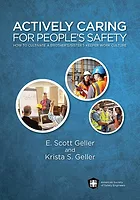
    E. Scott Geller, Ph.D., is Alumni Distinguished Professor, Center for Applied Behavior Systems, Virginia Tech, and senior partner with Safety Performance Solutions, Blacksburg, VA. For more information visit www.safetyperformance.com. "Actively Caring for People's Safety: How to cultivate a brother’s/sister’s keeper work culture," co-authored by Scott’s daughter Krista, was recently published by ASSE. Scott’s 15-minute TEDX talk on You Tube can be accessed at: https://www.youtube.com/watch?v=7sxpKhIbr0E


    Recommended Content

    JOIN TODAY
    to unlock your recommendations.

    Already have an account? Sign In

    • forklift safety

      Exploring the latest technologies in forklift safety

      With more staff and more stock in warehousing now more...
      Workplace Training Strategies
      By: Josh Cramer
    • welding

      All about welder’s flash or arc eye

      A flash burn is a painful inflammation of the cornea,...
      Environmental Health and Safety
    • dangerous jobs

      The 10 most dangerous jobs in the U.S.

      On-the-job deaths have been rising — hitting the highest...
      Construction Industry Safety and Health
      By: Benita Mehta
    Manage My Account
    • eMagazine Subscriptions
    • ISHN Newsletter & Other Newsletter Alerts
    • Online Registration
    • Manage My Preferences
    • Subscription Customer Service

    More Videos

    Sponsored Content

    Sponsored Content is a special paid section where industry companies provide high quality, objective, non-commercial content around topics of interest to the ISHN audience. All Sponsored Content is supplied by the advertising company and any opinions expressed in this article are those of the author and not necessarily reflect the views of ISHN or its parent company, BNP Media. Interested in participating in our Sponsored Content section? Contact your local rep!

    close
    • man wearing the the Sundström SR200 Full Face Mask Respirator
      Sponsored byOHD

      5 Fit Testing Mistakes That Could Cost You

    • This image shows Magid AcuSpex polarized blue mirrored safety glasses.
      Sponsored byMagid Glove and Safety

      Construction PPE Guide: What Crews Need for Each Task

    • lone worker in confined space
      Sponsored byAlphasense Ltd.

      GET THE LEAD OUT of your Safety Oxygen Sensors!

    Popular Stories

    SpaceX 7 launch

    OSHA Investigating Fatal Fall at SpaceX Starbase

    Worker Impairment

    How to Tell When a Co-Worker is Impaired? A Safety Pro’s Challenge

    Automated loading dock equipment

    After March 2026 Rivian Death, Safety Managers Reassess Loading Dock Systems Under OSHA's Warehouse Emphasis Program

    top 10 most dangerous jobs

    Poll

    Seasonal Readiness

    With the federal heat stress prevention rule on the horizon, which area of your safety program needs the most attention?
    View Results Poll Archive

    Products

    Surviving an OSHA Audit A Management Guide, 2nd Edition

    Surviving an OSHA Audit A Management Guide, 2nd Edition

    See More Products

    ISHN Podcasts

    Related Articles

    • ASSE

      Hot off the ASSE press: Actively Caring for People’s Safety

      See More
    • Actively Caring for People’s Safety

      4 STEPS to cultivating a brother’s/sister’s keeper culture

      See More
    • actively caring for people, behavior-based safety

      Actively caring for people’s safety

      See More

    Related Products

    See More Products
    • Top Ten Pitfalls in OSHA Recordkeeping and How to Avoid Them

    See More Products

    Related Directories

    • American Society of Safety Professionals (ASSP)

      The American Society of Safety Professionals (ASSP) is a global association of occupational safety and health professionals who are dedicated to workplace safety. We provide education, safety standards, advocacy and a professional community that supports our diverse members and the profession.
    ×

    Become a Leader in Safety Culture

    Build your knowledge with ISHN, covering key safety, health and industrial hygiene news, products, and trends.

    JOIN TODAY
    • RESOURCES
      • Advertise
      • Contact Us
      • Directories
      • Manufacturing Division
      • Store
      • Want More
    • SIGN UP TODAY
      • Create Account
      • eMagazine
      • Newsletters
      • Customer Service
      • Manage Preferences
    • SERVICES
      • Marketing Services
      • Reprints
      • Market Research
      • List Rental
      • Survey/Respondent Access
    • STAY CONNECTED
      • LinkedIn
      • Facebook
      • YouTube
      • X (Twitter)
    • PRIVACY
      • PRIVACY POLICY
      • TERMS & CONDITIONS
      • DO NOT SELL MY PERSONAL INFORMATION
      • PRIVACY REQUEST
      • ACCESSIBILITY

    Copyright ©2026. All Rights Reserved BNP Media, Inc. and BNP Media II, LLC.

    Design, CMS, Hosting & Web Development :: ePublishing