ISHN logo
search
cart
facebook twitter linkedin youtube
  • Sign In
  • Create Account
  • Sign Out
  • My Account
ISHN logo
  • NEWS
    • Today's News
    • Global Safety News
    • Government Regulations
  • PRODUCTS
    • Product Innovations
    • Featured Products
  • TOPICS
    • Environmental Health and Safety
    • Facility Safety
    • Workplace Health
    • Occupational Safety
    • PPE
    • More Topics
  • CONSTRUCTION
  • TECHNOLOGY
  • COLUMNS
    • Best Practices
    • Dave Johnson: What’s going on
    • Editorial Comments
    • Leading Safety
  • MULTIMEDIA
    • ISHN Podcast
    • Videos
    • Cold Stress Education Quiz
    • Webinars
    • White Papers
  • MORE
    • Buyer's Guide
    • Newsletters
    • Convention Companion
    • Polls
    • Events
    • ISHN Store
    • Sponsor Insights
  • EMAGAZINE
    • eMagazine
    • Archived Issues
    • Contact
    • Advertise
  • JOIN TODAY!
Psychology in the Workplace

Surveying behavior-based safety experiences

By E. Scott Geller
May 19, 2000
Last September, ISHN printed a survey on this page asking you about your opinions and experiences regarding behavior-based safety. It's part of Virginia Tech's two-year research grant from the National Institute for Occupational Safety and Health to study the critical success factors for behavior-based safety. Before the end of 1996, 162 completed surveys were returned to us by mail or fax.

An overall respect for behavioral safety was shown by 80% of the respondents answering "yes" to the question: "Do you believe behavior-based safety is a viable approach for reducing at-risk work behaviors and activities?" Plus, more respondents answered "no" (48%) than "yes" (34%) to the question of whether a safety program should focus more on attitudes than behaviors. This shows a shift from the traditional attitude-oriented approach to safety education.

But our survey was not random, however, and was likely biased toward the behavioral approach. Most of you who took the time to answer the questions are probably more knowledgeable and confident about behavioral strategies than the average reader of ISHN. Still, answers revealed some misperceptions about behavioral safety that can limit its potential for safety improvement. For example, the three descriptions selected most often by respondents to describe behavior-based safety were: "An intervention approach for increasing safe behavior" (selected by 88%); "An observation and feedback process" (80%); and "A tool for managing safety" (70%).

But only 26% consider behavior-based safety useful for investigating injuries. 54% feel it's useful for evaluating safety achievement, and 61% see it as a way of decreasing unsafe behavior.

I suspect many people have a rather narrow viewpoint about behavior-based safety. It's actually "a general philosophy that can be applied to many aspects of safety management"-the most accurate definition listed in our survey, and one selected by 71% of respondents.

Many sources, including my recent book, The Psychology of Safety, explain how behavior-based safety can be applied effectively to injury investigation, education and training, evaluation, ergonomics, and the design of incentive/reward programs. Three basic principles are worth repeating:

Target observable behavior

Organizational and community research has shown over and over that it's easier and more cost-effective to effect large-scale change by focusing on behaviors rather than attitudes. Attitude and other subjective feeling states are changed indirectly when behavior-based techniques are applied appropriately.

Focus on positive consequences

Behavior-based interventions manipulate external or environmental factors to motivate change. Events that occur before behavior-such as signs, memos, demonstrations, and group discussions-can direct our actions, but we actually perform the behavior for the consequences we expect to receive. In other words, antecedent events tell us what to do in order to receive a motivating consequence.

Interestingly, antecedent strategies turn out to be the most popular technique used by survey respondents, with policies, posted safety signs, demonstrations, and lectures leading the list. Behavior-oriented goal-setting and feedback for individuals and groups are the most cost-effective interventions, yet they are currently used at less than half of the sites represented by responses. The most common goals, feedback, and incentive/reward programs are used to focus on outcome ("accidents or injuries") rather than process ("safety-related behaviors or activities").

Monitor behavior trends

In an observation and feedback process, safety coaches work with a checklist to record safe and at-risk behaviors. The completed summary is used to give feedback to the person or group observed. Data can be compiled across individuals or groups per day or week with a "percent safe behavior" metric. This diagnostic measure shows how a particular intervention program influences different safety-related behaviors, and it can illustrate fluctuations in progress across weeks, months, or years. Monitoring trends tells you when to focus on different behaviors, or when to change an intervention approach or protocol. This is the key to continuous improvement. Traditional safety outcome measures, such as OSHA recordables and lost-time injuries, are reactive and have practically no diagnostic value. Since many factors influence the reporting (or non-reporting) of injuries, changes in these numbers provide no useful information. This is certainly not a revolutionary point for ISHN readers. But while readers know current safety measurements are insufficient, they are still the most popular.

Only 15% of respondents monitor "percent safe behavior" to assess the success of their safety programs. Traditional outcome metrics are most popular, with 77% using OSHA recordables, 75% using lost-time accidents, 42% using total recordable injury rates, and 44% using total recordable rates, including illnesses.

I think the gap between understanding and applying some of these behavior-based principles has more to do with management systems than personal inconsistencies. It shows us that shifting from an outcome-based, reactive safety process to one focused on critical up-stream activities is easier said than done.

Share This Story

Looking for a reprint of this article?
From high-res PDFs to custom plaques, order your copy today!

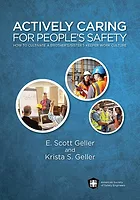
E. Scott Geller, Ph.D., is Alumni Distinguished Professor, Center for Applied Behavior Systems, Virginia Tech, and senior partner with Safety Performance Solutions, Blacksburg, VA. For more information visit www.safetyperformance.com. "Actively Caring for People's Safety: How to cultivate a brother’s/sister’s keeper work culture," co-authored by Scott’s daughter Krista, was recently published by ASSE. Scott’s 15-minute TEDX talk on You Tube can be accessed at: https://www.youtube.com/watch?v=7sxpKhIbr0E


Recommended Content

JOIN TODAY
to unlock your recommendations.

Already have an account? Sign In

  • forklift safety

    Exploring the latest technologies in forklift safety

    With more staff and more stock in warehousing now more...
    Workplace Training Strategies
    By: Josh Cramer
  • welding

    All about welder’s flash or arc eye

    A flash burn is a painful inflammation of the cornea,...
    Environmental Health and Safety
  • dangerous jobs

    The 10 most dangerous jobs in the U.S.

    On-the-job deaths have been rising — hitting the highest...
    Occupational Safety
    By: Benita Mehta
Manage My Account
  • eMagazine Subscriptions
  • ISHN Newsletter & Other Newsletter Alerts
  • Online Registration
  • Manage My Preferences
  • Subscription Customer Service

More Videos

Sponsored Content

Sponsored Content is a special paid section where industry companies provide high quality, objective, non-commercial content around topics of interest to the ISHN audience. All Sponsored Content is supplied by the advertising company and any opinions expressed in this article are those of the author and not necessarily reflect the views of ISHN or its parent company, BNP Media. Interested in participating in our Sponsored Content section? Contact your local rep!

close
  • man wearing the the Sundström SR200 Full Face Mask Respirator
    Sponsored byOHD

    5 Fit Testing Mistakes That Could Cost You

  • This image shows Magid AcuSpex polarized blue mirrored safety glasses.
    Sponsored byMagid Glove and Safety

    Construction PPE Guide: What Crews Need for Each Task

  • lone worker in confined space
    Sponsored byAlphasense Ltd.

    GET THE LEAD OUT of your Safety Oxygen Sensors!

Popular Stories

SpaceX 7 launch

OSHA Investigating Fatal Fall at SpaceX Starbase

dust explosion

Tennessee OSHA Issues Record $3.1M Fine After Deadly Explosion at Munitions Plant

Worker Impairment

How to Tell When a Co-Worker is Impaired? A Safety Pro’s Challenge

top 10 most dangerous jobs

Poll

Seasonal Readiness

With the federal heat stress prevention rule on the horizon, which area of your safety program needs the most attention?
View Results Poll Archive

Products

Surviving an OSHA Audit A Management Guide, 2nd Edition

Surviving an OSHA Audit A Management Guide, 2nd Edition

See More Products

ISHN Podcasts

Related Articles

  • ASSE

    Hot off the ASSE press: Actively Caring for People’s Safety

    See More
  • Actively Caring for People’s Safety

    4 STEPS to cultivating a brother’s/sister’s keeper culture

    See More
  • actively caring for people, behavior-based safety

    Actively caring for people’s safety

    See More

Related Products

See More Products
  • Top Ten Pitfalls in OSHA Recordkeeping and How to Avoid Them

See More Products
×

Become a Leader in Safety Culture

Build your knowledge with ISHN, covering key safety, health and industrial hygiene news, products, and trends.

JOIN TODAY
  • RESOURCES
    • Advertise
    • Contact Us
    • Directories
    • Manufacturing Division
    • Store
    • Want More
  • SIGN UP TODAY
    • Create Account
    • eMagazine
    • Newsletters
    • Customer Service
    • Manage Preferences
  • SERVICES
    • Marketing Services
    • Reprints
    • Market Research
    • List Rental
    • Survey/Respondent Access
  • STAY CONNECTED
    • LinkedIn
    • Facebook
    • YouTube
    • X (Twitter)
  • PRIVACY
    • PRIVACY POLICY
    • TERMS & CONDITIONS
    • DO NOT SELL MY PERSONAL INFORMATION
    • PRIVACY REQUEST
    • ACCESSIBILITY

Copyright ©2026. All Rights Reserved BNP Media, Inc. and BNP Media II, LLC.

Design, CMS, Hosting & Web Development :: ePublishing