Handle with care
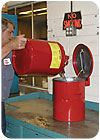
Pound for pound, flammable liquids can explode with more force than dynamite. For example, five gallons of gasoline is estimated to explode with a force equal to 415 pounds of dynamite. Let’s look at proper procedures for handling, storing, transferring and using flammable liquids in an industrial workplace, and review how containers should be selected and maintained.
Most plants rely on manual methods to transfer liquids from storage points to work stations. Although manual transfer involves having hazardous materials in open areas, the use of proper equipment will minimize the danger.
Dozens of types and sizes of safety cans exist. Selecting the best type for the job is the key to safe and easy transfer and use of flammable liquids.
Selection
Selecting the best safety can for the job involves three factors:1) liquid to be stored and transferred;
2) size of container into which the liquid will be transferred;
3) diameter of the receiving opening.
Safety cans are color-coded based on the anticipated contents. Gasoline cans are red, diesel fuel containers are yellow, and cans used to store kerosene are blue.
Transfer applications can be grouped into two categories: general process, and gas powered equipment and other containers with small receiving openings. In an industrial plant, flammable liquids are commonly used to clean parts in bench cans and rinse and wash tanks or automatic washers. This equipment must be refilled periodically. Normally, the flammable liquids are carried from storage areas in Type I single spout safety cans. Type I cans come in capacities up to five gallons.
Application is the principal criterion affecting the size of the safety can you choose. When flammable liquids are transferred into small-capacity containers, the safety can must be designed to control the rate of flow and the amount of liquid dispensed. For example, an operator can fill a one-gallon bench can faster and with less risk of a spill if he uses a smaller safety can rather than the more common five-gallon can, even though both meet OSHA requirements. Similarly, for filling wash tanks, rinse tanks and other large containers, a five-gallon safety can is more efficient.
Type II safety cans equipped with a flexible metal hose should be used to fuel small motors or fill fuel tanks.
Inspection and maintenance
All safety containers must be leak-tight and be equipped with a flame arrester screen that effectively prevents fire from traveling through the spout and igniting the flammable contents. They should automatically relieve internal pressure at five psig and should automatically close after pouring or filling.A regular inspection schedule should be established to assure that the cans are functioning properly. Because they are familiar with the cans, the workers can easily check them as they are being used. Following simple inspection and repair procedures can prevent citations and fines, and keep a minor fire from becoming a major one. Inspection should consist of checking each of four safety characteristics for impairment.
Leaks — A simple way to check for leaks is to hold a full safety can on its side over an open bench can. If more than four drops per minute leak from the can, it must be taken out of service. (Four drops/min. is the maximum leakage rate permitted in Factory Mutual’s approval procedures.) If the spout leaks, any foreign matter should be cleaned from the rim of the spout and the can tested again. If leaks persist, the gasket should be checked, and replaced, if necessary. The spring tension of the opening-closing mechanism also should be tested.
Pressure relief — Although there is no reliable method for accurately checking the pressure relief of a safety can in the field, a close estimate can be obtained by comparing the amount of pressure needed to crack the cap off the spout with that of a new container. The closure spring is calibrated to maintain a leak-tight seal, yet permit pressure relief. It should never be bent or altered. Damaged or missing springs should be replaced at once.
Flame arrester — The perforated metal or double-wire mesh screens promote a rapid dissipation of heat, and hold the vapor temperature inside the can below the ignition point. Screens should never be removed or damaged. Holes in a screen change its heat-absorbing characteristics and make it less effective. Damaged flame arresters also should be replaced immediately.
Self-closing mechanism — The self-aligning cap-closing mechanism should automatically close to make a leak-tight seal when the handle is released. It should be checked by opening the cap and allowing it to close several times before doing the leak test. The closure lever arms and pins should also be examined. If either are bent, even if the closure is still tight, the entire cover assembly should be replaced.
When you follow these suggestions, you will help control the hazards of handling flammable liquids and minimize the risk of fire and explosion in your workplace.
Looking for a reprint of this article?
From high-res PDFs to custom plaques, order your copy today!


