ISHN logo
search
cart
facebook twitter linkedin youtube
  • Sign In
  • Create Account
  • Sign Out
  • My Account
ISHN logo
  • NEWS
    • Today's News
    • Global Safety News
    • Government Regulations
  • PRODUCTS
    • Product Innovations
    • Featured Products
  • TOPICS
    • Environmental Health and Safety
    • Facility Safety
    • Workplace Health
    • Occupational Safety
    • PPE
    • More Topics
  • CONSTRUCTION
  • TECHNOLOGY
  • COLUMNS
    • Best Practices
    • Dave Johnson: What’s going on
    • Editorial Comments
    • Leading Safety
  • MULTIMEDIA
    • ISHN Podcast
    • Videos
    • Cold Stress Education Quiz
    • Webinars
    • White Papers
  • MORE
    • Buyer's Guide
    • Newsletters
    • Convention Companion
    • Polls
    • Events
    • ISHN Store
    • Sponsor Insights
  • EMAGAZINE
    • eMagazine
    • Archived Issues
    • Contact
    • Advertise
  • JOIN TODAY!
Columns

PSYCHOLOGY OF SAFETY: Let's get real in our relationships

By E. Scott Geller
January 1, 2007


My last ISHN contribution (December 2006) discussed leadership principles activated by the word LEAD. I advocated using this acronym to provoke group discussion:
L for Live, Listen, Learn, Love, and Leave a Legacy
E for Empathy, Energy, Empowerment, and Engagement
A for Audacity, and Achievement of success over Avoidance of failure
D for Data to support an opinion or perspective
In this month’s column, I propose adding a critical A-word to this list — Authenticity. In fact, I believe this word can give all of us beneficial direction for the New Year. How about a New Year’s Resolution to be more authentic in our interpersonal relations?

What is authenticity?

My American Heritage Dictionary (Houghton Mifflin Company, 1991) defines authenticity as “the condition or quality of being authentic, trustworthy, or genuine” (p. 142). This definition can incite constructive discussion about the meaning of related words: trust, reliability, consistency, and genuineness with regard to improving organizational safety. Even more behavioral direction is provided in two books with “authentic” in their titles — Authentic Leadership (Jossey-Bass, 2003) by Bill George, former chairman and CEO of Medtronic, and Authentic Involvement (National Safety Council, 2001) by Dan Petersen, a safety leadership guru who contributes regularly to ISHN.

The connection between these books is obvious: Authentic leadership yields authentic involvement. Let’s review the primary authenticity directives provided in these books.

Authentic leaders

Authentic leaders “are more interested in empowering the people they lead to make a difference than they are in power, money or prestige for themselves. They are as guided by qualities of the heart, by passion and compassion, as they are by qualities of the mind” (George, 2003, p. 12).

Authentic leaders are vulnerable and always open to corrective feedback, and they demonstrate self-discipline to continuously improve. Bill George claims you cannot be authentic without compassion. Compassion is developed through profound understanding of other people’s situations and feelings. Empathy is a synonym for compassion, and was discussed in my last ISHN article as a critical E-word for the LEAD acronym.

According to my dictionary, however, compassion also includes “the inclination to give aid or support or to show mercy” (p. 300). People with empathy and compassion lead others with purpose, meaning, and personal values. They don’t put an inordinate focus on short-run profits. They don’t motivate through warnings and threats, de-motivating the development of self-accountability —a key component of authentic involvement.

Authentic involvement

Authentic involvement is self-directed, and occurs when people are “treated like a mature, adult human being; as an equal, not subordinate, able to use their innate intelligence and skills daily, even hourly; able to achieve; given responsibility; and recognized for doing a good job” (Petersen, 2001, p. 46).

So who treats employees like this? You know the answer — authentic leaders. Actually, all of the leadership principles reflected in the LEAD acronym are relevant here. Effective leaders enrich their work culture and help workers become self-directed, self-accountable, and self-motivated. Dr. Petersen advocates an integration of the humanistic and behavioristic approaches to understanding and helping people. This is, in fact, the foundation of People-Based Safety™, which I call “humanistic behaviorism.”

Petersen advocates shared decision-making between salary and hourly workers, with each side recognizing the need for interdependent cooperation. But for this to happen, managers, supervisors, and hourly workers need mutual training on effective problem-solving tools and methods. He suggests training on specific analysis techniques, such as statistical process control (SPC), which includes the use of fishbone diagrams, pareto charts, flowcharts, control charts, and scatter diagrams.

Problem-solving mechanisms

Dr. Petersen also discussed various ways to enable regular employee input on safety-related matters to facilitate authentic involvement:

Safety Improvement Teams — Management asks employees to address a specific safety issue.

Job Safety Analysis — Work groups define specific environmental and/or behavioral hazards associated with each step of a job and develop ways to eliminate or control them.

Hazard Hunt — Employees use a special form on which to report anything they feel is a hazard, followed by corrective-action feedback from management.

Ergonomic Analysis — After training on ergonomic principles, workers observe the various behaviors of a job and consider ways to decrease the probability of a cumulative trauma disorder.

Incident Recall Technique — Through one-on-one interviews, employees relate a specific close call they experienced or heard about, suggest contributing factors to the incident, and then explore ways to prevent similar incidents and potential injuries.

I would add the observation and feedback process of behavior-based safety to this list, including employees’ development, application and refinement of a critical behavior checklist (CBC). Workers use this CBC to coach each other, which includes observing safe vs. at-risk behaviors on the job, defining barriers to safe behavior and facilitators of at-risk behavior, and providing constructive behavioral feedback to the worker.

None of these employee-involvement techniques can work without sufficient management support and authentic leadership from both supervisors and workers. This is easier said than done. Example: What happened to those safety-suggestion boxes once found at most industrial sites? Answer: They were not used constructively and removed because of insufficient leadership among managers and hourly workers.

Bottom line

In recent January columns I’ve provided concepts or directives relevant for a New Year’s Resolution. Last year I proposed we slow down and live in the moment. In 2004, I suggested a paradigm shift. Instead of asking “Who, what, or why?” after an incident, ask “How can I help?”

For 2007, I propose we try to be more authentic. Facilitate group discussions around behavioral definitions of “authenticity,” with particular reference to industrial safety. Then draw up a list of what it will take to “walk authentic talk” and improve safety in 2007.

Links

  • safety@safetyperformance.com
  • www.safetyperformance.com
  • pbs@coastal.com
  • www.people-based-safety.com

Share This Story

Looking for a reprint of this article?
From high-res PDFs to custom plaques, order your copy today!

E. Scott Geller, Ph.D., Alumni Distinguished Professor and Director, Center for Applied Behavior Systems, Virginia Tech, and senior partner, Safety Performance Solutions (SPS). For information on related books, training manuals, videotapes, audiotapes, and customized consulting call SPS at (540) 951-7233 (SAFE), email: pbs@coastal.com , and visit www.safetyperformance.com. For information on Dr. Geller’s new book on People-Based Safety, as well as five video/DVD/CD programs, accompanied by workbooks and leader guides produced by Coastal Training Technologies, visit www.people-based-safety.com; email: pbs@coastal.com; (888) 201-8740.

Recommended Content

JOIN TODAY
to unlock your recommendations.

Already have an account? Sign In

  • forklift safety

    Exploring the latest technologies in forklift safety

    With more staff and more stock in warehousing now more...
    Workplace Training Strategies
    By: Josh Cramer
  • welding

    All about welder’s flash or arc eye

    A flash burn is a painful inflammation of the cornea,...
    Environmental Health and Safety
  • dangerous jobs

    The 10 most dangerous jobs in the U.S.

    On-the-job deaths have been rising — hitting the highest...
    Government Safety Regulations
    By: Benita Mehta
Manage My Account
  • eMagazine Subscriptions
  • ISHN Newsletter & Other Newsletter Alerts
  • Online Registration
  • Manage My Preferences
  • Subscription Customer Service

More Videos

Sponsored Content

Sponsored Content is a special paid section where industry companies provide high quality, objective, non-commercial content around topics of interest to the ISHN audience. All Sponsored Content is supplied by the advertising company and any opinions expressed in this article are those of the author and not necessarily reflect the views of ISHN or its parent company, BNP Media. Interested in participating in our Sponsored Content section? Contact your local rep!

close
  • man wearing the the Sundström SR200 Full Face Mask Respirator
    Sponsored byOHD

    5 Fit Testing Mistakes That Could Cost You

  • This image shows Magid AcuSpex polarized blue mirrored safety glasses.
    Sponsored byMagid Glove and Safety

    Construction PPE Guide: What Crews Need for Each Task

  • lone worker in confined space
    Sponsored byAlphasense Ltd.

    GET THE LEAD OUT of your Safety Oxygen Sensors!

Popular Stories

SpaceX 7 launch

OSHA Investigating Fatal Fall at SpaceX Starbase

dust explosion

Tennessee OSHA Issues Record $3.1M Fine After Deadly Explosion at Munitions Plant

Worker Impairment

How to Tell When a Co-Worker is Impaired? A Safety Pro’s Challenge

top 10 most dangerous jobs

Poll

Seasonal Readiness

With the federal heat stress prevention rule on the horizon, which area of your safety program needs the most attention?
View Results Poll Archive

Products

Surviving an OSHA Audit A Management Guide, 2nd Edition

Surviving an OSHA Audit A Management Guide, 2nd Edition

See More Products

ISHN Podcasts

Related Articles

  • SYSTEMS THINKING: Let's get real about empowering employees

    See More
  • PSYCHOLOGY OF SAFETY: The power of safety communication

    See More
  • PSYCHOLOGY OF SAFETY: Punishment to fit the crime?

    See More

Related Products

See More Products
  • download (1).jpg

    Safety Rebels Real-World Transformations in Health and Safety

  • fearless world.jpg

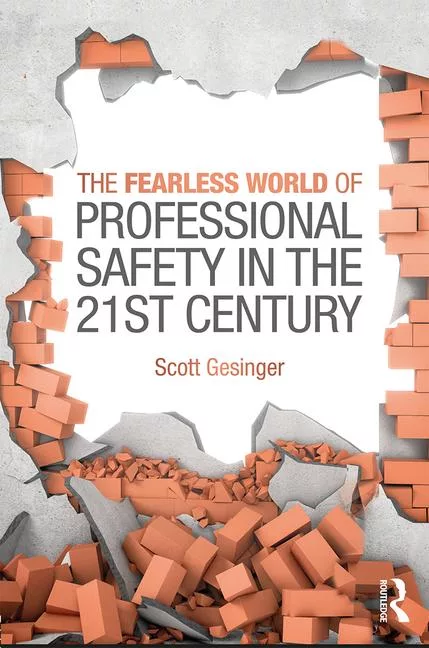
    The Fearless World of Professional Safety in the 21st Century

See More Products

Related Directories

  • American Society of Safety Professionals (ASSP)

    The American Society of Safety Professionals (ASSP) is a global association of occupational safety and health professionals who are dedicated to workplace safety. We provide education, safety standards, advocacy and a professional community that supports our diverse members and the profession.
  • Alliance of Women’s Safety Apparel Manufacturers (AWSAM)

    The Alliance of Women's Safety Apparel Manufacturers is a collection of specialty manufacturers and distributors committed to providing properly designed and fitted PPE for women. Our foundational pillars are Awareness, Access and Advocacy. Our non-profit organization has 12 Founding Members and aligns the needs of women in the workforce and the companies they work for with specialty manufacturers dedicated to providing appropriate PPE for women. The Founding Members of the organization have made great strides in removing barriers to access that have existed for many years and kept women from being equally protected. Together, we create a platform that increases awareness of products made for women, encourages equal access to appropriately fitting PPE, and advocates for the safety of women in the workforce. In the spirit of co-opetition, we collaborate to envision what is next for women in industry as we work side by side to accomplish our mission, increase our impact, and share the journey with everyone seeking to elevate diversity and equality in their workplace.
  • Board of Certified Safety Professionals (BCSP)

    Since 1969, BCSP has been setting and certifying the technical competency criteria for safety, health, and environmental practitioners; ensuring safety through certification. In 2019, BCSP developed examCORE a comprehensive educational program for safety certification.
×

Become a Leader in Safety Culture

Build your knowledge with ISHN, covering key safety, health and industrial hygiene news, products, and trends.

JOIN TODAY
  • RESOURCES
    • Advertise
    • Contact Us
    • Directories
    • Manufacturing Division
    • Store
    • Want More
  • SIGN UP TODAY
    • Create Account
    • eMagazine
    • Newsletters
    • Customer Service
    • Manage Preferences
  • SERVICES
    • Marketing Services
    • Reprints
    • Market Research
    • List Rental
    • Survey/Respondent Access
  • STAY CONNECTED
    • LinkedIn
    • Facebook
    • YouTube
    • X (Twitter)
  • PRIVACY
    • PRIVACY POLICY
    • TERMS & CONDITIONS
    • DO NOT SELL MY PERSONAL INFORMATION
    • PRIVACY REQUEST
    • ACCESSIBILITY

Copyright ©2026. All Rights Reserved BNP Media, Inc. and BNP Media II, LLC.

Design, CMS, Hosting & Web Development :: ePublishing