ISHN logo
search
cart
facebook twitter linkedin youtube
  • Sign In
  • Create Account
  • Sign Out
  • My Account
ISHN logo
  • NEWS
    • Today's News
    • Global Safety News
    • Government Regulations
  • PRODUCTS
    • Product Innovations
    • Featured Products
  • TOPICS
    • Environmental Health and Safety
    • Facility Safety
    • Workplace Health
    • Occupational Safety
    • PPE
    • More Topics
  • CONSTRUCTION
  • TECHNOLOGY
  • COLUMNS
    • Best Practices
    • Dave Johnson: What’s going on
    • Editorial Comments
    • Leading Safety
  • MULTIMEDIA
    • ISHN Podcast
    • Videos
    • Cold Stress Education Quiz
    • Webinars
    • White Papers
  • MORE
    • Buyer's Guide
    • Newsletters
    • Convention Companion
    • Polls
    • Events
    • ISHN Store
    • Sponsor Insights
  • EMAGAZINE
    • eMagazine
    • Archived Issues
    • Contact
    • Advertise
  • JOIN TODAY!
Columns

POSITIVE SAFETY CULTURES: Stress management 101

By Dr. John Kello
December 1, 2006


In part one of my “short course” in managing stress (October 2006) I mentioned individuals can have very different thresholds for experiencing distress. Even the hardiest among us have our limits. So what do we do when we’re nearing those limits? Here is what behavioral science tells us about effective stress management.
  1. It helps to be wired in a certain way. Not that we are complete prisoners of genetics, but heredity does predispose us strongly in one direction or another. “Hardiness” — an individual’s tendency to feel in control, to see problems as challenges that they can overcome, and to be personally and deeply committed to family, friends, spiritual life, career, etc. — is believed to be genetically based. These are valid predictors of how one will handle stressors. So choose your parents well, or observe and practice the behaviors of your more “hardy” mates.

  2. It also helps if you’re not wired certain ways. We all know “Type A” personalities. They’re the ones sitting in the doctor’s waiting room with their laptop popped open. This kind of “wiring” can lead to impatience, angry outbursts and even meltdowns. But Type A’s are not necessarily heart attacks waiting to happen. Many live long and happy lives (all the while wondering how those laid-back Type B managers keep their jobs). If anger/hostility is a problem for you, especially if combined with other Type A traits, be very careful. Anger management training could benefit you — and those around you.

  3. Social support is huge. The personal network is one of the major moderators of the stress reaction. Friends and family who serve as confidantes and provide the occasional reality check on your ideas and opinions are a big buffer for the stress reaction. Cultivating close personal relationships is one of the most profoundly powerful stress management strategies.

  4. You can reengineer your situation. Sometimes we trap ourselves into accepting stressors that we could, in fact, fight or flee. Sometimes it’s a good move to change jobs, to get out from under a bad boss, or away from physical or psychological stressors built into the job. Not everyone should be an air traffic controller or an EMT.

    Within a given job, it’s also possible to exert some control and eliminate or minimize stress factors, akin to how safety pros identify and eliminate workplace risks. We don’t have to passively accept the boundaries and constraints of a role. Decide how you would like it to be, and make your case to your management.

    Sometimes reengineering your situation is as simple (and profound) as just saying “no.” A lot of us in professional and responsible roles take on more than we really need to. A lot of good can come from occasionally saying, “I’d love to help, but I just can’t take that on now. Here’s what I can do, and here’s when I can do it.” Prioritizing is critical. Of course, if the boss “requests” it, it’s presumably automatically an “A” priority.

  5. “Cognitive appraisal” works. This is also known as “don’t sweat the small stuff, and it’s almost all small stuff,” as a consultant friend of mine says. Say you’re facing your annual budget inquisition with the bean counters. Don’t mistake those butterflies and dry throat as signs of fear and anxiety. I’ve learned to label those kinds of feelings, say before I give a speech to 500 people, as eagerness and readiness. And part of being ready is doing your homework. I always try to cold memorize the first three to five minutes of my talk, knowing a good start gets me over the butterflies and forecasts a good speech.

  6. Take care of your physical self. Exercise is another excellent buffer to the stress reaction. Regular exercise, especially combined with reasonable diet and rest, is about as good a thing as you can do for your physical self to promote stress resistance.

  7. Take care of your spiritual self. Whatever your personal belief system in this regard might be, feeling personally connected to a higher purpose, and having some active and real sense that there is meaning and importance in your life and in the lives of others is a strong stress buffer.

  8. Take time off. When you work past eight hours a day you’re probably just “adding bugs,” to paraphrase the CEO of the wildly successful software company SAS, as quoted in a recent Harvard Business Review article. Most of us know that beyond a certain point, we are not working effectively. Getting away from it all doesn’t automatically change a stressor, but it can help you get better perspective on it, and at least come back with renewed energy and maybe insight.

Share This Story

Looking for a reprint of this article?
From high-res PDFs to custom plaques, order your copy today!

Dr. John Kello, professor of industrial-organizational psychology at Davidson College, and president of the organization development consulting firm J.E. Kello & Associates, Inc. John’s work centers on the implementation of the “High-Performance Organization” model in a variety of work settings. He can be reached at (704) 894-2024; jokello@davidson.edu.

Recommended Content

JOIN TODAY
to unlock your recommendations.

Already have an account? Sign In

  • forklift safety

    Exploring the latest technologies in forklift safety

    With more staff and more stock in warehousing now more...
    Workplace Training Strategies
    By: Josh Cramer
  • welding

    All about welder’s flash or arc eye

    A flash burn is a painful inflammation of the cornea,...
    Environmental Health and Safety
  • dangerous jobs

    The 10 most dangerous jobs in the U.S.

    On-the-job deaths have been rising — hitting the highest...
    Government Safety Regulations
    By: Benita Mehta
Manage My Account
  • eMagazine Subscriptions
  • ISHN Newsletter & Other Newsletter Alerts
  • Online Registration
  • Manage My Preferences
  • Subscription Customer Service

More Videos

Sponsored Content

Sponsored Content is a special paid section where industry companies provide high quality, objective, non-commercial content around topics of interest to the ISHN audience. All Sponsored Content is supplied by the advertising company and any opinions expressed in this article are those of the author and not necessarily reflect the views of ISHN or its parent company, BNP Media. Interested in participating in our Sponsored Content section? Contact your local rep!

close
  • man wearing the the Sundström SR200 Full Face Mask Respirator
    Sponsored byOHD

    5 Fit Testing Mistakes That Could Cost You

  • This image shows Magid AcuSpex polarized blue mirrored safety glasses.
    Sponsored byMagid Glove and Safety

    Construction PPE Guide: What Crews Need for Each Task

  • lone worker in confined space
    Sponsored byAlphasense Ltd.

    GET THE LEAD OUT of your Safety Oxygen Sensors!

Popular Stories

SpaceX 7 launch

OSHA Investigating Fatal Fall at SpaceX Starbase

Worker Impairment

How to Tell When a Co-Worker is Impaired? A Safety Pro’s Challenge

Automated loading dock equipment

After March 2026 Rivian Death, Safety Managers Reassess Loading Dock Systems Under OSHA's Warehouse Emphasis Program

top 10 most dangerous jobs

Poll

Seasonal Readiness

With the federal heat stress prevention rule on the horizon, which area of your safety program needs the most attention?
View Results Poll Archive

Products

Surviving an OSHA Audit A Management Guide, 2nd Edition

Surviving an OSHA Audit A Management Guide, 2nd Edition

See More Products

ISHN Podcasts

Related Articles

  • POSITIVE SAFETY CULTURES: Is stress a friend or foe?

    See More
  • POSITIVE SAFETY CULTURES: So you want to be best-in-class?

    See More
  • POSITIVE SAFETY CULTURES: When the choice is to change or die

    See More

Related Products

See More Products
  • 1118645685.jpg

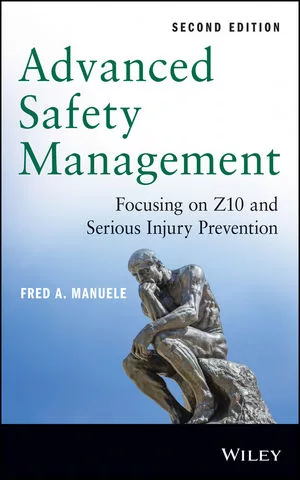
    Advanced Safety Management: Focusing on Z10 and Serious Injury Prevention, 2nd Edition

See More Products

Events

View AllSubmit An Event
  • March 4, 2015

    ACGIH® TLV® for Heat Stress and Strain in the Context of Heat Stress Management webinar

    While the Heat Stress and Strain TLV® is designed for exposure assessment, it exists in the context of an integrated heat stress management program. This webinar will outline the components of a heat stress management program to illustrate how the TLV® can be used for exposure assessment and the development of controls.
View AllSubmit An Event
×

Become a Leader in Safety Culture

Build your knowledge with ISHN, covering key safety, health and industrial hygiene news, products, and trends.

JOIN TODAY
  • RESOURCES
    • Advertise
    • Contact Us
    • Directories
    • Manufacturing Division
    • Store
    • Want More
  • SIGN UP TODAY
    • Create Account
    • eMagazine
    • Newsletters
    • Customer Service
    • Manage Preferences
  • SERVICES
    • Marketing Services
    • Reprints
    • Market Research
    • List Rental
    • Survey/Respondent Access
  • STAY CONNECTED
    • LinkedIn
    • Facebook
    • YouTube
    • X (Twitter)
  • PRIVACY
    • PRIVACY POLICY
    • TERMS & CONDITIONS
    • DO NOT SELL MY PERSONAL INFORMATION
    • PRIVACY REQUEST
    • ACCESSIBILITY

Copyright ©2026. All Rights Reserved BNP Media, Inc. and BNP Media II, LLC.

Design, CMS, Hosting & Web Development :: ePublishing