ISHN logo
search
cart
facebook twitter linkedin youtube
  • Sign In
  • Create Account
  • Sign Out
  • My Account
ISHN logo
  • NEWS
    • Today's News
    • Global Safety News
    • Government Regulations
  • PRODUCTS
    • Product Innovations
    • Featured Products
  • TOPICS
    • Environmental Health and Safety
    • Facility Safety
    • Workplace Health
    • Occupational Safety
    • PPE
    • More Topics
  • CONSTRUCTION
  • TECHNOLOGY
  • COLUMNS
    • Best Practices
    • Dave Johnson: What’s going on
    • Editorial Comments
    • Leading Safety
  • MULTIMEDIA
    • ISHN Podcast
    • Videos
    • Cold Stress Education Quiz
    • Webinars
    • White Papers
  • MORE
    • Buyer's Guide
    • Newsletters
    • Convention Companion
    • Polls
    • Events
    • ISHN Store
    • Sponsor Insights
  • EMAGAZINE
    • eMagazine
    • Archived Issues
    • Contact
    • Advertise
  • JOIN TODAY!

Layer your FR clothing
By Robert W. Hines, Jr.
January 11, 2010
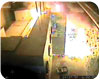
An arc flash incident such as this one (captured on video) can have deadly consequences.


You don’t need to be Ben Franklin with a kite, a key and a wicked thunderstorm to know that electricity is dangerous. If you’ve ever seen an arc flash in person or on video, you’re well aware of the frightening force that an errant electrical current can pack. As a result, you know how important it is to take appropriate measures to minimize injury and avoid potentially fatal situations for employees who work with or near energized equipment.

We all know that some types of clothing are flammable — cotton and polyester, to name two. What many may not realize, however, is that under some exposure conditions — such as an arc flash — these flammable clothing fibers can ignite even when worn beneath flame-resistant (FR) clothing.

That’s why it’s so important for safety managers to rethink the standards they maintain for their employees’ personal protective equipment (PPE) and to require workers to layer only FR clothing in order to provide maximum safety — and comfort — and to achieve the required arc rating.

Is your PPE adequate?
In brief, an arc flash is an electrical phenomenon that results when electricity flows through a medium that it shouldn’t. In most cases, that medium is air, which becomes like a piece of copper in the way it conducts electricity. With air, however, you can see the massive discharge of the electrons from the discharging element. This is the arc flash, and you can think of it as a lightning bolt on a smaller, yet more deadly, scale.

The most common causes of arc flashes are equipment failure, human error such as the improper placement of tools or improper use of equipment, or the conduction of electricity due to foreign particles in the air (often metal shavings). But whatever the cause, a worker’s greatest fear with an arc flash is that its force may be powerful enough to break open all the FR clothing outer layers and ignite a non-FR layer that’s being worn as a base underneath.

This set of circumstances can result in more severe burn injuries to an expanded area of the body due to a “chimney effect” in which cotton, for example, will burn underneath the FR layers onto areas of the worker’s body that were not exposed by the arc flash. Polyester garments will result in even worse injury — the material can melt and drip onto skin and into wounds.

Layer only with FR clothing
In 2009, the National Fire Protection Association (NFPA) 70E Standard for Electrical Safety in the Workplace was revised to address safety gaps and increase electrical worker protection. The new 70E Standard permits cotton clothing to be worn as a base layer beneath a worker’s PPE, but the cotton layer does not count toward the PPE’s required arc rating.

Because of the safety hazards posed by cotton and the fact that it isn’t considered protective layering by the NFPA, it makes sense for workers to eliminate cotton and other flammable materials altogether and layer only with FR clothing. In fact, Annex M of the NFPA 70E regulations states, “the use of all FR clothing layers will result in achieving the required arc rating with the lowest number of layers and the lowest clothing system weight.”

As Annex M also notes, to achieve, for example, a total system arc rating of 40 cal/cm2, an arc flash suit with an arc rating of 40 cal/cm2 could be worn over a cotton shirt and cotton pants. Alternatively, an arc flash suit with a 25 cal/cm2 arc rating could be worn over an FR shirt and FR pants with an arc rating of 8 cal/cm2 to achieve a total system arc rating of 40 cal/cm2. This second approach provides the required arc rating at a lower weight and with fewer total layers of fabric, providing the required protection with a higher level of worker comfort and safety.

It is important to understand that the total system and arc rating cannot be determined by simply adding the arc ratings of the individual layers. The only way to determine the total system arc rating is to conduct a multi-layer arc test on the combination of all the layers assembled just as they would be worn.

By understanding the risks involved with arc flashes along with the solutions available to you through FR layering, there’s no reason you cannot combine safety and comfort to help ensure that your workers head home safe and sound at the end of every shift.

Share This Story

Looking for a reprint of this article?
From high-res PDFs to custom plaques, order your copy today!

Robert is vice president of product development for DRIFIRE LLC. He has nearly 20 years of domestic and international experience in textile product development, quality and manufacturing. He earned his Master’s Degree in Textile Technology from the Institute of Textile Technology and his B.S. Degree in Business from the University of North Carolina at Chapel Hill.

Recommended Content

JOIN TODAY
to unlock your recommendations.

Already have an account? Sign In

  • forklift safety

    Exploring the latest technologies in forklift safety

    With more staff and more stock in warehousing now more...
    Workplace Training Strategies
    By: Josh Cramer
  • welding

    All about welder’s flash or arc eye

    A flash burn is a painful inflammation of the cornea,...
    Environmental Health and Safety
  • dangerous jobs

    The 10 most dangerous jobs in the U.S.

    On-the-job deaths have been rising — hitting the highest...
    Government Safety Regulations
    By: Benita Mehta
Manage My Account
  • eMagazine Subscriptions
  • ISHN Newsletter & Other Newsletter Alerts
  • Online Registration
  • Manage My Preferences
  • Subscription Customer Service

More Videos

Sponsored Content

Sponsored Content is a special paid section where industry companies provide high quality, objective, non-commercial content around topics of interest to the ISHN audience. All Sponsored Content is supplied by the advertising company and any opinions expressed in this article are those of the author and not necessarily reflect the views of ISHN or its parent company, BNP Media. Interested in participating in our Sponsored Content section? Contact your local rep!

close
  • man wearing the the Sundström SR200 Full Face Mask Respirator
    Sponsored byOHD

    5 Fit Testing Mistakes That Could Cost You

  • This image shows Magid AcuSpex polarized blue mirrored safety glasses.
    Sponsored byMagid Glove and Safety

    Construction PPE Guide: What Crews Need for Each Task

  • lone worker in confined space
    Sponsored byAlphasense Ltd.

    GET THE LEAD OUT of your Safety Oxygen Sensors!

Popular Stories

SpaceX 7 launch

OSHA Investigating Fatal Fall at SpaceX Starbase

Automated loading dock equipment

After March 2026 Rivian Death, Safety Managers Reassess Loading Dock Systems Under OSHA's Warehouse Emphasis Program

psychology in the workplace

Most Workplaces Measure Psychological Safety, Ignoring Psychosocial Risks

top 10 most dangerous jobs

Poll

Seasonal Readiness

With the federal heat stress prevention rule on the horizon, which area of your safety program needs the most attention?
View Results Poll Archive

Products

Surviving an OSHA Audit A Management Guide, 2nd Edition

Surviving an OSHA Audit A Management Guide, 2nd Edition

See More Products

ISHN Podcasts

Related Articles

  • How to wash your FR clothing

    See More
  • Test your FR clothing options with a wear trial

    See More
  • Feat_PKsafety_pic_0820.jpg

    How to extend the life of your FR clothing

    See More

Related Products

See More Products
  • ISHN Instrument & Controls Industrial Hygiene Buyers Guide

See More Products

Related Directories

  • Bulwark FR

    When real lives are on the line and corporate reputations are at stake you can turn to Bulwark® Protection. We’re the PPE powerhouse that surrounds you completely. We balance the demand for FR and PPE that looks as good as it protects. We expand your knowledge in all directions with the latest information, advice and guidance.
×

Become a Leader in Safety Culture

Build your knowledge with ISHN, covering key safety, health and industrial hygiene news, products, and trends.

JOIN TODAY
  • RESOURCES
    • Advertise
    • Contact Us
    • Directories
    • Manufacturing Division
    • Store
    • Want More
  • SIGN UP TODAY
    • Create Account
    • eMagazine
    • Newsletters
    • Customer Service
    • Manage Preferences
  • SERVICES
    • Marketing Services
    • Reprints
    • Market Research
    • List Rental
    • Survey/Respondent Access
  • STAY CONNECTED
    • LinkedIn
    • Facebook
    • YouTube
    • X (Twitter)
  • PRIVACY
    • PRIVACY POLICY
    • TERMS & CONDITIONS
    • DO NOT SELL MY PERSONAL INFORMATION
    • PRIVACY REQUEST
    • ACCESSIBILITY

Copyright ©2026. All Rights Reserved BNP Media, Inc. and BNP Media II, LLC.

Design, CMS, Hosting & Web Development :: ePublishing