ISHN logo
search
cart
facebook twitter linkedin youtube
  • Sign In
  • Create Account
  • Sign Out
  • My Account
ISHN logo
  • NEWS
    • Today's News
    • Global Safety News
    • Government Regulations
  • PRODUCTS
    • Product Innovations
    • Featured Products
  • TOPICS
    • Environmental Health and Safety
    • Facility Safety
    • Workplace Health
    • Occupational Safety
    • PPE
    • More Topics
  • CONSTRUCTION
  • TECHNOLOGY
  • COLUMNS
    • Best Practices
    • Dave Johnson: What’s going on
    • Editorial Comments
    • Leading Safety
  • MULTIMEDIA
    • ISHN Podcast
    • Videos
    • Cold Stress Education Quiz
    • Webinars
    • White Papers
  • MORE
    • Buyer's Guide
    • Newsletters
    • Convention Companion
    • Polls
    • Events
    • ISHN Store
    • Sponsor Insights
  • EMAGAZINE
    • eMagazine
    • Archived Issues
    • Contact
    • Advertise
  • JOIN TODAY!
Columns

MANAGING BEST PRACTICES: New fed law challenges EHS pros

By Dan Markiewicz MS, CIH, CSP, RMP
June 4, 2010


The Patient Protection and Affordable Care Act (health care reform) is now law. As you may be aware, the act provides basic direction but does not provide details on how to meet its many requirements, to be enforced by the Labor Department.

Among other provisions, the law requires an employer to:
  • Provide a reasonable break time for an employee to express milk for her nursing child one year after the child’s birth each time such employee has the need to express milk.
  • Provide a place, other than a bathroom, that is shielded from view and free from intrusion from coworkers and the public, which may be used by an employee to express breast milk.
Companies employing less than 50 employees are not be subject to these requirements if they cause the employer significant difficulty or expense in relation to the size, financial resources, nature, or structure of the employer’s business.

Conflicting opinions

Rush Limbaugh has weighed in on the law and finds it an unnecessary intrusion by government.(1) The United States Breastfeeding Committee, however, “applauds the workplace breastfeeding support provision in health care reform.”(2)

So is this an issue to be addressed by an EHS pro?

As noted in Figure 1 in my December, 2009 ISHN column, Workplace developmental hazards: Be sure to manage the “right side,” employees who breastfeed are within the continuum of workplace developmental health.(3) The issue of breastfeeding does impact employee health and the health of employees’ children.

Plus, the place where breast milk may be expressed has been interpreted by the U.S. Department of Health and Human Services and other authorities to include a location that is “clean and sanitary.” This is why expressing milk in a bathroom is now prohibited by law.

OSHA hazcom

Proximity to storage and use of chemicals should be considered. Within OSHA’s September, 2009 proposed rule to align the hazard communication standard with the globally harmonized system for chemical labeling (GHS) is a new health hazard category “effects on or via lactation.” As defined within the United Nations’ GHS guides, this category includes “substances that may be absorbed by women and have been shown to interfere with lactation, or that may be present (including metabolites) in breast milk in amounts sufficient to cause concern for the health of a breastfed child.”

LactMed

Whether breast milk may become contaminated during the period when it is being expressed may be a minor issue compared to the concern of whether breast milk may be contaminated from workplace chemicals before it is expressed. Wide interpretations are possible. The LactMed database can be used to identify chemicals of concern.(4) LactMed is part of the National Library of Medicine’s TOXNET® database and includes information about chemicals and drugs to “which breastfeeding mothers may be exposed.”

Seek expert advice

Determining if chemical exposures are safe for workers who breastfeed falls on the shoulders of EHS pros. The health hazard category of “effects on or via lactation” falls into the “reproductive” health hazard category within GHS. The GHS precautionary statement P201 for the reproductive hazards is “obtain special instructions before use.” Additionally, Control Banding strategies suggested by NIOSH place reproductive hazards (by inhalation) into Band No. 4 where the control is “Seek expert advice.”

Almost all the information you need to develop and manage a workplace breastfeeding program, except for issues on chemical exposures, can be found in the report, Investing in Workplace Breastfeeding Programs and Policies: An Employer’s Toolkit; Washington, D.C. Center for Prevention and Health Services, National Business Group on Health; 2009.(5)

The new federal law that allows time for workers to express breast milk may extend to incentives under the law for employers that develop wellness programs. The impact of other requirements in the law, such as Section 10323 that provides Medicare coverage and medical screenings to individuals exposed to environmental health hazards from Superfund sites, could be very problematic, especially if medical screening may be performed to find chemicals in breast milk. All of this and more begs for an EHS pro’s involvement.

References:

1 http://www.rushlimbaugh.com/home/daily/site_040210/ content/01125114.guest.html

2 http://www.usbreastfeeding.org/Home/tabid/36/Default.aspx

3 http://www.ishn.com/Articles/Column/BNP_GUID_9-5- 2006_A_10000000000000713529

4 http://www.nlm.nih.gov/pubs/factsheets/lactmedfs.html

5 http://www.wbgh.org/benefitstopics/breastfeeding.cfm

Share This Story

Looking for a reprint of this article?
From high-res PDFs to custom plaques, order your copy today!

Dan Markiewicz, MS, CIH, CSP, RMP, is an independent environmental health and safety consultant and a long-time columnist. He can be reached at (419) 356-3768 or by email at dan.markiewicz@gmail.com.

Recommended Content

JOIN TODAY
to unlock your recommendations.

Already have an account? Sign In

  • forklift safety

    Exploring the latest technologies in forklift safety

    With more staff and more stock in warehousing now more...
    Facility Safety
    By: Josh Cramer
  • welding

    All about welder’s flash or arc eye

    A flash burn is a painful inflammation of the cornea,...
    Environmental Health and Safety
  • dangerous jobs

    The 10 most dangerous jobs in the U.S.

    On-the-job deaths have been rising — hitting the highest...
    Occupational Safety
    By: Benita Mehta
Manage My Account
  • eMagazine Subscriptions
  • ISHN Newsletter & Other Newsletter Alerts
  • Online Registration
  • Manage My Preferences
  • Subscription Customer Service

More Videos

Sponsored Content

Sponsored Content is a special paid section where industry companies provide high quality, objective, non-commercial content around topics of interest to the ISHN audience. All Sponsored Content is supplied by the advertising company and any opinions expressed in this article are those of the author and not necessarily reflect the views of ISHN or its parent company, BNP Media. Interested in participating in our Sponsored Content section? Contact your local rep!

close
  • man wearing the the Sundström SR200 Full Face Mask Respirator
    Sponsored byOHD

    5 Fit Testing Mistakes That Could Cost You

  • This image shows Magid AcuSpex polarized blue mirrored safety glasses.
    Sponsored byMagid Glove and Safety

    Construction PPE Guide: What Crews Need for Each Task

  • lone worker in confined space
    Sponsored byAlphasense Ltd.

    GET THE LEAD OUT of your Safety Oxygen Sensors!

Popular Stories

SpaceX 7 launch

OSHA Investigating Fatal Fall at SpaceX Starbase

Worker Impairment

How to Tell When a Co-Worker is Impaired? A Safety Pro’s Challenge

psychology in the workplace

Most Workplaces Measure Psychological Safety, Ignoring Psychosocial Risks

top 10 most dangerous jobs

Poll

Seasonal Readiness

With the federal heat stress prevention rule on the horizon, which area of your safety program needs the most attention?
View Results Poll Archive

Products

Surviving an OSHA Audit A Management Guide, 2nd Edition

Surviving an OSHA Audit A Management Guide, 2nd Edition

See More Products

ISHN Podcasts

Related Articles

  • MANAGING BEST PRACTICES: A science/math lesson plan for EHS pros

    See More
  • MANAGING BEST PRACTICES: A new age of regulation?

    See More
  • Managing best practices

    See More

Related Products

See More Products
  • safety law.jpg

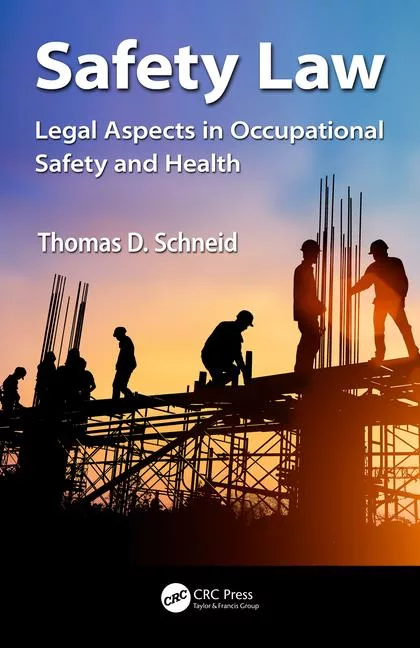
    Safety Law: Legal Aspects in Occupational Safety and Health

  • 1119906652.webp

    Alive and Well at the End of the Day: The Supervisor's Guide to Managing Safety in Operations, 2E

See More Products

Related Directories

  • VelocityEHS

    VelocityEHS is the global leader in EHS & Sustainability software, pioneering human-centered AI to make workplaces safer, faster. Protecting over ten million workers worldwide, our Accelerate® Platform delivers AI-driven innovation across Safety, Ergonomics, Chemical Management, and Operational Risk, and with standalone solutions Contractor Safety & Permit to Work, Environmental Compliance, and Sustainability. With the deepest bench of certified experts, from PhD AI/ML scientists to board-certified ergonomists and safety professionals, VelocityEHS ensures trusted, human-in-the-loop oversight. Recognized as a 2025 Verdantix Green Quadrant Leader and SOC 2 Type II attested, we help companies outpace risk with speed and purpose. Learn more at www.EHS.com.
×

Become a Leader in Safety Culture

Build your knowledge with ISHN, covering key safety, health and industrial hygiene news, products, and trends.

JOIN TODAY
  • RESOURCES
    • Advertise
    • Contact Us
    • Directories
    • Manufacturing Division
    • Store
    • Want More
  • SIGN UP TODAY
    • Create Account
    • eMagazine
    • Newsletters
    • Customer Service
    • Manage Preferences
  • SERVICES
    • Marketing Services
    • Reprints
    • Market Research
    • List Rental
    • Survey/Respondent Access
  • STAY CONNECTED
    • LinkedIn
    • Facebook
    • YouTube
    • X (Twitter)
  • PRIVACY
    • PRIVACY POLICY
    • TERMS & CONDITIONS
    • DO NOT SELL MY PERSONAL INFORMATION
    • PRIVACY REQUEST
    • ACCESSIBILITY

Copyright ©2026. All Rights Reserved BNP Media, Inc. and BNP Media II, LLC.

Design, CMS, Hosting & Web Development :: ePublishing