ISHN logo
search
cart
facebook twitter linkedin youtube
  • Sign In
  • Create Account
  • Sign Out
  • My Account
ISHN logo
  • NEWS
    • Today's News
    • Global Safety News
    • Government Regulations
  • PRODUCTS
    • Product Innovations
    • Featured Products
  • TOPICS
    • Environmental Health and Safety
    • Facility Safety
    • Workplace Health
    • Occupational Safety
    • PPE
    • More Topics
  • CONSTRUCTION
  • TECHNOLOGY
  • COLUMNS
    • Best Practices
    • Dave Johnson: What’s going on
    • Editorial Comments
    • Leading Safety
  • MULTIMEDIA
    • ISHN Podcast
    • Videos
    • Cold Stress Education Quiz
    • Webinars
    • White Papers
  • MORE
    • Buyer's Guide
    • Newsletters
    • Convention Companion
    • Polls
    • Events
    • ISHN Store
    • Sponsor Insights
  • EMAGAZINE
    • eMagazine
    • Archived Issues
    • Contact
    • Advertise
  • JOIN TODAY!
Today's Safety NewsPPEWorkplace HealthWorkplace Training Strategies

There's no excuse: Managing hearing-impaired or deaf workers

By Renee S. Bessette, COHC, Theresa Y. Schulz, Lt. Col. U.S. Air Force (retired) Ph.D.
June 1, 2011


It is a misconception that hearing-impaired or deaf workers do not have to participate in a hearing conservation program. Like those with normal hearing, these workers still fall under OSHA, MSHA and FRA regulations for occupational noise exposures. Employers are still required to provide annual audiometry and training, and those workers exposed to levels above 90 dBA must wear hearing protection devices (HPD). Workers with a documented hearing loss, or Standard Threshold Shift (STS) are required to wear HPDs at 85 dBA.
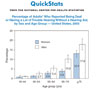
*The civilian, noninstitutionalized population aged >18 years.
Figure 1: Percentage of adults* who reported being deaf or having a lot of trouble hearing without a hearing aid, by sex and age group — United States, 2003

In the 2003 National Health Survey, (Figure 1) the percentage of adults aged 18 years and older who reported being deaf or having a lot of trouble hearing increased with age, from 1 percent in persons aged 18-44 years to 15 percent in persons over 75 years old. In 2006, 37 million adults in the U.S. had trouble hearing, representing a substantial increase since 2000 when 31.5 million U.S. adults reported trouble hearing.

These impairments may be due to occupational exposures, biological diseases, genetic defects or natural aging. Military veterans returning from active combat — and returning to the workplace — have higher incident rates of NIHL than ever before.

This article will focus on how to best accommodate and manage hearing-impaired workers, using best practices to manage personal behaviors and new technologies to manage noise exposures.

Hearing protectors

Hearing-impaired and deaf workers are still required to use hearing protection when exposed to hazardous noise levels. Several options are available:
  • Uniform Attenuation – For workers with a mild to moderate hearing loss, a solution may be passive earplugs and earmuffs that offer uniform attenuation. Flat or uniform attenuation hearing protectors block low and medium frequencies but let higher frequencies be heard more naturally. Many of these uniform-attenuating HPDs offer moderate attenuation and are good for workers exposed to lower levels of hazardous noise. These are also a good option for workers who prefer to wear their hearing aids while working.
  • Electronic Sound Amplification – For those with a mild hearing loss, earmuffs that deliver sound amplification may provide added hearing assistance in moderate levels of noise.
  • Noise Exposure Monitoring / In-Ear Dosimetry – In-ear dosimetry measures in real time the amount of noise dose workers accumulate during a workday with and without hearing protection. This helps determine if a worker is properly protected or has achieved additional noise exposures and is at risk for additional hearing loss.
  • Hearing Protector Fit Testing – If an employee has some hearing loss, special hearing protection may be needed to both protect hearing and allow situational awareness for safe operations. Fit-testing earplugs can help ensure the right amount of protection.
  • Hearing Aids as Hearing Protectors – Hearing aids are generally not good hearing protectors, however some hearing aids could be used as hearing protectors, such as “completely in the canal,” or CIC, hearing aids that have a deep insertion into the ear canal and are turned to the off position. A supervisor or safety manager must know whether or not the worker has turned them off in order to be properly protected. CICs also may only provide a lower level of attenuation, and are not suited for high levels of hazardous noise.


OSHA SHIB

In 2005, OSHA published a Safety and Health Bulletin titled “Innovative Workplace Safety Accommodations for Hearing-Impaired Workers. ” This bulletin provides recommendations including strobe lighting for visual cues, vibrating alarms, and buddy systems that pair healthy hearing with hearing-impaired workers.

Training + care

  • Workers as Role Models – Workers whose hearing loss is due to occupational or military exposures might be willing to share testimonials about the value of maintaining healthy hearing in training sessions with their peers.
  • Clear Communication – When conversing with these workers, make sure that you face the person directly, standing in light, and speak as clearly as possible.
  • Hearing Protectors and Hearing Aids – It is highly recommended that workers who wear both hearing aids and hearing protection consult with an audiologist before wearing them. The audiologist will be able to advise regarding what type of hearing aid might work best with hearing protection and how loud the person can turn up their hearing aids so that they mitigate any distortion or feedback sounds.
Workers with a hearing loss or who are deaf often offer companies a wealth of experience and dedication to their job. These workers can be easily accommodated to ensure that they are productive and not at risk for further hearing loss.

References

1 www.cdc.gov/mmwr/preview/mmwrhtml/mm5425a5.htm
2 Health Disparities Among Adults With Hearing Loss: United States, 2000-2006. by Charlotte A. Schoenborn, M.P.H., and Kathleen Heyman, M.S. Division of Health Interview Statistics. www.cdc.gov/nchs/data/hestat/hearing00-06/hearing00-06.htm
3 Schulz, TY. Troops Return with Alarming Rates of Hearing Loss. Hearing Health, Fall 2004. Cited 4.15.11 from www.nmcphc.med.navy.mil/downloads/occmed/toolbox/ hearing%20health%20article%20-troops%20return%20with%20 alarming%20rates%20of%20hl.pdf
4 Schulz, TY. Key Hearing Conservation Issues for 2011 and Beyond. Professional Safety, April 2011. cited 4.15.11 from www.asse.org/professionalsafety/best-practices.php
5 Morata TC, Themann CL, Randolph RF, Verbsky BL, Byrne DC, Reeves ER. Working in noise with a hearing loss: Perceptions from workers, supervisors and hearing conservation program managers. Noise Health 2006;8:61-2
6 Rink, T.L. (1979). Hearing Protection and Speech Discrimination in Hearing-Impaired Persons. Sound and Vibration,Vol. 13 No.1, 22-25.]
7 www.osha.gov/dts/shib/shib072205.html 8 Verbsky, Babette. “Hearing Aids + Earmuffs: Counter-Intuitive Hearing Conservation.” CAOHC Update, Summer 2004.
KEYWORDS: hearing protection

Share This Story

Looking for a reprint of this article?
From high-res PDFs to custom plaques, order your copy today!

Renee is the marketing manager for Howard Leight/Sperian Hearing Protection, LLC, a global leader in hearing conservation solutions. She is responsible for global brand management and marketing communications for the Howard Leight brand. Renee holds a BA in journalism from the University of Rhode Island; she received CAOHC certification in 2005; and is a Certified Occupational Hearing Conservationist [COHC].
Dr. Theresa Y. Schulz is the hearing conservation manager for Honeywell Safety Products, manufacturer of Howard Leight® hearing protection products (www.howardleight.com, www.hearforever.org). She is a past president and has been an active member of the National Hearing Conservation Association [NHCA] for 30 years. Dr. Schulz served in the U.S. Air Force for over 20 years as an audiologist.

Recommended Content

JOIN TODAY
to unlock your recommendations.

Already have an account? Sign In

  • forklift safety

    Exploring the latest technologies in forklift safety

    With more staff and more stock in warehousing now more...
    Workplace Training Strategies
    By: Josh Cramer
  • welding

    All about welder’s flash or arc eye

    A flash burn is a painful inflammation of the cornea,...
    Environmental Health and Safety
  • dangerous jobs

    The 10 most dangerous jobs in the U.S.

    On-the-job deaths have been rising — hitting the highest...
    Occupational Safety
    By: Benita Mehta
Manage My Account
  • eMagazine Subscriptions
  • ISHN Newsletter & Other Newsletter Alerts
  • Online Registration
  • Manage My Preferences
  • Subscription Customer Service

More Videos

Sponsored Content

Sponsored Content is a special paid section where industry companies provide high quality, objective, non-commercial content around topics of interest to the ISHN audience. All Sponsored Content is supplied by the advertising company and any opinions expressed in this article are those of the author and not necessarily reflect the views of ISHN or its parent company, BNP Media. Interested in participating in our Sponsored Content section? Contact your local rep!

close
  • man wearing the the Sundström SR200 Full Face Mask Respirator
    Sponsored byOHD

    5 Fit Testing Mistakes That Could Cost You

  • This image shows Magid AcuSpex polarized blue mirrored safety glasses.
    Sponsored byMagid Glove and Safety

    Construction PPE Guide: What Crews Need for Each Task

  • lone worker in confined space
    Sponsored byAlphasense Ltd.

    GET THE LEAD OUT of your Safety Oxygen Sensors!

Popular Stories

SpaceX 7 launch

OSHA Investigating Fatal Fall at SpaceX Starbase

Worker Impairment

How to Tell When a Co-Worker is Impaired? A Safety Pro’s Challenge

Automated loading dock equipment

After March 2026 Rivian Death, Safety Managers Reassess Loading Dock Systems Under OSHA's Warehouse Emphasis Program

top 10 most dangerous jobs

Poll

Seasonal Readiness

With the federal heat stress prevention rule on the horizon, which area of your safety program needs the most attention?
View Results Poll Archive

Products

Surviving an OSHA Audit A Management Guide, 2nd Edition

Surviving an OSHA Audit A Management Guide, 2nd Edition

See More Products

ISHN Podcasts

Related Articles

  • There’s no excuse for not installing emergency showers & eyewashes

    See More
  • No excuse: Confined spaces continue to kill

    See More
  • Hurricane Rita no excuse for safety violations, says court ruling (10/5)

    See More

Related Products

See More Products
  • 1119906652.webp

    Alive and Well at the End of the Day: The Supervisor's Guide to Managing Safety in Operations, 2E

See More Products

Related Directories

  • SafetyLine Lone Worker

    SafetyLine Lone Worker helps companies monitor the status of workers who are remote, alone, or working in hazardous situations. We are an automated check-in monitoring and emergency notification service. SafetyLine uses its communications infrastructure to ensure that workers have comprehensive monitoring, 24/7, without the need for costly monitoring centers.
×

Become a Leader in Safety Culture

Build your knowledge with ISHN, covering key safety, health and industrial hygiene news, products, and trends.

JOIN TODAY
  • RESOURCES
    • Advertise
    • Contact Us
    • Directories
    • Manufacturing Division
    • Store
    • Want More
  • SIGN UP TODAY
    • Create Account
    • eMagazine
    • Newsletters
    • Customer Service
    • Manage Preferences
  • SERVICES
    • Marketing Services
    • Reprints
    • Market Research
    • List Rental
    • Survey/Respondent Access
  • STAY CONNECTED
    • LinkedIn
    • Facebook
    • YouTube
    • X (Twitter)
  • PRIVACY
    • PRIVACY POLICY
    • TERMS & CONDITIONS
    • DO NOT SELL MY PERSONAL INFORMATION
    • PRIVACY REQUEST
    • ACCESSIBILITY

Copyright ©2026. All Rights Reserved BNP Media, Inc. and BNP Media II, LLC.

Design, CMS, Hosting & Web Development :: ePublishing