ISHN logo
search
cart
facebook twitter linkedin youtube
  • Sign In
  • Create Account
  • Sign Out
  • My Account
ISHN logo
  • NEWS
    • Today's News
    • Global Safety News
    • Government Regulations
  • PRODUCTS
    • Product Innovations
    • Featured Products
  • TOPICS
    • Environmental Health and Safety
    • Facility Safety
    • Workplace Health
    • Occupational Safety
    • PPE
    • More Topics
  • CONSTRUCTION
  • TECHNOLOGY
  • COLUMNS
    • Best Practices
    • Dave Johnson: What’s going on
    • Editorial Comments
    • Leading Safety
  • MULTIMEDIA
    • ISHN Podcast
    • Videos
    • Cold Stress Education Quiz
    • Webinars
    • White Papers
  • MORE
    • Buyer's Guide
    • Newsletters
    • Convention Companion
    • Polls
    • Events
    • ISHN Store
    • Sponsor Insights
  • EMAGAZINE
    • eMagazine
    • Archived Issues
    • Contact
    • Advertise
  • JOIN TODAY!
Today's Safety NewsFacility Safety

CSB identifies cause of HF leak in Texas
March 19, 2012
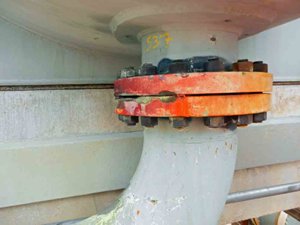
The leaky flange
flange

A leaky flange with a long history of trouble appears to be at the root of a March 5, 2012 release of hydrofluoric acid (HF) from a CITGO refinery, according to the Chemical Safety Board (CSB).

The CSB team investigating the incident in Corpus Christi, Texas noted last week that this was the second release of HF at that facility within three years.

"On July 19, 2009, an intense hydrocarbon flash fire resulted in a release of hydrofluoric acid in the same process unit as the March 5th incident," said Johnnie Banks, Team Lead for the CSB. "The fire, which burned for several days, critically injured one employee and another was treated for possible HF exposure. As a result of the 2009 accident, CITGO reported to the Texas Commission on Environmental Quality that approximately 21 tons of HF released from alkylation unit piping and equipment."

The latest HF release did not cause any injuries, but Banks said the CSB nonetheless is taking the accident very seriously. "HF is highly corrosive and toxic.  Absorption through the skin and underlying tissue can produce fatal cardiac arrest and inhalation causes damage to the linings of the lungs."

Since arriving on the scene the day after the HF release, the CSB investigation teams have conducted about 20 interviews, examined the accident scene and designed testing to estimate the total amount of process stream that was released to the atmosphere during the incident.
 
The team has determined that the March 5th leak occurred due to the failure of the seal on a 12 inch flange on a process vessel in the Alkylation unit.
 
Banks said that leaks have been reported at that flange as far back as September 2011. "In late January of this year, maintenance was performed on the flange, tightening the existing bolts, but the leak persisted. Further maintenance was performed on February 10 – over three weeks prior to the actual incident. At that time workers replaced the flange bolts and a work order was submitted to order a clamp to enclose the leak.
 
"The unit was not shut down; rather the clamp was ordered in the hopes that its installment would stop the leak. The proposed design of the new clamp was rejected three times over the next three weeks and had not been installed by March 5th."  
 
On that day, the leak from the piping flange on the 12-inch line worsened. "Process liquids containing hydrocarbons and about 5% HF were released in a steady stream which worsened through the late afternoon," said Banks.
 
The CSB has determined that the March 5th incident resulted in the release of between 300 and 500 pounds of HF.
 
Eventually, the release was detected by sensors that triggered the alkylation unit’s automatic water cannons, designed to capture airborne HF. Automatic water cannons are intended as the last line of defense in the event of a release of HF.
 
Water cannons were once again activated by an HF release on March 10th and 11th as the refinery was restarting the unit. Banks said that the company was aware that the water cannons might be triggered by the planned work activities.
 
"Although the two additional releases were small in quantity the CSB is concerned that management accepted that the water cannons could be triggered. The facility is routinely using the water cannons as release mitigation for maintenance activities when in reality they should not be used as the last line of defense."
 
Banks said the investigators will be examining commonalities between the 2009 HF release and the March 5th incident.

"The facility’s continued reliance on the water cannons to “control” an HF release raises serious concerns regarding the facility’s management systems and control."

KEYWORDS: accident

Share This Story

Looking for a reprint of this article?
From high-res PDFs to custom plaques, order your copy today!

Recommended Content

JOIN TODAY
to unlock your recommendations.

Already have an account? Sign In

  • forklift safety

    Exploring the latest technologies in forklift safety

    With more staff and more stock in warehousing now more...
    Workplace Training Strategies
    By: Josh Cramer
  • welding

    All about welder’s flash or arc eye

    A flash burn is a painful inflammation of the cornea,...
    Environmental Health and Safety
  • dangerous jobs

    The 10 most dangerous jobs in the U.S.

    On-the-job deaths have been rising — hitting the highest...
    Transportation Safety
    By: Benita Mehta
Manage My Account
  • eMagazine Subscriptions
  • ISHN Newsletter & Other Newsletter Alerts
  • Online Registration
  • Manage My Preferences
  • Subscription Customer Service

More Videos

Sponsored Content

Sponsored Content is a special paid section where industry companies provide high quality, objective, non-commercial content around topics of interest to the ISHN audience. All Sponsored Content is supplied by the advertising company and any opinions expressed in this article are those of the author and not necessarily reflect the views of ISHN or its parent company, BNP Media. Interested in participating in our Sponsored Content section? Contact your local rep!

close
  • man wearing the the Sundström SR200 Full Face Mask Respirator
    Sponsored byOHD

    5 Fit Testing Mistakes That Could Cost You

  • This image shows Magid AcuSpex polarized blue mirrored safety glasses.
    Sponsored byMagid Glove and Safety

    Construction PPE Guide: What Crews Need for Each Task

  • lone worker in confined space
    Sponsored byAlphasense Ltd.

    GET THE LEAD OUT of your Safety Oxygen Sensors!

Popular Stories

SpaceX 7 launch

OSHA Investigating Fatal Fall at SpaceX Starbase

dust explosion

Tennessee OSHA Issues Record $3.1M Fine After Deadly Explosion at Munitions Plant

roofing dangerous jobs Getty.jpg

OSHA Finds Florida Roofing Company Willfully Exposed Workers to Safety Hazards After Worker’s Fatal Fall

top 10 most dangerous jobs

Poll

Seasonal Readiness

With the federal heat stress prevention rule on the horizon, which area of your safety program needs the most attention?
View Results Poll Archive

Products

Surviving an OSHA Audit A Management Guide, 2nd Edition

Surviving an OSHA Audit A Management Guide, 2nd Edition

See More Products

ISHN Podcasts

Related Articles

  • CSB deploys to investigate toxic release at Citgo refinery in Texas

    See More
  • Investigation underway into deadly chem leak at DuPont plant in Texas

    See More
  • NTSB investigating deadly van-pickup crash in Texas

    See More

Events

View AllSubmit An Event
  • October 18, 2017

    ACGIH® TLV® For Audible Sound – Understanding the Proposed Notice of Intended Change to The Acgih® Tlv® for Noise

    Occupational noise exposures represent an important but under-recognized cause of disease and disability in the United States. Now titled as Audible Sound, the ACGIH® Threshold Limit Values for Physical Agents (TLV®-PA) Committee has proposed a revision to the TLV® for Noise.
View AllSubmit An Event
×

Become a Leader in Safety Culture

Build your knowledge with ISHN, covering key safety, health and industrial hygiene news, products, and trends.

JOIN TODAY
  • RESOURCES
    • Advertise
    • Contact Us
    • Directories
    • Manufacturing Division
    • Store
    • Want More
  • SIGN UP TODAY
    • Create Account
    • eMagazine
    • Newsletters
    • Customer Service
    • Manage Preferences
  • SERVICES
    • Marketing Services
    • Reprints
    • Market Research
    • List Rental
    • Survey/Respondent Access
  • STAY CONNECTED
    • LinkedIn
    • Facebook
    • YouTube
    • X (Twitter)
  • PRIVACY
    • PRIVACY POLICY
    • TERMS & CONDITIONS
    • DO NOT SELL MY PERSONAL INFORMATION
    • PRIVACY REQUEST
    • ACCESSIBILITY

Copyright ©2026. All Rights Reserved BNP Media, Inc. and BNP Media II, LLC.

Design, CMS, Hosting & Web Development :: ePublishing