ISHN logo
search
cart
facebook twitter linkedin youtube
  • Sign In
  • Create Account
  • Sign Out
  • My Account
ISHN logo
  • NEWS
    • Today's News
    • Global Safety News
    • Government Regulations
  • PRODUCTS
    • Product Innovations
    • Featured Products
  • TOPICS
    • Environmental Health and Safety
    • Facility Safety
    • Workplace Health
    • Occupational Safety
    • PPE
    • More Topics
  • CONSTRUCTION
  • TECHNOLOGY
  • COLUMNS
    • Best Practices
    • Dave Johnson: What’s going on
    • Editorial Comments
    • Leading Safety
  • MULTIMEDIA
    • ISHN Podcast
    • Videos
    • Cold Stress Education Quiz
    • Webinars
    • White Papers
  • MORE
    • Buyer's Guide
    • Newsletters
    • Convention Companion
    • Polls
    • Events
    • ISHN Store
    • Sponsor Insights
  • EMAGAZINE
    • eMagazine
    • Archived Issues
    • Contact
    • Advertise
  • JOIN TODAY!
Today's Safety NewsWorkplace Safety Culture

Safety expert outlines the “6 pillars of safety”

November 1, 2012

Phil LaDukeAt the National Safety Congress and Expo held last week in Orlando, attendees had the chance to see and hear Paul La Duke. Phil is currently an associate of Rockford Greene International, a Monroe-Michigan based company that specializes in business optimization solutions. He is an emerging thought leader in safety, as well as one of the field’s most aggressive and provocative, not to say prolific, bloggers. 

Here is a sample of Phil’s thought leadership, taken from his blog:

The Safety function wasn’t designed in most organizations, it evolved. Unfortunately when functions evolve they tend to organizational artifacts staffed by people who are long on activity and short on results.  But given the opportunity to reengineer the safety function, what would you do? Where would you make changes? What would you keep and build on and what would you throw on the scrap heap?

Given that I have spent a fair percentage of time, effort, and intellectual energy helping organizations through this particular exercise, I have strong opinions on the subject (I know, I know, a strong opinion from ME? Impossible.)

In my experience there are six basic elements, pillars if you will. (I find it interesting that the analogy of pillars is so often used when in today’s architecture actual pillars is so seldom used).

Training

Even though I have devoted so much digital ink to evangelize the need for expertly designed, developed and delivered training, I feel the need to drone on about it yet again.  Beyond the obvious, and oft repeated, need for worker to possess the core skills required of their jobs, training is also essential for workers to participate in problem solving, understanding the subtle nuances of their jobs, and to truly internalize the risks associated with their jobs.

Training should be a damned sight more formalized than most safety people believe. Training should be tracked by the safety professional—not just safety training—all training.  Safety professionals should work with the training professionals to assess the risk points of the job and together craft learning solutions that address the areas of greatest risk.

There should be a specific focus on hazard recognition so that all workers can vigilantly approach the identification and containment of the hazards of their work areas.

Process Improvement

There are some who advocate for a greater relationship between Lean Principles and safety; I say that there really isn’t any meaningful difference between the two. “What profiteth an organization that leaneth itself but loses safety” or something like that. In my expansive experience you can’t lean out a process without making it safer. Lean is about taking processes to a place of peak efficiency and you can’t reach the zenith of efficiency without making a process safer.

Process improvement should include specialized programs like 5S and Total Productive Maintenance which directly relate to worker safety and topics like Kan Ban and Poke Yoke that are indirectly related.

Hazard and Risk Management

Forget the imbeciles who debate behavior versus process; it’s ALL about hazards, mouth breathers. Hazard identification, containment, and correction collectively are the cornerstone of any effective safety effort. Hazard management begins with an in-depth understanding of one’s job which is initiated by basic skills training but is continued via the intimate and holistic knowledge of a process that can only come from work experience.

Hazard management is essential because for an organization to assess its risk of injuries it needs sufficient data to analyze. Hazards need to be collected and tracked in a database. A multi-disciplinary team should continually review the hazard as a population and look for patterns and trends that provide insights into the overall robustness of the operation.

Incident Investigation

Incident investigation is rooted in the understanding of how the process works and where the risks of process failures lie. A strong incident investigation needs to be more than simply a body count drawn to a hasty conclusion. Effective incident investigation mirrors hazard management in its ability to feed the organization the information it needs to make tough choices and to draw inferences about the risk of injuries workers face from process failures.

Read-Across is also an important element of incident investigation. Read-Across is the practice of determining other areas where a similar issue that caused an injury may exist in other areas. By sharing the findings of a incident investigation with representatives of another area, the overall safety of the organization can be exponentially improved.

Strategy

Too few organizations have any real strategy for safety. Safety strategy involves taking a big-picture look at the safety of the workplace. Safety strategy development should establish periodic reviews of policy to ensure that anachronistic rules, policies, and procedures do not jeopardize worker safety. Safety strategy should also look at industry trends.

A good safety management process bridges the gap between different functions, but a great safety management process erases those gaps altogether. The organization of the safety function can and should differ from industry to industry and from company to company, but that does not obviate the need to have something in place for each of these pillars.

KEYWORDS: hazards process risk

Share This Story

Looking for a reprint of this article?
From high-res PDFs to custom plaques, order your copy today!

Recommended Content

JOIN TODAY
to unlock your recommendations.

Already have an account? Sign In

  • forklift safety

    Exploring the latest technologies in forklift safety

    With more staff and more stock in warehousing now more...
    Workplace Training Strategies
    By: Josh Cramer
  • welding

    All about welder’s flash or arc eye

    A flash burn is a painful inflammation of the cornea,...
    Environmental Health and Safety
  • dangerous jobs

    The 10 most dangerous jobs in the U.S.

    On-the-job deaths have been rising — hitting the highest...
    Construction Industry Safety and Health
    By: Benita Mehta
Manage My Account
  • eMagazine Subscriptions
  • ISHN Newsletter & Other Newsletter Alerts
  • Online Registration
  • Manage My Preferences
  • Subscription Customer Service

More Videos

Sponsored Content

Sponsored Content is a special paid section where industry companies provide high quality, objective, non-commercial content around topics of interest to the ISHN audience. All Sponsored Content is supplied by the advertising company and any opinions expressed in this article are those of the author and not necessarily reflect the views of ISHN or its parent company, BNP Media. Interested in participating in our Sponsored Content section? Contact your local rep!

close
  • man wearing the the Sundström SR200 Full Face Mask Respirator
    Sponsored byOHD

    5 Fit Testing Mistakes That Could Cost You

  • This image shows Magid AcuSpex polarized blue mirrored safety glasses.
    Sponsored byMagid Glove and Safety

    Construction PPE Guide: What Crews Need for Each Task

  • lone worker in confined space
    Sponsored byAlphasense Ltd.

    GET THE LEAD OUT of your Safety Oxygen Sensors!

Popular Stories

SpaceX 7 launch

OSHA Investigating Fatal Fall at SpaceX Starbase

dust explosion

Tennessee OSHA Issues Record $3.1M Fine After Deadly Explosion at Munitions Plant

Worker Impairment

How to Tell When a Co-Worker is Impaired? A Safety Pro’s Challenge

top 10 most dangerous jobs

Poll

Seasonal Readiness

With the federal heat stress prevention rule on the horizon, which area of your safety program needs the most attention?
View Results Poll Archive

Products

Surviving an OSHA Audit A Management Guide, 2nd Edition

Surviving an OSHA Audit A Management Guide, 2nd Edition

See More Products

ISHN Podcasts

Related Articles

  • The 6 pillars of safety

    See More
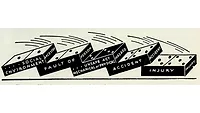
  • The Domino Theory of Accident Causation

    The 5 Pillars of a Highly Effective Safety Management Process

    See More
  • ISHN podcast - All Things Safety

    Podcast | Safety expert discusses 2023 safety trends

    See More

Related Directories

  • American Society of Safety Professionals (ASSP)

    The American Society of Safety Professionals (ASSP) is a global association of occupational safety and health professionals who are dedicated to workplace safety. We provide education, safety standards, advocacy and a professional community that supports our diverse members and the profession.
  • Alliance of Women’s Safety Apparel Manufacturers (AWSAM)

    The Alliance of Women's Safety Apparel Manufacturers is a collection of specialty manufacturers and distributors committed to providing properly designed and fitted PPE for women. Our foundational pillars are Awareness, Access and Advocacy. Our non-profit organization has 12 Founding Members and aligns the needs of women in the workforce and the companies they work for with specialty manufacturers dedicated to providing appropriate PPE for women. The Founding Members of the organization have made great strides in removing barriers to access that have existed for many years and kept women from being equally protected. Together, we create a platform that increases awareness of products made for women, encourages equal access to appropriately fitting PPE, and advocates for the safety of women in the workforce. In the spirit of co-opetition, we collaborate to envision what is next for women in industry as we work side by side to accomplish our mission, increase our impact, and share the journey with everyone seeking to elevate diversity and equality in their workplace.
  • Board of Certified Safety Professionals (BCSP)

    Since 1969, BCSP has been setting and certifying the technical competency criteria for safety, health, and environmental practitioners; ensuring safety through certification. In 2019, BCSP developed examCORE a comprehensive educational program for safety certification.
×

Become a Leader in Safety Culture

Build your knowledge with ISHN, covering key safety, health and industrial hygiene news, products, and trends.

JOIN TODAY
  • RESOURCES
    • Advertise
    • Contact Us
    • Directories
    • Manufacturing Division
    • Store
    • Want More
  • SIGN UP TODAY
    • Create Account
    • eMagazine
    • Newsletters
    • Customer Service
    • Manage Preferences
  • SERVICES
    • Marketing Services
    • Reprints
    • Market Research
    • List Rental
    • Survey/Respondent Access
  • STAY CONNECTED
    • LinkedIn
    • Facebook
    • YouTube
    • X (Twitter)
  • PRIVACY
    • PRIVACY POLICY
    • TERMS & CONDITIONS
    • DO NOT SELL MY PERSONAL INFORMATION
    • PRIVACY REQUEST
    • ACCESSIBILITY

Copyright ©2026. All Rights Reserved BNP Media, Inc. and BNP Media II, LLC.

Design, CMS, Hosting & Web Development :: ePublishing