The 2018 edition of NFPA 70E®, Standard for Electrical Safety in the Workplace®, addresses issues that should be put into practice at any workplace. New voluntary requirements and guidance cover risk assessment, the hierarchy of controls, human error, job safety planning, management systems, work performance and workplace culture.
Workplace burn injury and fatalities are frequently the result of the worker’s clothes catching on fire from two primary workplace hazards: flash fire and electric arc flash also referred to as “thermal incidents.”
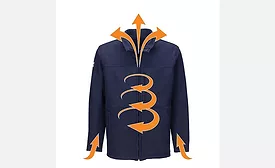
With warmer weather comes an increased risk of heat stress. According to the Bureau of Labor Statistics, in 2015 alone, exposure to environmental heat led to 37 work-related deaths and another 2,830 injuries and illnesses that involved days away from work.
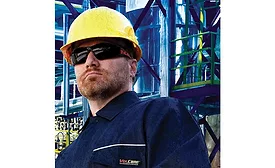
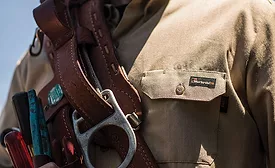
FR apparel today is more stylish, functional and performance-driven. Workers transition from work to date night, working out, doing chores around the house in their FR clothing and they want to look good. They also demand performance.
Private sector companies could take a few lessons from the U.S. Navy when it comes to implementing and managing their flame resistant (FR) clothing programs. Earlier this year, the Navy announced a new piece of FR apparel for sailors stationed aboard ships and submarines.
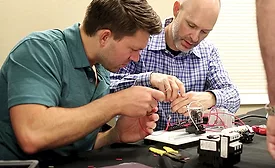
Training, therefore, is perhaps the most essential part of an electrical safety program, but arc flash and electrical safety training comes in many formats and lengths, so it’s essential that the training is effective for electrical Qualified Persons.
NFPA 70E responds to the latest information about the effects of arc flash, arc blast, and direct current (dc) hazards, and recent developments in electrical design and PPE. It provides vital information that helps you comply with OSHA 1910 Subpart S and OSHA 1926 Subpart K.
The statistics are well known. Each day three or four workers are killed due to electrical related accidents, according to NIOSH. A Michigan burn center found that 34 percent of patients injured on the job received flash injuries.
Despite the potential for serious injuries and fatalities, gloves were not considered when arc flash standards for clothing were first developed in the 1990s. For years electrical industry safety experts wanted the same type of rating on gloves as they had for clothing and face shields.
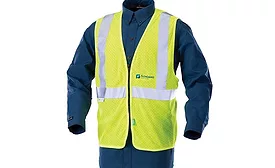
GlenGuard® Style 1400 and 1500 are lightweight Hi-Vis mesh fabrics that are both ANSI compliant and arc-rated. Style 1500 incorporates an anti-static yarn in its construction. Both offer GlenGuard's patented no melt, no drip protection in the event the worker is in an Arc-Flash or Flash-fire incident.