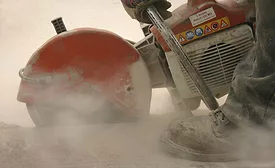
Over 300 workplace substances have been identified to cause new-onset asthma and the list continues to grow 1, 2. Other substances can aggravate pre-existing asthma, causing increased illness and medication requirements. Work-related asthma (WRA) comprises both new-onset and work-aggravated asthma3. An estimated 15-55% of all adult asthma is related to work4-7.
OSHA has made changes to its national emphasis program (NEP) on silica, which is intended to identify and reduce or eliminate worker exposures to respirable crystalline silica (RCS) in general industry, maritime, and construction. The NEP targets specific industries expected to have the highest exposures to RCS.
There were 24 mining fatalities in the U.S. in 2019, the U.S. Department of Labor’s Mine Safety and Health Administration (MSHA) reports. This is the fewest annual fatalities ever recorded, and only the fifth year in MSHA’s 43-year history that mining fatalities were below 30.
Workplace toxins that are inadvertently tracked by employees into their homes serve “as an intriguing example of how occupational conditions can have broader public health consequences,” according to scientists who’ve studied the problem.
In Eliminating Take-Home Exposures: Recognizing the Role of Occupational Health and Safety in Broader Community Health, researchers reframe the problem as one arising from unsanitary worker behavior – the current thinking – to a larger issue that needs to be viewed through an ecosocial lens in order to institute effective prevention.
Australia’s largest union representing workers in construction, forestry, maritime and mining and energy is demanding urgent national action on silicosis after revelations that 1-in-5 Queensland stone workers tested positive to the potentially fatal disease.
The Construction, Forestry, Maritime, Mining and Energy Union (CFMEU ) says the severity of the risks associated with engineered stone products calls for a nationally coordinated approach rather than piecemeal regulations and health monitoring programs.
With 2020 barely underway, the poultry industry has already experienced two workplace fatalities, at facilities in two different states. The National Council for Occupational Safety and Health (National COSH) says those incidents, along with a government-approved increase in line speeds at poultry slaughterhouses, illustrate the need for safety reforms in the industry. The poultry industry maintains that employees are considerably safer now on the job than in the past, and points to Bureau of Labor Statistics (BLS) data to back up that claim.
When OSHA celebrates an anniversary, it does it up big. The federal agency otherwise known as the U.S. Department of Labor's Occupational Safety and Health Administration (OSHA) plans to commemorate its 50th anniversary this year with a yearlong celebration of past achievements, current events and future initiatives.
The Williams-Steiger Occupational Safety and Health Act signed into law by President Richard M. Nixon on December 29, 1970 – that one that created OSHA – gave the federal government the authority to set and enforce safety and health standards for most of the country's workers.
“The USDA is letting the wolf guard the hog-house”
January 14, 2020
Several food safety advocacy organizations have filed a legal action against the U.S. Department of Agriculture for issuing New Swine Inspection System (NSIS) rules that that they say undermine pork-safety inspection in slaughter plants. Food & Water Watch and the Center for Food Safety are calling the new NSIS rules “a draconian reversal to the swine slaughter inspection system that has existed in the United States since 1906, which required meat inspectors to examine each animal before and after slaughter.”
Artificial stone countertops, also known as "quartz stone countertops," are made by polymerizing quartz aggregate and resin binder. These materials look similar to natural stone and are increasingly used in residential construction and home furnishings. Between 2010 and 2018, imports of quartzite countertops in the United States have increased by nearly 800% (US International Trade Commission).
Environmental cold can affect any worker exposed to cold air temperatures and puts workers at risk of cold stress. As wind speed increases, it causes the cold air temperature to feel even colder, increasing the risk of cold stress to exposed workers, especially those working outdoors, such as recreational workers, snow cleanup crews, construction workers, police officers and firefighters.