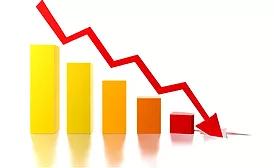
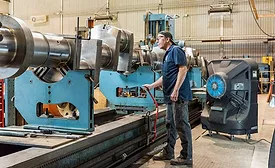
Although the injury and illness rate for poultry workers remains higher than for all private industry workers, new Bureau of Labor Statistics (BLS) show that the rate is trending downward.
The BLS reported that there were approximately 230,000 poultry processing workers in 2016. That year, there was an incident rate of 4.2 nonfatal workplace injuries and illnesses per 100 full-time equivalent workers; higher than the rate for all private industry workers, which was 2.9 per 100.
OSHA is urging vigilance among employers and employees to address the types of workplace hazards that tend to peak in the summer months.
Hazards related to heat exposure, falls, trenching and excavation, struck-by objects and vehicles, electrical safety, workplace violence, grain bin engulfment and other risks in agricultural operations have been at their highest in Iowa, Kansas, Missouri, and Nebraska in July, August, and September in the past three years.
Although the use of asbestos has been banned in European Union (EU) nations since 2005, the substance remains a health risk in Europe due to its ubiquitous presence in many private and public buildings.
Asbestos was one of the major agenda items at last month’s seminar on chemicals and worker protection held in Lisbon. Hosted by the European Trade Union Institute in Lisbon in collaboration with the General Confederation of the Portuguese Workers (CGTP), the gathering brought together more than 40 union representatives from 21 European countries.
An alarming increase in the incidence of the black lung disease among the nation’s coal miners has led to a call by the United Mine Workers of America (UMWA) and the United Steelworkers International Union (USW) for a new standard to protect miners from the silica dust that causes the disease.
In a letter to David Zatezalo, the head of the Mine Safety and Health Administration (MSHA), UMWA President Cecil Roberts and USW President Leo W. Gerard noted that changes in mining practices have led to increased exposure to silica for miners.
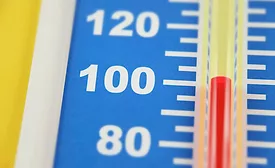
Every year, thousands of workers are exposed to heat on the job created by environmental conditions, clothing and workload. This heat exposure can lead to costly mistakes, time lost due to illness and even death in extreme heat illness situations. Government organizations, like OSHA, implement guidelines and regulations to ensure that heat-related prevention practices are in place to protect these workers.
Cal/OSHA is reminding all employers to protect their outdoor workers from
heat illness as temperatures rise throughout California. The National Weather Service
has issued heat advisories for triple-digit temperatures today in Fresno, Kern, Kings and
Tulare counties and forecasts high heat throughout inland parts of the state next week.
Oregon forestry workers who were injured on the job were more likely to fully recover if they received treatment and support from their employers, according to a recent study at the University of Washington. Those workers also reported that their employer promoted safety through policies, practices, and resources—indicators of a healthy safety climate.
A Kansas aircraft manufacturer exposed its employees to hexavalent chromium and failed to monitor exposure levels, according to OSHA, which has assessed citations and fines against Spirit Aerosystems Inc.
According to OSHA inspectors, the Wichita-based company failed to
implement feasible engineering controls to limit employee exposure to hexavalent chromium, a known carcinogen...
For Peggy Frank, a Los Angeles letter carrier, any federal or California safety rule ordering her employer—and all other firms—to protect workers from the hazards of excess heat didn’t work.
Frank, a 63-year-old grandmother, collapsed and died from California’s monstrously high heat while delivering the mail in Woodland Hills, a section of Los Angeles, last summer. The temperature in that particular neighborhood the day she died? 107 degrees.
After an analysis of 25 OSHA heat-related illnesses — 14 fatal and 11 nonfatal — the Centers for Disease Control suggested that employers start screening their workers for heat stress when the heat index reaches 85 degrees Fahrenheit rather than the 91 F OSHA currently recommends. Heat stress covers a wide variety of potential illnesses, including life-threatening heat stroke.