The state of California continues to place obligations for preventing employee heat stroke onto employers. In 2015, California heat stroke law clarified that cooldown periods or “recovery periods” must be paid, by state law.
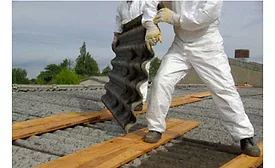
For decades, asbestos was considered an ideal substance used in a variety of industrial materials and equipment due to its remarkable heat and fire resistance properties, paired with incredible durability, poor electrical conductivity, and high tensile strength. Because of these properties, and because it was available in large quantities and inexpensive to produce, asbestos fibers were often combined with other materials for use in thousands of industrial, maritime, automotive, and building products.
The topic of worker heat exposure has made headlines across the country in recent years. In January of this year, OSHA leveled a fine of $149,664 for violations of the General Duty Clause in response to the 2018 death of a California Postal Worker.
When it comes to keeping workers cool on the job, Ergodyne leads the way. Their new Dry Evaporative Cooling Vest offers up to three days of cooling, while keeping the wearer completely dry.
Most evaporative cooling vests need to be soaked with water in order to work, which in turn soaks the wearer.
In the United States, farm workers die from heat-related illness at an annual rate 20 times that of other workers. However, few studies have measured heat conditions at their actual work settings, and research is limited on how accurately regional weather reports reflect worksite temperatures.
Just in time for Workers Memorial Day, April 28, the AFL-CIO has released its annual report, “Death on the Job: The Toll of Neglect.” Among the figures in this year’s comprehensive look at the state of safety and health protections for America’s workers:
in 2017, 5,147 workers lost their lives on the job as a result of traumatic injuries, according to fatality data from the Bureau of Labor Statistics.
Farm workers are at high risk for heat-related illness in hot temperatures, especially during summer crop production. Farming is also physically demanding, further increasing the likelihood of developing heat-related illness. In California, where an estimated 30%-40% of U.S. farm workers are employed, temperatures in the state’s Central Valley – are typically in the 90s in June and July.
NIOSH uses robotic arms to test healthcare PPE, teen workers get safety info from OSHA and FairWarning sheds a light on the hazards faced by small farmers in the U.S. These were among the occupational safety and health stories featured on ISHN.com this week.
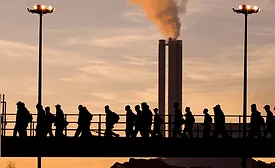
Every day, an average of 137 workers in the United States lose their lives to diseases and
illnesses caused by on-the-job exposures to hazards like silica dust, asbestos, and a wide variety
of toxic chemicals. That means every year, roughly 50,000 people die from occupational
illnesses, and the toll is likely much higher because of underreporting and incomplete statistics.
Ergodyne has announced the addition of three new item to its SHAX® line of portable work shelters. The SHAX® line features a number of pop-up tents and accessories designed to go up quickly and easily to provide shade and shelter at a jobsite.