Meeting the goals of the Paris Agreement could save about a million lives a year worldwide by 2050 through reductions in air pollution alone, according to the World Health Organization (WHO). The organization says latest estimates from leading experts also indicate that the value of health gains from climate action would be approximately double the cost of mitigation policies at global level, and the benefit-to-cost ratio is even higher in countries such as China and India.
Almost every homeowner has a toolbox filled with trusted tools to help get the job done. Tools that are reliable, and trusted to perform time and time again. Tools that are easy to use and don’t require instruction manuals. The same is true for safety professionals who keep people safe.
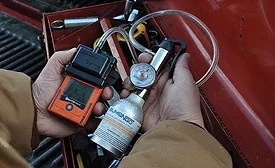
Inhalation of toxic gases can kill you. It’s important that you perpetually monitor your breathing air to ensure that you and your employees are breathing air that is safe and free of such gases all the time.
The safety industry has worked diligently over the past decade to improve the effectiveness of refrigerant, toxic and combustible gas sensors. The latest digital technologies have been employed at the sensor and systems levels to add greater intelligence and communications capabilities.
If there’s no occupational exposure limit (OEL) listed for a chemical ingredient or byproduct in a SDS, you can conduct an online search for the chemical by CAS number and include the qualifier DNEL — derived no effect levels. CAS is required on an SDS, DNEL is not.
You wouldn’t drive a vehicle without putting on your seat belt. You wouldn’t ride a bike without putting on a helmet. You don’t go to bed at night without locking your doors. When it comes to gas detection, safe and simple practices like these are no different.
A Utica Shale well that XTO Energy Inc. and its contractors lost control of on February 15, 2018 was still spewing raw methane three weeks later in Ohio’s Belmont County.
About 24 people were working at the Schnegg pad in York Township when contractors lost control of the well as they were pulling plugs and finishing up completion operations.
When her black cat rapidly dropped from a healthy 14 pounds to a skeletal five pounds, it was natural for Arlene Blum to investigate whether a toxic chemical in her home might be to blame. The veterinarian’s diagnosis raised that possibility, and Blum had expertise in the harm that chemicals can cause.
President Obama signed a bipartisan bill to reform the Toxic Substances Control Act (TSCA), the first major update to an environmental statute in 20 years. That’s great news for the environment and for the health of all Americans.